

ATP/ADP/AMP Analysis: When LC-MS/MS Is a Better Choice Than ATP Kits
Submit Your InquiryIn many laboratories, ATP determination is initially performed using luminescent assay kits. These assays are widely available, cost-effective, and straightforward to implement, making them well suited for preliminary screening and basic comparisons of cellular ATP levels.
As projects progress, however, the analytical requirements often change. Reviewers, collaborators, or internal stakeholders start to request absolute concentrations of ATP, ADP and AMP and a quantitative assessment of the adenylate energy charge (AEC) rather than relative light units (RLU) alone. At this point, the inherent limitations of kit-based readouts—particularly for ADP and AMP and for complex biological matrices—become more apparent, and many groups begin to consider LC-MS/MS–based ATP/ADP/AMP analysis as a more robust alternative.
This resource article is intended to support that decision. It addresses three practical questions:
- Where do ATP kits fit, and when are they appropriate?
- What are the technical limitations of kit-based ATP assays, especially for ADP/AMP and complex matrices?
- How can LC-MS/MS–based ATP/ADP/AMP analysis, delivered as a targeted metabolomics service, provide the level of accuracy and robustness modern projects require?
Where ATP Assay Kits Fit Within a Research Workflow
Real advantages of luminescence-based ATP kits
Commercial luciferase-based ATP kits have several genuine strengths:
- Cost-effective for early work
The per-plate cost is modest, which is attractive for pilot experiments and exploratory screens. - Low technical barrier
Protocols are typically simple: lyse, add reagent, incubate, read luminescence. This makes them accessible to laboratories without specialized analytical expertise. - Moderate throughput
96- or 384-well formats allow many conditions and replicates to be evaluated in parallel, which is ideal for early "go/no-go" decisions.
For questions such as "Does this treatment roughly increase or decrease ATP relative to control?", kit-based workflows can be entirely appropriate.
Typical "screening-level" use cases
ATP kits are well suited to:
- Single-time-point comparisons (treated vs control) in cultured cells
- Simple viability or cytotoxicity readouts
- High-level ranking of compounds by their impact on ATP levels
- Teaching laboratories or training experiments, where ease of use is important
If a project remains at this level—focusing on directionality ("up/down") rather than quantitative precision—kit-based data may be sufficient.
However, when a study moves toward mechanism-of-action, metabolic reprogramming, or mitochondrial toxicity, the analytical demands shift from "trend detection" to "quantitative bioenergetics." That is where the limitations of ATP kits start to matter.
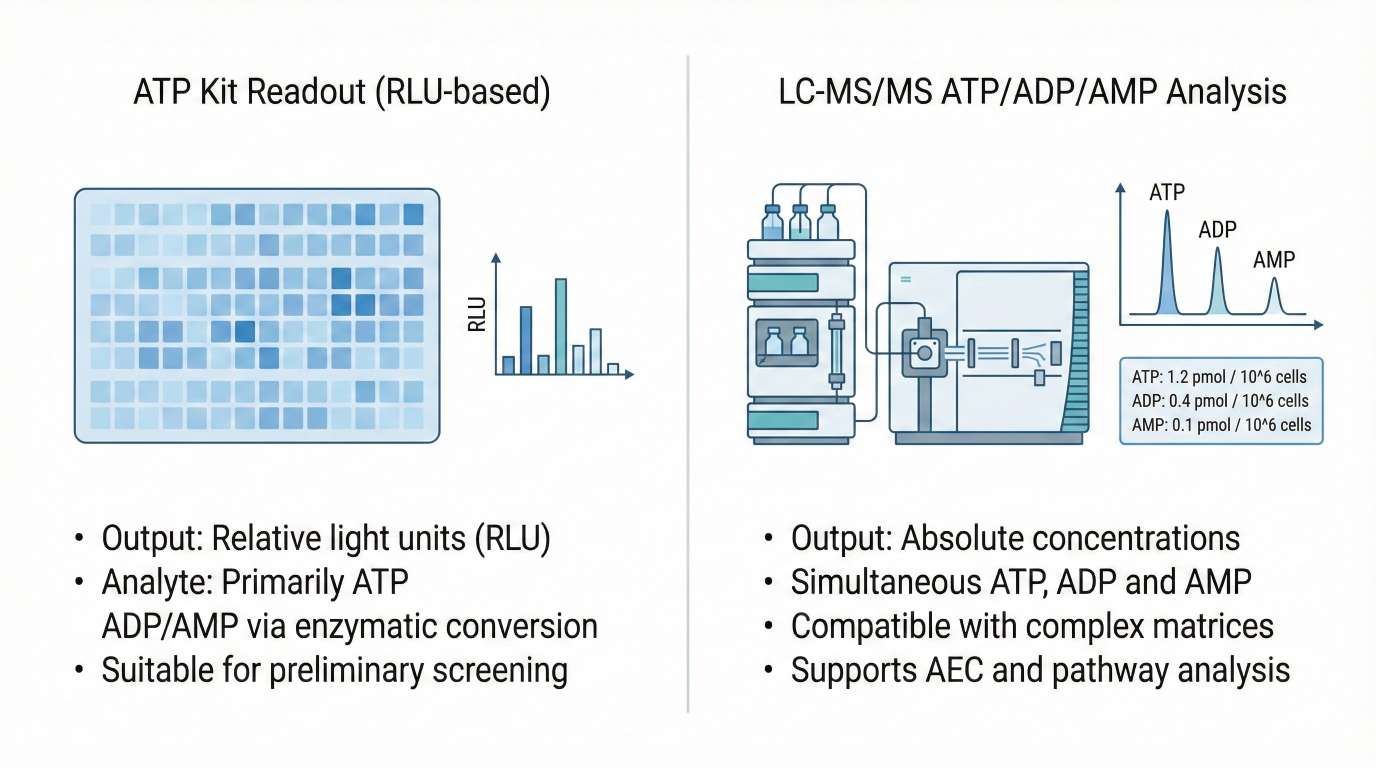 Figure 1. Comparison of ATP luminescence kits and LC-MS/MS analysis in terms of output type, analyte coverage, and quantification method.
Technical Limitations of Luminescent ATP Kits
RLU is not a universal quantitative currency
Luminescent output (RLU) is influenced by:
- Enzyme activity and substrate stability
- Reaction time and temperature
- Plate effects and instrument settings
Within a single plate, relative comparisons can be meaningful. Across plates, runs, or sites, direct comparison of RLU values is challenging. This becomes problematic when:
- Absolute concentrations (e.g. pmol/mg protein, pmol per 10⁶ cells) are requested
- Data from different days, batches, or laboratories must be compared
- ATP levels are used as quantitative endpoints in drug discovery or toxicology
In contrast, LC-MS/MS–based methods use calibration curves and internal standards to generate absolute concentrations with defined linear ranges, limits of detection, and precision. This is the core rationale behind targeted metabolomics platforms such as the Metabolomics Service and Targeted Metabolomics Analysis Service, which are designed for reproducible quantification rather than relative signal alone.
ADP and AMP via enzyme conversion: an indirect and error-prone approach
Most ATP kits are designed primarily for ATP. When ADP and AMP are included, they are often measured indirectly by:
- Enzymatically converting ADP or AMP into ATP
- Measuring ATP by luminescence
- Inferring ADP or AMP concentrations from differences between pre- and post-conversion signals
This strategy introduces several sources of uncertainty:
- Conversion efficiencies are rarely complete and may be matrix-dependent
- Multi-step reaction cascades (AMP → ADP → ATP) are sensitive to pH, temperature, and cofactors
- Side reactions and cross-reactivity can alter the effective stoichiometry
If your conclusions depend on accurate ADP and AMP levels—for example, to compute ATP/ADP ratios, AMP accumulation, or adenylate energy charge—these uncertainties can compromise biological interpretation.
LC-MS/MS methods do not need to infer ADP or AMP indirectly. Instead, ATP, ADP, and AMP are chromatographically separated and individually quantified using specific mass transitions. Dedicated panels such as:
- Adenosine Triphosphate (ATP) Analysis Service
- Adenosine Diphosphate (ADP) Analysis Service
- Adenosine Monophosphate (AMP) Analysis Service
allow each nucleotide to be measured directly and then combined into a robust ATP/ADP/AMP panel.
Complex sample matrices: plants, tissues, and drug-treated systems
In standardized cell culture, optical interference is modest. In many real-world applications, it is not:
- Plant tissues contain pigments and polyphenols that absorb or emit light
- Liver and other tissues contain heme, lipids, and other chromophores
- Drug-treated samples may include small molecules or natural products that directly affect luminescent reactions
These matrix components can:
- Quench or enhance the luminescent signal
- Contribute background luminescence independent of ATP
- Change the local environment of the assay (pH, ionic strength), altering enzyme performance
The result is often familiar: blank wells are unstable, negative controls drift, and small true biological effects are buried under technical variability.
LC-MS-based workflows address matrix interference through:
- Sample preparation (e.g. protein precipitation, extraction) tailored to remove interfering species
- Chromatographic separation, isolating nucleotides prior to detection
- Mass-selective detection, measuring specific m/z transitions for each analyte
Dynamic range and non-linearity
ATP kits operate within a finite dynamic range. At very high ATP levels, signals may saturate; at very low levels, they approach the background. Achieving reliable quantification across different experimental conditions can require multiple rounds of dilution or concentration, adding complexity and potential error.
LC-MS/MS methods are usually developed with wide linear ranges and well-characterized limits of detection, enabling quantification of nucleotide concentrations from low nanomolar to high micromolar in a single method, depending on matrix and instrumentation. In integrated platforms like the metabolomics service, this quantitative robustness is a fundamental design criterion.
How LC‑MS/MS Enables Accurate ATP/ADP/AMP Quantification
Principle: chromatographic separation plus mass-selective detection
A typical LC-MS/MS workflow for nucleotides includes:
- Metabolic quenching and extraction
Rapid quenching (e.g. cold organic solvents) minimizes ATP hydrolysis and post-sampling metabolism. - Liquid chromatography
ATP, ADP, AMP, and related nucleotides are separated based on polarity and charge. This step also helps remove matrix components that could cause ion suppression. - Tandem mass spectrometry (MS/MS)
Each nucleotide is detected via characteristic precursor → product ion transitions, using multiple reaction monitoring (MRM) or selected reaction monitoring (SRM).
This approach directly addresses the two major challenges of kit-based assays:
- ADP and AMP are measured directly, not reconstructed from enzyme conversion
- Interfering molecules are largely separated away before detection
Beyond ATP/ADP/AMP, the same framework supports broader nucleotide profiling through the Nucleotide Metabolism Service, enabling quantification of additional nucleotides and pathway intermediates where required.
Absolute quantification with internal standards
LC-MS/MS methods typically rely on:
- Isotopically labelled or structurally similar internal standards
- External calibration curves built from known standards
- Matrix-matched calibration where appropriate
Together, these elements make it possible to report concentrations as:
- pmol per mg protein
- pmol per 10⁶ cells
- nmol per g tissue
rather than only relative intensities. This is particularly important in:
- Multi-center collaborations
- Longitudinal studies
- Dose–response and PK/PD work, where quantitative thresholds are relevant
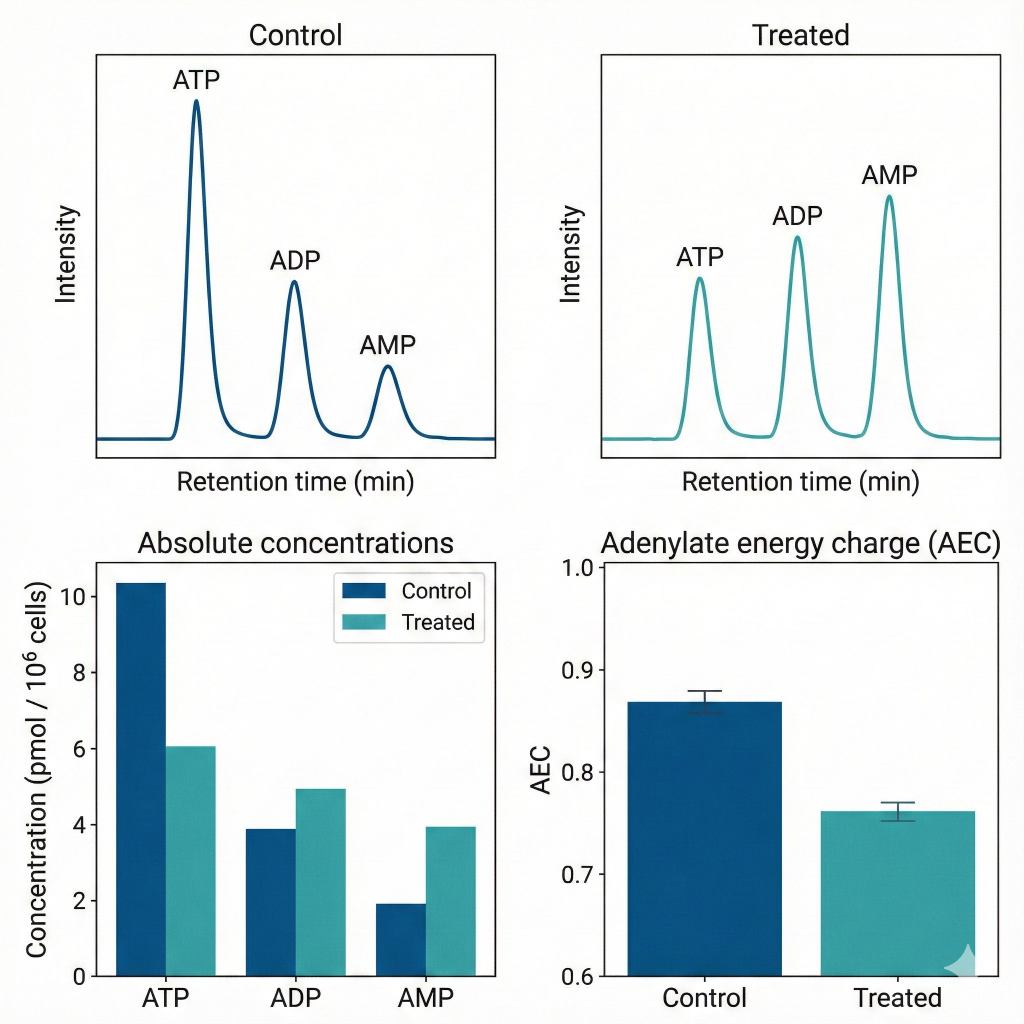 Figure 2. LC-MS/MS results showing nucleotide separation and energy charge differences between control and treated samples.
Scientific Value of Simultaneous ATP, ADP, and AMP Measurement
Robust calculation and interpretation of adenylate energy charge
The adenylate energy charge (AEC) is a widely used measure of cellular energetic state:
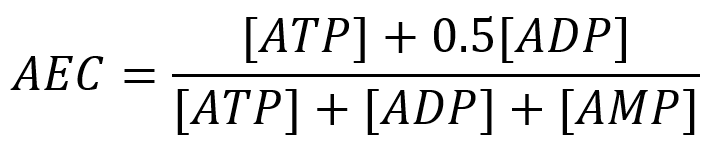
By construction, AEC is sensitive to the relative distribution of ATP, ADP and AMP across the adenylate pool. Any systematic bias in ADP or AMP measurement will propagate into the AEC, potentially altering conclusions about energy status.
With LC-MS/MS:
- ATP, ADP and AMP are each measured with defined precision and accuracy
- AEC can be calculated from high-confidence absolute concentrations
- Trends in AEC can be related to other metabolite changes (e.g. NAD⁺/NADH, TCA intermediates) in a pathway-aware manner
In many projects, adenylate measurements are combined with targeted profiling of central carbon and energy pathways via services such as Energy Metabolism Service and Oxidative Phosphorylation Analysis Service, enabling a more holistic view of bioenergetics.
Distinguishing different energetic phenotypes
A single ATP measurement can tell you whether overall ATP is higher or lower. It cannot distinguish how the adenylate pool is being remodelled. In contrast, ATP/ADP/AMP together can reveal distinct phenotypes, for example:
- ATP↓, ADP↑, AMP slight↑
– Suggests impaired ATP synthesis with partial compensation via adenylate kinase. - ATP↓, ADP≈constant, AMP↑↑
– Consistent with strong adenylate breakdown and AMPK activation, often seen in severe energy stress. - ATP↓, ADP↓, AMP↓
– Compatible with global adenylate pool depletion, as in necrosis or extreme mitochondrial failure.
Linking these signatures to broader metabolic shifts is straightforward when ATP/ADP/AMP analysis is integrated into a pathway-centric framework, such as the metabolomics service with its coverage of central carbon, energy, and nucleotide metabolism.
Application scenarios
Simultaneous ATP/ADP/AMP quantification is particularly useful in:
- Mitochondrial toxicity evaluation
Distinguishing direct effects on oxidative phosphorylation from secondary consequences of cell death, especially when combined with oxidative phosphorylation and TCA profiling. - Metabolic reprogramming in cancer and immunology
Relating changes in glycolytic vs oxidative metabolism to shifts in adenylate balance. - Hypoxia, ischemia–reperfusion, and stress models
Tracking dynamic changes in adenylate energy charge and recovery, rather than single-time-point ATP. - Translational and preclinical studies
Where quantitative thresholds and cross-study comparability are required for decision-making.
When to Transition from ATP Kits to LC‑MS/MS Analysis
Not every experiment needs LC-MS/MS, and not every ATP readout needs to be converted into an adenylate panel. A simple decision framework can be helpful:
You should strongly consider LC-MS/MS ATP/ADP/AMP analysis if:
- Absolute quantification is required
– Reviewers, collaborators, or internal stakeholders ask for pmol/mg, pmol per 10⁶ cells, or similar metrics. - ADP and AMP are biologically important readouts
– You plan to interpret ATP/ADP ratios, AMP accumulation, or AEC as key endpoints. - The matrix is complex
– Plant tissues, primary tissues, biofluids, or heavily drug-treated samples where optical interference is likely. - The study is pivotal, not exploratory
– Mechanism-of-action work, candidate ranking, lead optimization, or key figures in a manuscript. - You intend to expand into pathway-level or multi-omics analysis
– For example, integrating nucleotides with glycolysis, TCA cycle, redox cofactors, or other metabolic pathways.
By contrast, luminescent ATP kits remain useful when:
- The goal is an initial screen or pre-screen;
- Only directional change is needed;
- The matrix is relatively simple and well-controlled;
- Budget and time constraints favour a very rapid, approximate readout.
In many projects, a hybrid strategy is effective: use kits for early trend-finding, then confirm key conditions and time points with LC-MS/MS ATP/ADP/AMP analysis and broader metabolic panels.
ATP/ADP/AMP Quantification and Energy Metabolism Services at Creative Proteomics
For research teams that require precise quantification of cellular energy status, LC-MS/MS–based ATP/ADP/AMP analysis provides a high-confidence alternative to kit-based assays. At Creative Proteomics, we offer comprehensive metabolomics services designed to meet the needs of advanced biomedical research, drug discovery, and translational science.
Whether you are studying mitochondrial toxicity, metabolic reprogramming, or simply need reliable AEC calculations, our targeted platforms support:
- Absolute quantification of ATP, ADP, and AMP
- Simultaneous measurement of energy-related metabolites
- Robust performance across diverse sample types, including cells, tissues, biofluids, and plant materials
Our metabolomics experts will work closely with you to define the appropriate analytical strategy—whether that's a focused ATP/ADP/AMP panel, an extended energy metabolism profile, or a broader targeted metabolomics solution.
Frequently Asked Questions (FAQs)
How should samples be preserved to prevent ATP degradation during collection and shipping?
Because the half-life of ATP in disrupted tissue is extremely short, immediate metabolic quenching is essential to preserve the in vivo adenylate energy charge. We strongly recommend flash-freezing samples in liquid nitrogen immediately after harvesting or using specific cold extraction solvents (such as cold methanol or perchloric acid) at the point of collection, followed by continuous storage at -80°C and shipment on dry ice to prevent enzymatic hydrolysis of ATP into ADP and AMP during transport.
What is the minimum sample amount required for simultaneous ATP/ADP/AMP quantification?
While requirements vary by matrix, robust quantification of lower-abundance nucleotides like AMP generally requires approximately 10–50 mg of wet tissue or a minimum of 1–5 million cultured cells per replicate. For biofluids or rare samples with limited availability, our technical team can optimize extraction protocols to work with smaller volumes, provided the initial handling minimized metabolite degradation.
Do you use stable isotope-labeled internal standards for nucleotide analysis?
Yes, to ensure absolute quantitative accuracy, we employ stable isotope-labeled analogs (such as 13C-ATP or 15N-ATP) as internal standards during the LC-MS/MS workflow. This critical step corrects for potential matrix effects, ionization suppression, and variations in extraction efficiency that are common in complex biological samples, ensuring that the reported concentrations are precise and reproducible across different batches.
Can this analysis distinguish between intracellular and extracellular ATP?
Differentiation depends entirely on the sample preparation method used prior to analysis rather than the instrument itself. If you specifically need to measure intracellular ATP, the supernatant must be removed and cells washed (typically with PBS) prior to lysis; conversely, for extracellular ATP, the culture medium or biofluid is analyzed directly, and we recommend discussing your specific localization goals with our team to design an appropriate washing and quenching protocol.
Is it possible to quantify redox cofactors like NAD+/NADH in the same run as ATP?
Yes, the chromatographic conditions and extraction methods used for adenylates are often compatible with other polar, unstable metabolites including nicotinamide adenine dinucleotides (NAD+/NADH) and NADPH. Expanding the targeted panel to include these cofactors allows for a more comprehensive assessment of mitochondrial function and cellular redox status alongside the adenylate energy charge without requiring additional sample aliquots.
References
- Atkinson, Daniel E. "The energy charge of the adenylate pool as a regulatory parameter. Interaction with feedback modifiers." Biochemistry 7.11 (1968): 4030–4034.
- Fu, Xiaorong, et al. "Targeted determination of tissue energy status by LC-MS/MS." Analytical Chemistry 91.9 (2019): 5881–5887.
- Law, Andrew S., Paul S. Hafen, and Jeffrey J. Brault. "Liquid chromatography method for simultaneous quantification of ATP and its degradation products compatible with both UV–Vis and mass spectrometry." Journal of Chromatography B 1206 (2022): 123351.
- Hiefner, Johanna, et al. "A liquid chromatography–tandem mass spectrometry based method for the quantification of adenosine nucleotides and NAD precursors and products in various biological samples." Frontiers in Immunology 14 (2023): 1250762.
- Morciano, Giampaolo, et al. "Use of luciferase probes to measure ATP in living cells and animals." Nature Protocols 12 (2017): 1542–1562.

 Contact Us