

Practical Guide to ATP/ADP/AMP and Cellular Energy Readouts
Submit Your Inquiry"ATP went down after treatment — does that mean the cells are dying, or just working harder?"
That's the core question behind most ATP-related readouts. The challenge is that "ATP ↓" can mean very different things depending on how much of the adenylate pool you can actually see:
- ATP-only (luminescent/fluorescent kit)
- ATP + ADP (partial view of energy transfer)
- ATP + ADP + AMP (full adenylate pool)
- AEC and panel-level interpretation (adenylate energy charge in metabolic context)
Each layer adds resolution:
- ATP-only tells you whether the overall energy status is clearly compromised.
- ATP + ADP begins to separate "high demand / high turnover" from simple ATP depletion.
- ATP + ADP + AMP allows you to quantify adenylate energy charge (AEC) and see how the whole pool is being reorganized under stress.
- When you add broader energy metabolism panels (glycolysis, TCA, redox), you can connect ATP dynamics to specific mechanisms and pathways rather than just "toxic vs non-toxic".
At Creative Proteomics, these layers correspond to different analytical options — from focused ATP assays by LC-MS/MS to broader energy metabolism panels and pathway-level targeted metabolomics.
This guide walks through how to interpret ATP, ADP and AMP readouts at each level, and where advanced readouts like AEC really add value.
For practical guidance on assay selection, experimental design and sample handling for ATP/ADP/AMP studies, see "ATP/ADP/AMP Targeted Metabolomics: Assay Choice, Experimental Design and Sample Preparation."
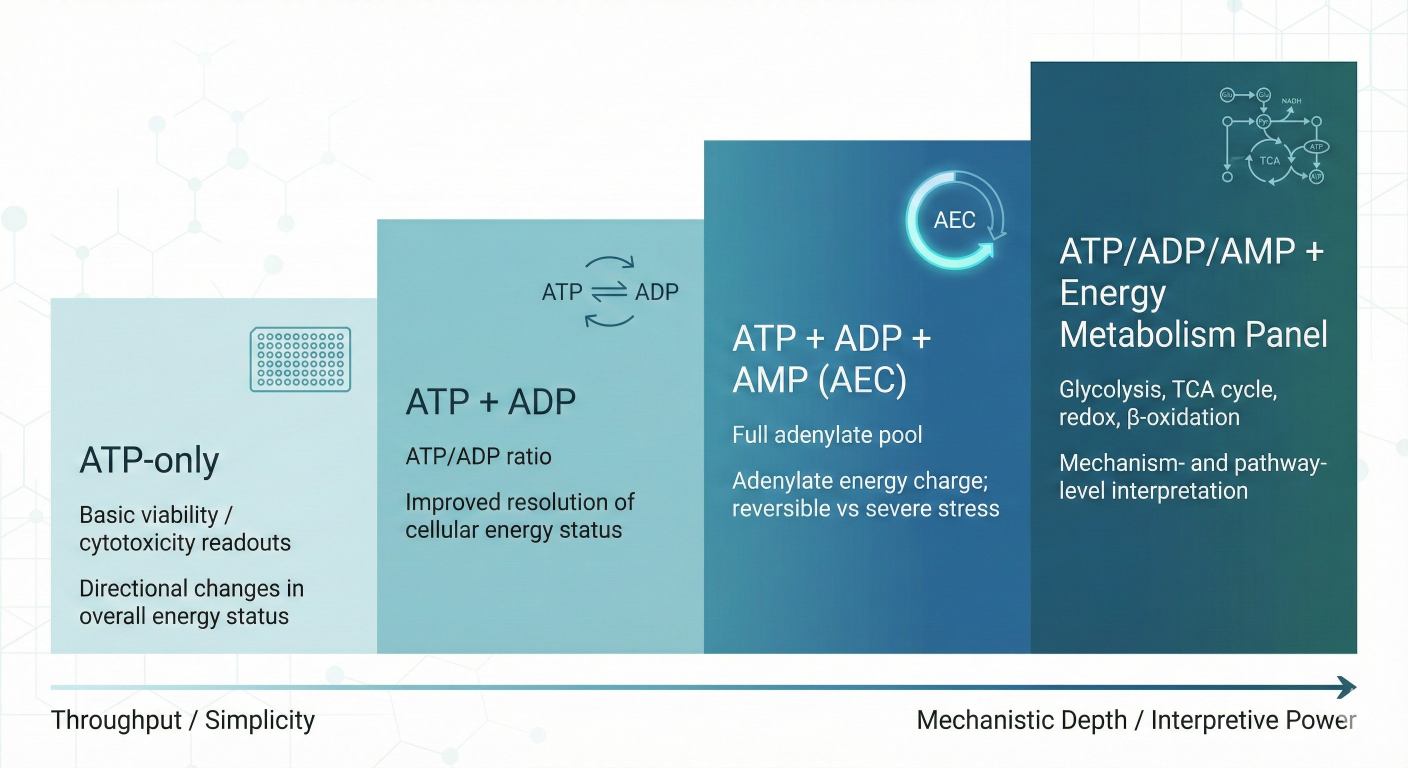 Figure 1. Hierarchical framework for ATP-related readouts. From ATP-only assays to ATP/ADP/AMP profiling and energy metabolism panels, analytical depth and mechanistic insight gradually increase.
Analytical Scope and Limitations of ATP-Only Assays
Most labs start with ATP-only assays, often in kit format, because they are:
- Fast and scalable
- Compatible with multi-well screening
- Easy to benchmark between treated vs control
But it's important to be honest about what this level of readout can and cannot tell you.
What ATP-only can tell you
Directional changes in overall energy status
A robust drop in ATP per cell (or per protein) usually means:
- Cellular energy production can no longer keep up with demand
- Major stress is present (e.g. mitochondrial inhibition, severe nutrient deprivation, late-stage cell death)
In screening mode, this is useful for:
- Early compound ranking: flagging strong hitters that clearly reduce ATP.
- Simple treated vs control comparisons: "Does this condition reduce ATP more than our reference control?"
ATP-only readouts can support:
- Rough viability/cytotoxicity estimation (especially when aligned with orthogonal assays).
- Triage decisions: "Is this compound worth more mechanistic follow-up?"
What ATP-only cannot tell you
However, ATP-only readouts are blind to many mechanistic nuances. You generally cannot reliably distinguish between:
- Mitochondrial dysfunction vs nutrient limitation vs cell death
ATP ↓ could result from direct inhibition of oxidative phosphorylation, insufficient substrates (glucose, oxygen), or simple loss of viable cells.
- Adaptive metabolic reprogramming vs irreversible damage
Early adaptive responses (e.g. increased glycolysis) may temporarily maintain ATP, while AMP and redox state already shift.
And crucially, ATP-only does not allow you to:
- Calculate ATP/ADP ratio or quantify AMP accumulation
- Derive AEC or assess the overall adenylate pool
This leads to an important interpretive boundary:
If your decision-making depends on mechanism differentiation (e.g. "metabolic adaptation vs terminal toxicity"), ATP-only isn't enough. You'll need at least ATP + ADP, and ideally ATP + ADP + AMP with AEC from LC-MS/MS-based targeted metabolomics .
For a deeper discussion of when LC-MS/MS becomes a better choice than ATP-only kits, see our resource "ATP/ADP/AMP Analysis: When LC-MS/MS Is a Better Choice Than ATP Kits. "
For projects that start with basic ATP readouts and later escalate to LC-MS/MS, Creative Proteomics can extend measurement to quantitative ATP analysis using mass spectrometry-based methods for more precise energy profiling.
Adding ADP: Interpreting ATP/ADP Ratios
Adding ADP already upgrades your readout from "energy on/off" to a more nuanced view of energy transfer and demand.
What the ATP/ADP ratio tells you
The ATP/ADP ratio is a classic marker of cellular energy state:
High ATP/ADP
- Energy supply is sufficient relative to demand
- Biosynthetic and transport processes can proceed efficiently
Low ATP/ADP
- Energy demand is high or ATP production is impaired
- Synthetic processes become limited; stress signaling may be engaged
Because many ATP-dependent enzymes sense ATP and ADP directly, the ATP/ADP ratio often correlates better with functional capacity than ATP alone.
Quantitative ADP profiling is available via LC-MS/MS, enabling accurate ATP/ADP ratios rather than indirect kit-based estimates.
Typical patterns you might see
Some common ATP/ADP patterns and their possible interpretations:
ATP ↓, ADP ↑
- Suggests that energy demand > supply
- Mitochondria and/or glycolysis are unable to keep pace
- Compatible with mitochondrial inhibition, high workload, or partial nutrient restriction
ATP ≈ constant, ADP ↑
- Total ATP remains in a "normal" range, but turnover is increased
- May reflect metabolic reprogramming, increased workload, or early compensatory responses (before ATP falls)
Both ATP ↓ and ATP/ADP ↓
- Energy reserves are dropping and the ability to maintain ATP is compromised
- Often more severe than ATP-only data would suggest
Limitations of ATP + ADP
Even with ATP + ADP, you still have blind spots:
- You do not see AMP, which is a key signal for severe energy stress and AMPK activation.
- You cannot calculate AEC, because the full adenylate pool (ATP + ADP + AMP) is unknown.
So while ATP/ADP helps distinguish "higher demand / higher turnover" from simple ATP depletion, you still lack a direct measure of how far the system has progressed along the trajectory from reversible stress → decompensation → collapse.
When your research question becomes:
"Is this a reversible metabolic adaptation, or are we pushing cells into irreversible failure and death?"
you usually need full ATP/ADP/AMP profiling and AEC.
Full Adenylate Pool: ATP/ADP/AMP and AEC
When ATP, ADP and AMP are measured quantitatively, you can look at:
- Absolute pool sizes (nmol/mg protein, pmol/10⁶ cells, etc.)
- ATP/ADP and ATP/AMP ratios
- Total adenylate pool (ATP + ADP + AMP)
- Adenylate Energy Charge (AEC)
This is where LC-MS/MS-based assays for ATP, ADP and AMP become essential — they provide the precision needed for robust AEC calculations and pattern recognition across conditions.
AEC definition and calculation
AEC is defined as:
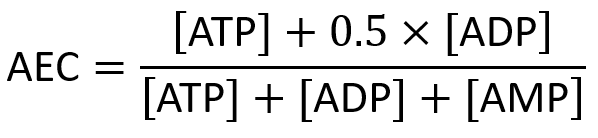
Conceptually:
AEC ≈ 1.0
- Almost all adenylate is in ATP
- Highly energized state (e.g. well-fed, robust mitochondria)
Moderate AEC (e.g. ~0.7–0.8, context-dependent)
- More ADP and some AMP present
- Typical of cells under manageable workload or moderate stress
Low AEC
- Significant accumulation of AMP and loss of ATP
- Indicates severe energy stress, impending failure, or actual collapse
Exact "normal" ranges depend on cell type, species, sampling strategy, and compartment, so AEC should be interpreted relative to your matched control and experimental context, not as a diagnostic threshold.
Pattern-based interpretation of the adenylate pool
With full ATP/ADP/AMP data, you can move from simple ratios to pattern-level interpretation. Some common patterns:
ATP ↓, ADP ↑, AMP slight ↑
- The system is under load; ATP is being consumed and partly compensated.
- AEC may drop modestly but often remains in a mid-to-high range.
- Suggests reversible or moderate stress where compensation is still active.
ATP ↓, ADP ≈, AMP ↑↑
- AMP accumulates due to adenylate kinase activity (2 ADP ↔ ATP + AMP) and/or AMP-deaminase pathways.
- AEC drops sharply.
- Indicates severe energy stress, often compatible with strong AMPK activation and significant compromise of ATP-dependent processes.
ATP ↓, ADP ↓, AMP ↓ (total adenylate pool collapsed)
- Not just a shift within the pool, but reduction of the entire adenylate pool size.
- May reflect cell lysis, leakage during sampling, or irreversible loss of viability.
- Requires careful check of sample handling and normalization (e.g. cell counts, protein content).
ATP ≈, ADP ↑, AMP ↑ (total pool up or stable)
- Possible scenario: cells expand their adenylate pool under chronic load, with higher turnover.
- Interpretation depends on broader metabolite context (e.g. glycolytic intermediates, TCA cycle, redox cofactors).
These patterns are impossible to distinguish with ATP-only readouts and remain ambiguous with ATP + ADP only. Full adenylate profiling and AEC give you a structured way to separate adaptive responses from terminal energy failure.
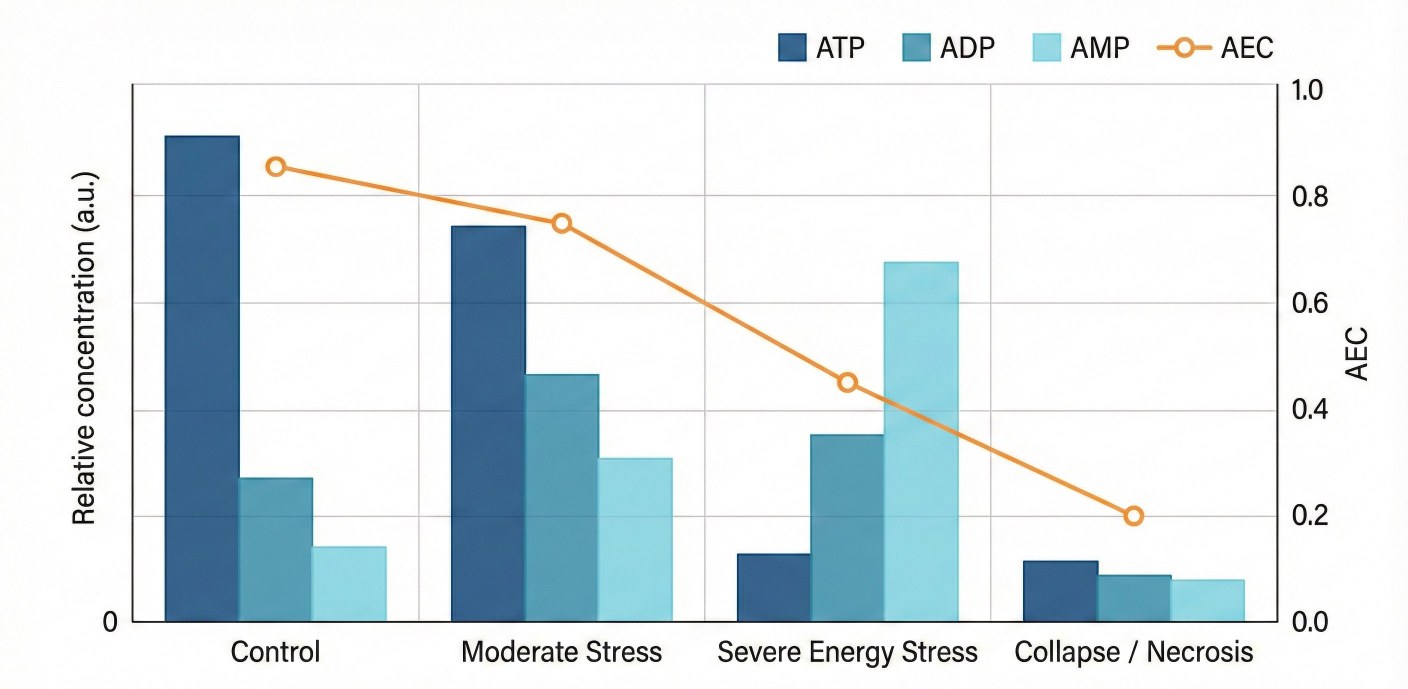 Figure 2. Adenylate nucleotide and AEC patterns under different energetic states. ATP, ADP and AMP bar plots with an overlaid AEC line compare control, moderate stress, severe energy stress and collapse/necrosis.
Linking Adenylate Data to Broader Metabolism
ATP, ADP and AMP sit at the intersection of multiple pathways:
- Glycolysis
- TCA cycle
- Oxidative phosphorylation
- β-oxidation and other fuel pathways
- Redox systems (NAD⁺/NADH, NADP⁺/NADPH)
To understand why ATP or AEC are changing, it's often necessary to combine adenylate data with:
- Lactate and pyruvate → glycolytic flux and redox balance
- Citrate, α-ketoglutarate, succinate, fumarate, malate → TCA activity and bottlenecks
- NAD⁺/NADH, NADP⁺/NADPH → redox state, oxidative stress and biosynthetic capacity
- Acyl-carnitines and β-oxidation flux markers → mit ochondrial fatty acid oxidation and fuel switching
For this integrated perspective, targeted panels such as:
allow you to quantify adenylate nucleotides, energy metabolites and pathway intermediates in one LC-MS/MS-based workflow, providing both mechanistic depth and pathway-level readouts.
How Different Projects Use ATP/ADP/AMP Readouts
Below are short vignettes illustrating how ATP-related data are used in different project contexts.
Mitochondrial toxicity screening
Phase 1 – High-throughput ATP kit
A pharma team runs a 2D cell culture screen on a compound library, using ATP kit readouts for early toxicity signals.
- Hits: compounds that drop ATP by >40% vs vehicle.
- At this stage, interpretation is limited to "strongly energy-disruptive vs non-disruptive".
Phase 2 – Mechanistic follow-up with LC-MS/MS ATP/ADP/AMP and AEC
For a short-listed subset, the team moves to targeted adenylate profiling:
- Quantitative ATP/ADP/AMP, AEC
- Combined with lactate and TCA intermediates
- Time-course sampling (0.5 h, 2 h, 24 h)
They find two distinct patterns:
- Compound A: Early ATP/ADP drop, AMP rise, AEC sharply reduced, lactate accumulation, TCA intermediates decreased → mitochondrial oxidative phosphorylation inhibition with compensatory glycolysis.
- Compound B: Moderate ATP/ADP drop, small AMP increase, preserved AEC, central carbon metabolites largely unchanged → mild energy stress, likely manageable with dose adjustment.
Here, adenylate profiling plus energy metabolism panels allow them to separate "mitochondrial liability" from "manageable on-target energetics", guiding medicinal chemistry priorities.
Cancer cell metabolic reprogramming
A translational research team is studying how an oncogenic driver reshapes energy metabolism in tumor cells.
Initial ATP kits show no significant change in total ATP relative to wild-type cells. If they stopped there, they might conclude "no major energy phenotype".
But targeted LC-MS/MS reveals:
- ATP stable, ADP and AMP both increased
- AEC modestly lowered
- Lactate production increased, TCA intermediates redistributed
- NAD⁺/NADH ratio shifted toward more reduced state
This pattern fits a Warburg-like metabolic shift: elevated glycolytic flux maintains ATP despite altered mitochondrial function. Adenylate data help confirm that ATP is being defended at the cost of increased turnover and altered pathway usage.
Hypoxia / ischemia-reperfusion (I/R) models
In hypoxia or I/R models, time-course AEC is especially informative:
During hypoxia:
- Gradual ATP ↓, ADP ↑, AMP ↑↑, AEC falls
- Accumulation of anaerobic metabolites (e.g. lactate) and perturbation of TCA cycle
During reperfusion:
- In successfully protected tissues: ATP and AEC recover over time
- In poorly protected or injured tissues: AEC remains low, adenylate pool partially collapses, indicating lasting damage
By combining adenylate nucleotides, TCA intermediates, and redox markers in a single targeted panel, researchers can distinguish transient energetic compromise from irreversible energetic failure, and quantify the benefit of protective interventions.
Common Pitfalls in ATP/ADP/AMP Interpretation
Even with high-quality LC-MS/MS data, interpretation can go wrong. Some frequent pitfalls:
Using kit-derived "ADP/AMP" to calculate AEC
Some workflows attempt to infer ADP or AMP from enzymatic conversion steps layered on ATP kits, then use these values to calculate AEC.
Problems:
- Indirect estimation can introduce systematic bias (e.g. incomplete conversion, interference).
- When you plug those numbers into the AEC formula, small errors are amplified, leading to misleading AEC comparisons.
For any study where AEC is a key readout, it is safer to use direct, quantitative LC-MS/MS measurements of ATP, ADP and AMP rather than kit-derived proxies.
Ignoring pre-analytical sample handling
Adenylate nucleotides are labile:
- Delays in quenching metabolism can lead to artifactual ATP → ADP → AMP conversion.
- Incomplete cooling or extraction can distort the adenylate distribution more than the biological effect itself.
Best practice includes:
- Rapid quenching (e.g. cold organic solvent or snap freezing)
- Clear SOPs adapted to matrix (cells, tissues, biofluids)
- Normalization to cell number, protein, or tissue weight
A high-quality sample handling and extraction protocol is as important as the analytical platform.
Comparing ATP or AEC without proper normalization
Interpreting ATP or AEC per well without accounting for:
- Changes in cell number,
- Differences in protein content, or
- Variations in tissue mass
can lead to misleading conclusions. For example, ATP per well could appear reduced simply because there are fewer cells, not because each cell is energy-depleted.
Quantitative, per-cell or per-protein normalization is essential for meaningful cross-group comparisons.
Over-interpreting bulk AEC as compartment-specific
Bulk AEC measurements from homogenized cells or tissues reflect the average adenylate state across all compartments and cell types present:
- Cytosol + mitochondria + other organelles
- Possibly multiple cell types in a complex tissue
It is incorrect to directly equate bulk AEC with "mitochondrial matrix AEC" or "synaptic AEC" without additional evidence. Compartmental modeling or complementary assays (e.g. respirometry, compartment-specific probes) are needed to draw such conclusions.
Supporting ATP/ADP/AMP and AEC Interpretation with Targeted Metabolomics
From a CRO perspective, we often see the same progression: projects begin with ATP-only readouts for quick triage, then move toward questions of mechanism, reversibility and pathway-level impact, and eventually require full adenylate profiling and broader energy metabolism data.
To match this escalation, we provide LC-MS/MS–based quantification of ATP, ADP and AMP with AEC, as well as tailored energy-focused panels that can incorporate glycolytic, TCA and redox markers, plus additional pathway-specific readouts where needed.
Because each study has different constraints, our role is to help you decide:
- When ATP-only measurements are sufficient,
- When adding ADP for ATP/ADP ratios adds clear value, and
- When full ATP/ADP/AMP + AEC and expanded panels are justified.
If you are planning a new study or upgrading from ATP kits to LC-MS/MS–based energy metabolism analysis, our team can help define the essential dataset, select an appropriate panel and sampling strategy, and support interpretation of ATP/ADP/AMP patterns and AEC in your experimental context.
To discuss study design or data interpretation options in more detail, please contact our scientific team for project-specific support.
Frequently Asked Questions
What is the best way to normalize ATP/ADP/AMP data for accurate AEC calculation?
For cell culture, normalizing to total protein (e.g., BCA assay) or DNA content is usually more robust than raw cell counts, as it compensates for cell size and extraction differences. For tissues, wet weight is standard, but normalizing to total protein after homogenization often reduces variance. When cell lysis is severe or variable (e.g., necrosis), adding stable isotope–labeled internal standards before extraction is the most reliable way to correct for matrix effects and volume loss so that AEC reflects true biology rather than sampling artifacts.
Why might LC-MS/MS ATP results differ from luciferase-based luminescence kits?
Luciferase assays are indirect enzymatic measurements and can be affected by compound interference, pH changes or optical quenching, whereas LC-MS/MS detects ATP by its mass-to-charge ratio with high specificity. Kits also measure total well ATP, including extracellular ATP from lysed cells, while LC-MS/MS workflows typically wash and quench to focus on intracellular pools. As a result, LC-MS/MS often reveals that "low ATP" kit signals were due to assay interference, not true ATP depletion.
How should samples be preserved and shipped to maintain AEC?
Adenylate nucleotides are highly labile, so metabolism must be quenched immediately at harvest by liquid nitrogen snap-freezing or cold organic solvent. Store samples at –80 °C and ship on dry ice only, avoiding any thaw cycles. Even brief warming can drive ATP → ADP → AMP conversion, causing artificially low AEC that reflects shipping, not biology.
Can AEC values be compared across different tissue types or species?
Typical AEC in healthy, active cells is around 0.8–0.95, but baselines differ with tissue function, metabolic demand, and model. Heart, liver, quiescent tissues and tumors may all maintain different "normal" AEC ranges. AEC is therefore best used as a relative metric versus matched controls within the same tissue and species, not for direct cross-tissue or cross-species comparisons.
Is a full metabolomics panel necessary to confirm mitochondrial toxicity?
Not always. If you mainly want to confirm a screen hit, a focused targeted panel covering ATP/ADP/AMP plus a few central carbon metabolites (e.g., lactate, pyruvate, citrate) is often sufficient. This supports AEC calculation and helps distinguish mitochondrial inhibition (e.g., high lactate/pyruvate) from other toxicity mechanisms without the complexity and cost of a full untargeted metabolomics run.
How does cell confluence or culture density affect AEC readings?
Cell density strongly shapes baseline energetics: over-confluent cells often become contact-inhibited and less metabolically active, altering ATP/ADP compared with log-phase cells. Always harvest control and treated groups at similar confluence. If a treatment causes growth arrest or large biomass differences, normalize to total protein or DNA to separate per-cell energetic changes from simple cell number effects.
References
- Atkinson, Daniel E. "The energy charge of the adenylate pool as a regulatory parameter. Interaction with feedback modifiers." Biochemistry 7.11 (1968): 4030–4034.
- Fu, Xiaorong, et al. "Targeted determination of tissue energy status by LC-MS/MS." Analytical Chemistry 91.9 (2019): 5881–5887.
- Jayaraj, Richard L., et al. "Development and validation of LC-MS/MS method for quantification of ATP, ADP and AMP in dried blood spot, liver and brain of neonate mice pups." Results in Chemistry 3 (2021): 100172.
- Willacey, Cornelius C. W., et al. "LC-MS/MS analysis of the central energy and carbon metabolites in biological samples following derivatization by dimethylaminophenacyl bromide." Journal of Chromatography A 1608 (2019): 460413.
- Anh, Nguyen Ky, et al. "Advancements in mass spectrometry-based targeted metabolomics and lipidomics: Implications for clinical research." Molecules 29.24 (2024): 5934.

 Contact Us