

ATP/ADP/AMP Targeted Metabolomics: Assay Choice, Experimental Design and Sample Preparation
Submit Your InquiryAccurate measurement of ATP, ADP and AMP is central to understanding cellular bioenergetics. Many research teams know they need "ATP/ADP/AMP data", but run into three practical questions:
- Which assay platform should be used?
- How should the experiment be designed?
- How can sample handling avoid ATP degradation before analysis?
This resource provides a practical guide to ATP/ADP/AMP targeted metabolomics using LC-MS/MS. It is intended for groups that have already decided to quantify ATP, ADP and AMP—either in-house or through a CRO—and want to ensure that assay choice, experimental design and sample preparation are aligned with their scientific objectives.
Choosing the Assay Platform: Kit, HPLC, or LC-MS/MS?
Before considering tubes, solvents and centrifuges, it is important to decide how ATP, ADP and AMP will be measured. The analytical platform determines what questions can realistically be answered.
Clarifying the Analytical Question
The most suitable platform depends on the type of information required:
| Analytical Need | Recommended Assay | Why this choice? |
|---|---|---|
| Screening-level trend detection | ATP Kits | Ideal for early experiments or large-scale screens to detect ATP up/down changes. |
| Absolute quantification | LC-MS/MS | Provides precise ATP, ADP, and AMP concentrations (pmol/mg protein, pmol/10⁶ cells). |
| Bioenergetic indices | LC-MS/MS | For calculating adenylate energy charge (AEC) and interpreting ATP/ADP/AMP ratios. |
| Complex matrices (tissues, biofluids) | LC-MS/MS | Necessary for complex samples where optical interference (e.g., pigments in plant tissues) or matrix effects are a concern. |
| Extended metabolic panels (TCA, NADH) | LC-MS/MS | For comprehensive bioenergetic analysis, combining ATP/ADP/AMP with other metabolites. |
As dependence on absolute concentrations, adenylate ratios, AEC, and complex matrices increases, chromatographic and LC-MS/MS-based methods become more appropriate than simple kit-based assays.
Comparing ATP Kits, HPLC, and LC-MS/MS
At a high level, the main options can be summarised as follows:
| Method | Strengths | Limitations |
|---|---|---|
| ATP Luminescence Kits | - Low cost, simple procedure - Quick screening for ATP changes |
- Relative data only - Not suitable for ADP/AMP, complex matrices |
| HPLC (UV detection) | - Direct ATP, ADP, AMP separation - Moderate sensitivity for quantification |
- Limited sensitivity and multiplexing - No ability to handle complex matrices |
| LC-MS/MS | - Simultaneous ATP, ADP, AMP quantification - High sensitivity, specificity |
- Requires specialized equipment - Expensive, method development needed |
When to Use Each Method
- ATP kits: Suitable for early, cost-effective screening when relative trends are sufficient.
- HPLC: Best for direct quantification of ATP, ADP, and AMP but may struggle with sensitivity and multiplexing for complex samples.
- LC-MS/MS: Gold standard for absolute quantification, handling complex samples, and enabling multi-metabolite panels, including AEC calculations.
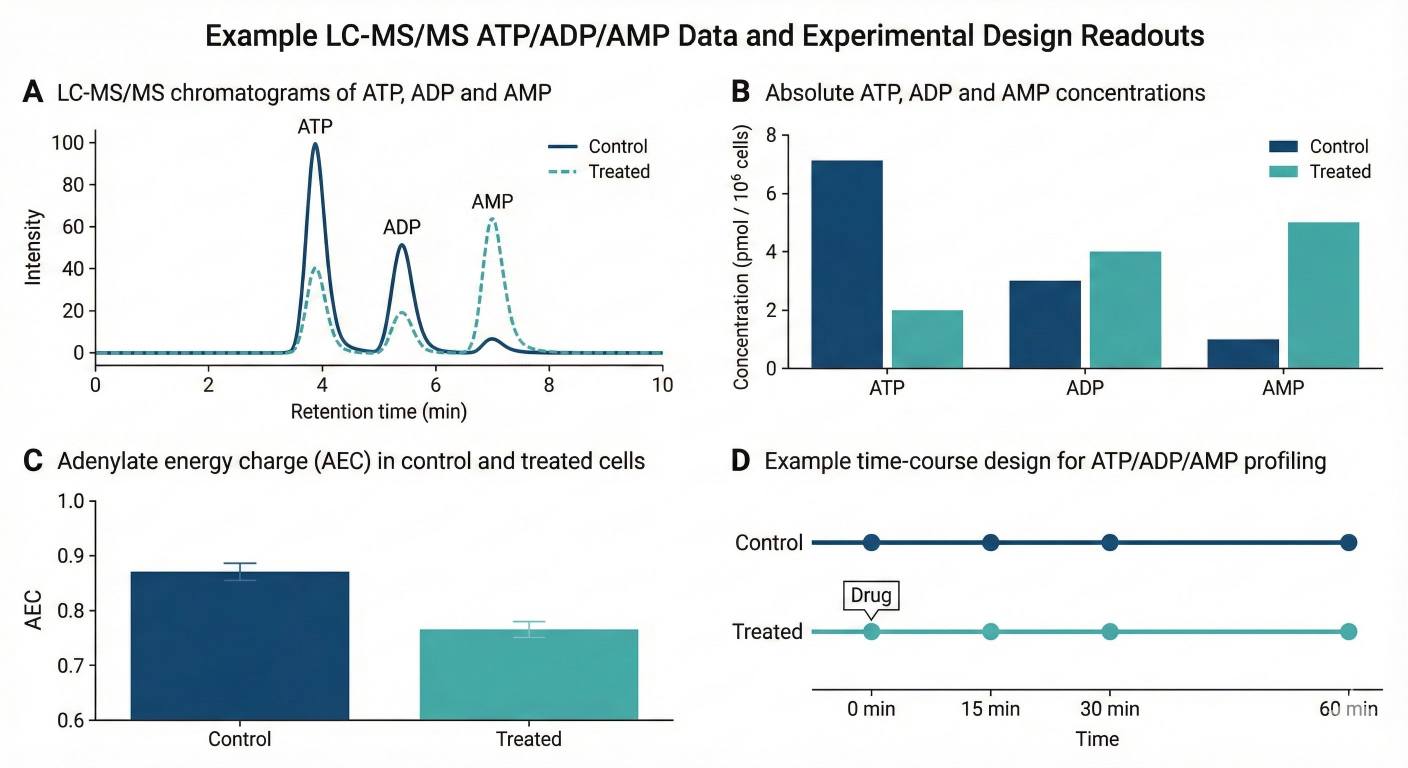 Figure 1. LC-MS/MS–based ATP/ADP/AMP data: chromatogram, concentration profiles, AEC comparison, and time-course design.
If you are still evaluating whether to move beyond kit-based ATP assays, this article can be read alongside a companion piece on transitioning from ATP kits to LC-MS/MS ATP/ADP/AMP analysis.
Experimental Design: Defining What You Really Need to Measure
Good experimental design ensures that the ATP/ADP/AMP data you generate is reliable and meaningful. In this section, we'll break down the key decisions that should guide your design.
Defining ATP/ADP/AMP and AEC Endpoints
Clearly defining your experimental endpoints will guide assay selection and sample preparation. Decide what you need to measure and why:
| Endpoint | Definition | Recommended Assay |
|---|---|---|
| ATP only | Total ATP concentration (pmol/mg protein or pmol/10⁶ cells) | ATP kits or LC-MS/MS |
| ATP + ADP + AMP | Quantification of all three nucleotides | LC-MS/MS |
| Adenylate Energy Charge (AEC) | Ratio of ATP, ADP, and AMP, representing cellular energy status | LC-MS/MS |
| Extended Panel | Includes ATP/ADP/AMP, NADH, glycolytic intermediates, TCA cycle | LC-MS/MS |
Decision Points
- AEC calculation requires reliable measurement of ATP, ADP, and AMP. This is most efficiently done using LC-MS/MS.
- If you're only measuring ATP or need a quick screening assay, ATP kits are cost-effective but limited to trend detection.
- For extended metabolic profiling (e.g., ATP/ADP/AMP plus glycolytic intermediates or NADH/NAD+), LC-MS/MS allows for a more comprehensive view of bioenergetic pathways.
Selecting Time Points and Kinetics
ATP levels can change rapidly in response to stimuli, so timing is critical:
| Response Type | Time Frame | Recommended Approach |
|---|---|---|
| Acute responses | Minutes to hours | Short time-course (0, 5, 15, 30 min) |
| Chronic effects | Hours to days | Longer time-courses (6, 12, 24 h) |
Key Considerations
- Acute responses: Treatments like hypoxia, drug exposure, or signaling pathways often alter ATP/ADP/AMP levels rapidly (within minutes to hours). Pilot time-course experiments can help pinpoint the best sampling windows.
- Chronic treatments: For conditions like metabolic adaptation or differentiation, you'll need to sample at multiple time points over several hours or days to detect meaningful changes.
Planning Biological and Technical Replicates
Reproducibility is a cornerstone of experimental integrity. The number of replicates will depend on your study design:
| Replicate Type | Recommended Count | Purpose |
|---|---|---|
| Biological replicates | 3–6 per condition | Captures biological variability |
| Technical replicates | 1–2 per sample (optional) | Assesses intra-assay variability |
Randomization and Blocking
- Randomize the order of sample extraction and LC-MS/MS runs to avoid batch effects.
- Block your samples if they are expected to have high variability (e.g., by experimental condition or sample source).
Choosing a Normalization Strategy
Normalization ensures that differences in ATP/ADP/AMP concentrations are due to biological effects, not sample handling. Common strategies include:
| Normalization Factor | Usage | Considerations |
|---|---|---|
| Per 10⁶ cells | Common for cell cultures | Consistent cell counts necessary |
| Per mg protein | Common for tissue samples | Ideal for studies where protein content is stable |
| Per g tissue | Common for animal or plant tissue | Consistent tissue samples are necessary |
Tip: If treatment affects cell size or protein content, use cell count or DNA content as an alternative normalization method to avoid bias.
Sample Preparation: Preventing ATP Degradation
Once you've designed your experiment, the next step is to ensure that ATP, ADP, and AMP are stable and measurable after sample collection. Here's how to handle samples properly to prevent degradation.
Core Principles to Protect ATP/ADP/AMP
Regardless of sample type, there are core principles to follow:
| Principle | Action | Purpose |
|---|---|---|
| Rapid quenching | Use ice-cold organic solvents or acids (e.g., methanol, acetonitrile, perchloric acid) | Stops metabolic activity quickly |
| Low temperature | Pre-cool solvents, tubes, and centrifuges; work on ice | Slows ATP degradation and enzymatic activity |
| Minimal freeze-thaw cycles | Aliquot samples for single-use storage | Prevents ATP degradation and metabolite loss |
| Documentation | Record exact time of quenching and sample conditions | Ensures reproducibility and data accuracy |
By adhering to these basic principles, you can preserve the integrity of your samples from collection to analysis.
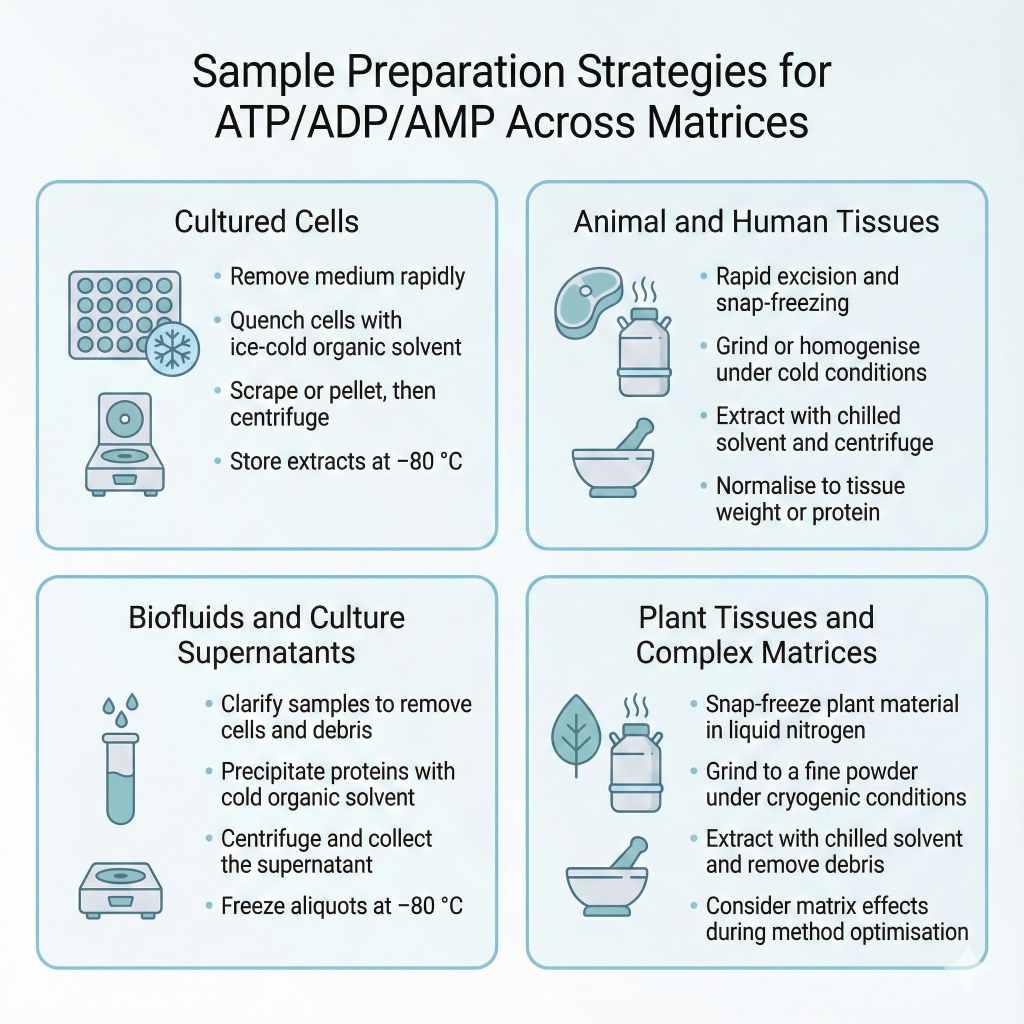 Figure 2. Sample preparation strategies for ATP/ADP/AMP analysis in cells, tissues, biofluids, and plants.
Cultured Cells: Quenching and Extraction
For cultured cells, the goal is to rapidly stop metabolism and extract metabolites efficiently.
Adherent Cells:
A. Prepare ahead: Pre-cool solvents and buffers on dry ice.
B. Remove medium quickly, then rinse with ice-cold PBS if needed.
C. Add pre-chilled extraction solvent (e.g., 80% methanol) directly to cells.
D. Scrape cells and transfer them to pre-chilled tubes.
E. Centrifuge at high speed (10–15 min at 4°C) to collect the supernatant.
F. Store supernatant at −80°C for LC-MS/MS analysis.
Suspension Cells:
A. Pellet cells quickly by centrifugation.
B. Resuspend cells in ice-cold extraction solvent.
C. Centrifuge to collect supernatant, then store as above.
Animal and Human Tissues: Fast Collection and Freezing
For animal and human tissues, fast excision and immediate freezing are crucial to preserve metabolic activity.
Tissue Collection:
A. Harvest tissue rapidly and immediately immerse in liquid nitrogen for snap-freezing.
B. Use pre-chilled equipment for homogenization (e.g., liquid nitrogen, cryo-grinding).
C. Store tissue at −80°C for long-term storage.
Tissue Homogenization:
A. Cryo-grind tissues with liquid nitrogen or use a pre-chilled homogenizer.
B. Add cold solvent (e.g., methanol or acetonitrile) and homogenize under cold conditions.
C. Centrifuge to remove debris, collect supernatant, and store at −80°C.
Biofluids and Culture Supernatants: Handling and Stabilizing
Biofluids and culture supernatants require specific handling to preserve ATP/ADP/AMP levels.
Plasma, Serum, and Other Fluids:
A. Use appropriate anticoagulants (e.g., EDTA for plasma).
B. Process promptly to avoid clotting and degradation.
C. Protein precipitation: Mix biofluid with 3–4 volumes of ice-cold organic solvent (e.g., methanol or acetonitrile).
D. Centrifuge and collect the supernatant for analysis.
E. Store at −80°C until ready for LC-MS/MS analysis.
Culture Supernatants:
A. Centrifuge to remove cells and debris.
B. Protein precipitation: Apply the same procedure as for biofluids.
C. Store at −80°C for analysis.
Plant Tissues and Complex Matrices: Special Considerations
Plant tissues and pigmented samples (e.g., leaves, roots) can interfere with optical assays but can be handled effectively with LC-MS/MS.
Collection and Freezing:
A. Snap-freeze plant tissues in liquid nitrogen immediately after harvest.
B. Grind to powder under cryogenic conditions for effective extraction.
Extraction:
A. Add cold extraction solvent (methanol or acetonitrile) to the powder.
B. Centrifuge to remove debris and retain the supernatant for analysis.
C. Store at −80°C.
Storage, Labelling, and Shipping: Essential Logistics
Proper storage and shipping are essential for ensuring that your samples retain their integrity during transportation and long-term storage.
| Logistics Step | Best Practice | Reason |
|---|---|---|
| Storage | Store extracts at −80°C | Prevents degradation and maintains metabolite stability |
| Labelling | Clearly label each sample with ID, condition, and time point | Ensures accurate tracking and data interpretation |
| Shipping | Ship on dry ice with sufficient coolant for the entire transit | Ensures that samples remain frozen until they reach the lab |
Quality Control in ATP/ADP/AMP Targeted Metabolomics
In targeted metabolomics, quality control (QC) is crucial to ensure the accuracy, reliability, and reproducibility of your data. High-quality data are essential for proper biological interpretation, especially when measuring bioenergetic metrics like ATP, ADP, AMP, and AEC.
Internal Standards
Using internal standards helps compensate for variations during sample preparation and analysis, ensuring more accurate quantification. These standards should be stable isotopically labeled nucleotides or structurally similar compounds.
| Internal Standard Type | Use Case | Purpose |
|---|---|---|
| Isotopically labeled ATP, ADP, AMP | Quantification of adenylates | Corrects for extraction efficiency, ion suppression, and sample loss |
| Analogous nucleotides (e.g., ATP analogs) | For samples where isotopically labeled standards are unavailable | Provides a close surrogate for quantification in absence of labeled standards |
Internal standards are used to correct for experimental errors (e.g., sample loss, ion suppression, matrix effects) that can skew metabolite measurements. They are added to the samples at the time of extraction and used to calibrate the data during analysis.
Calibration Curves and QC Samples
Calibration curves are essential for establishing accurate concentration measurements, especially when performing absolute quantification.
| QC Element | Purpose | Best Practice |
|---|---|---|
| Calibration Curves | To generate a linear relationship between instrument response and known concentrations of ATP/ADP/AMP | Use multi-point curves covering the expected sample concentration range (e.g., low nM to high µM) |
| QC Samples | To monitor run-to-run variability and instrument stability | Use pooled samples (mixed biological replicates) and run periodically throughout the analysis |
QC pools are composed of mixed biological samples to assess intra- and inter-day variability. They are run throughout the analysis to monitor performance and ensure consistency.
Acceptance Criteria and Data Review
Once the data is collected, review it using the following criteria:
| Criteria | Recommended Range | Purpose |
|---|---|---|
| Linearity (R² value) | R² > 0.99 for calibration curves | Ensures accurate quantification across the sample's concentration range |
| Precision (RSD%) | < 15% for intra-day and inter-day variance | Indicates consistency of measurements within and across runs |
| Accuracy | Recovery of known standards within ±10% | Verifies the method's reliability in accurately measuring ATP/ADP/AMP |
| Signal-to-Noise Ratio (S/N) | > 10:1 for ATP, ADP, AMP peaks | Ensures sufficient signal for quantification |
These criteria ensure that the method performs well and the results are robust and reproducible.
When to Extend Beyond ATP/ADP/AMP
In many projects, ATP/ADP/AMP measurements are just the beginning. To gain a more comprehensive understanding of cellular bioenergetics, it is often beneficial to expand the analysis to additional metabolites involved in energy metabolism or purine metabolism.
Extending to Energy Metabolism Panels
Energy metabolism panels can include additional metabolites from central metabolic pathways such as glycolysis, oxidative phosphorylation, and the TCA cycle .
| Extended Panel | Additional Metabolites | Scientific Relevance |
|---|---|---|
| ATP/ADP/AMP + NAD/NADH | NAD⁺, NADH, NADPH, NADP⁺ | Provides insights into redox balance and oxidative stress |
| ATP/ADP/AMP + TCA Intermediates | Citrate, α-KG, Succinate, Fumarate | Helps in understanding mitochondrial function and metabolic shifts |
| ATP/ADP/AMP + Acyl-CoAs | Acetyl-CoA, Malonyl-CoA, Long-chain Acyl-CoAs | Relevant in lipid metabolism and energy storage |
Use Cases for Energy Metabolism Panels
- Cancer: Monitoring metabolic reprogramming (e.g., Warburg effect).
- Immunology: Understanding immune cell metabolism under different activation states.
- Toxicology: Assessing mitochondrial dysfunction or bioenergetic failure due to drug treatments.
Expanding to Purine and Nucleotide Metabolism Panels
In addition to ATP, ADP, and AMP, several other nucleotides and metabolites in the purine metabolism pathway can provide more context for understanding diseases like cancer, metabolic disorders, or immune dysfunction.
| Extended Panel | Additional Metabolites | Scientific Relevance |
|---|---|---|
| IMP, GMP, XMP | Inosine monophosphate, Guanosine monophosphate, Xanthosine monophosphate | Provides insight into purine metabolism, critical in inflammation, cancer, and metabolism |
| Uric Acid | Waste product of purine degradation | Can be a marker of metabolic diseases like gout or kidney dysfunction |
When to Expand
- When ATP/ADP/AMP alone doesn't provide enough information for your biological hypothesis.
- In studies where purine/nucleotide metabolism plays a crucial role, such as cancer metabolism or immune cell activation.
Working with a Targeted Metabolomics Partner
For many academic, pharmaceutical, and translational research teams, outsourcing ATP/ADP/AMP quantification to a metabolomics CRO can be more efficient than developing in-house LC-MS/MS methods. At Creative Proteomics, we offer end-to-end support to help you generate high-quality, biologically meaningful data.
| Step | What We Do | Why It Matters |
|---|---|---|
| Initial Consultation | Define your research goals, sample types, and panel needs | Ensure the study is aligned with your biological questions |
| Sample Submission | Guide you through preparation and shipping | Maintain sample integrity and consistency |
| LC-MS/MS Analysis & Report | Deliver absolute concentrations and QC metrics | Provide reproducible, publication-ready results |
| Data Interpretation (Optional) | Offer expert insights and optional extended analyses | Help you draw clear biological conclusions from your results |
Whether you're conducting ATP/ADP/AMP profiling alone or integrating it into a broader metabolomics strategy, our team ensures that each step—from assay design to final data—is optimized for scientific rigor and efficiency.
Frequently Asked Questions (FAQs)
What is the minimum sample amount required for ATP/ADP/AMP quantification?
Robust quantification of lower-abundance metabolites like AMP generally requires 10–50 mg of wet tissue or 1–5 million cultured cells per replicate to ensure signal intensities exceed the limit of quantification. However, protocols can often be optimized for limited-volume biofluids or rare specimens provided immediate metabolic quenching was performed during collection.
Can LC-MS/MS distinguish between intracellular and extracellular ATP?
Distinction depends entirely on sample preparation rather than the instrument. For intracellular ATP, supernatants must be removed and cells washed prior to lysis; for extracellular ATP, the culture medium is analyzed directly. We recommend consulting our team to design a washing protocol that prevents cross-contamination.
Do detergents or high salt concentrations interfere with analysis?
Yes, high concentrations of non-volatile salts (like PBS) and detergents (especially SDS or Triton X-100) cause significant ion suppression in LC-MS/MS. We strongly advise using volatile buffers such as ammonium formate and strictly avoiding strong detergents during lysis to ensure maximum ionization efficiency and sensitivity.
How does shipping stability differ between ATP, ADP, and AMP?
ATP is the least stable and rapidly hydrolyzes into ADP and AMP if enzymes remain active or temperatures rise, which artificially lowers the calculated Adenylate Energy Charge (AEC). Consequently, all samples must be shipped on ample dry ice to remain frozen throughout transit; any thawing typically necessitates rejection to prevent biologically misleading data.
Is it possible to measure GTP or UTP in the same run?
Yes, the chromatographic and extraction conditions for adenylates are chemically compatible with Guanosine (GTP/GDP/GMP) and Uridine (UTP/UDP/UMP) nucleotides. These metabolites can be added to the targeted panel to assess broader nucleic acid metabolism without requiring additional sample aliquots.
What is the lower limit of detection (LLOD) for ATP on your platform?
Our targeted LC-MS/MS platform typically detects ATP, ADP, and AMP in the low nanomolar (nM) range depending on matrix background. This sensitivity exceeds conventional HPLC-UV methods and offers absolute specificity, avoiding the false positives from ATP-mimicking compounds often seen in luminescence assays.
References
- Atkinson, Daniel E. "The energy charge of the adenylate pool as a regulatory parameter. Interaction with feedback modifiers." Biochemistry 7.11 (1968): 4030–4034.
- Fu, Xiaorong, et al. "Targeted determination of tissue energy status by LC-MS/MS." Analytical Chemistry 91.9 (2019): 5881–5887.
- Jayaraj, Richard L., et al. "Development and validation of LC-MS/MS method for quantification of ATP, ADP and AMP in dried blood spot, liver and brain of neonate mice pups." Results in Chemistry 3 (2021): 100172.
- Menegollo, Michela, et al. "Determination of ATP, ADP, and AMP levels by reversed-phase high-performance liquid chromatography in cultured cells." Methods in Molecular Biology 1925 (2019): 223–232.
- Ovens, Ashley J., et al. "Measuring cellular adenine nucleotides by liquid chromatography-coupled mass spectrometry." In: Nutrient Sensing in Eukaryotes. Methods in Molecular Biology (2025): 3–14.

 Contact Us