

ATP/ADP/AMP Energy Metabolism in Disease Models and Drug Mechanism Studies
Submit Your InquiryWhy ATP/ADP/AMP Profiling Remains Central to Disease Models and Drug Mechanism Studies
ATP has been a workhorse readout for decades. ATP luminescence kits are everywhere in cell biology, pharmacology and toxicology. But in modern projects, researchers rarely stop at the absolute ATP level. What matters more is the energy state of the system and what it says about mechanism.
Across a wide range of models, ATP, ADP and AMP — the adenylate pool — sit at the core of energy metabolism:
- Cancer and EMT: metabolic reprogramming, Warburg effect, shifting reliance between glycolysis and mitochondrial oxidative phosphorylation (OXPHOS).
- Immune cell metabolism: activation, exhaustion and cytokine production are tightly linked to ATP turnover and redox status.
- Hypoxia and ischemia–reperfusion (I/R): abrupt disruption and restoration of oxygen supply reshape ATP/ADP/AMP and the broader metabolic network.
- Drug-induced mitochondrial toxicity: early ATP drops are often among the first functional signals that something is wrong at the mitochondrial level.
- Metabolic and translational disease models: adenylate profiles can bridge in vitro, ex vivo and in vivo data, and help assess energetic reserve.
In real projects, teams are asking questions such as:
- How do we actually use ATP/ADP/AMP in a specific disease model or drug screen?
- When is ATP alone enough, and when should we extend to ADP, AMP, adenylate energy charge (AEC) or even broader metabolite panels?
This article focuses on those practical questions: how research groups use adenylate and energy metabolism readouts in disease models and drug mechanism studies, and how to right-size the depth of analysis for different stages of a project.
ATP/ADP/AMP Readout Types
In practice, you'll see several "tiers" of energy readouts:
ATP-only
- Most commonly kit-based luminescent or colorimetric assays.
- Widely used in high-throughput screening, viability assays and simple functional readouts.
ATP + ADP (ATP/ADP ratio)
- Better sensitivity to energy balance changes than ATP alone.
- Frequently used in mitochondrial function and metabolic reprogramming studies.
ATP + ADP + AMP (full adenylate pool)
- Enables calculation of AEC and a more nuanced view of stress severity and reversibility.
- Typically measured by LC–MS/MS targeted metabolomics.
AEC (adenylate energy charge)
- A single index summarising ATP, ADP and AMP:
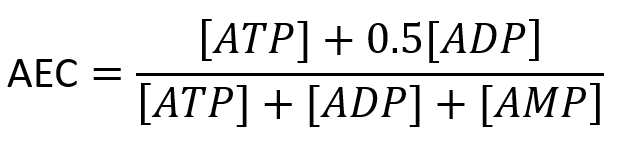
- Often used in hypoxia, I/R and toxicity models as a "global energetic status" marker.
Extended energy/purine panels
- ATP/ADP/AMP plus TCA cycle intermediates, lactate/pyruvate, NAD⁺/NADH, acylcarnitines and purine degradation products.
- Used when the key question is not only if energy metabolism changes, but how and why.
If you need a deeper comparison between ATP kits and LC–MS/MS-based adenylate analysis, you can refer to "ATP/ADP/AMP Analysis: When LC-MS/MS Is a Better Choice Than ATP Kits".
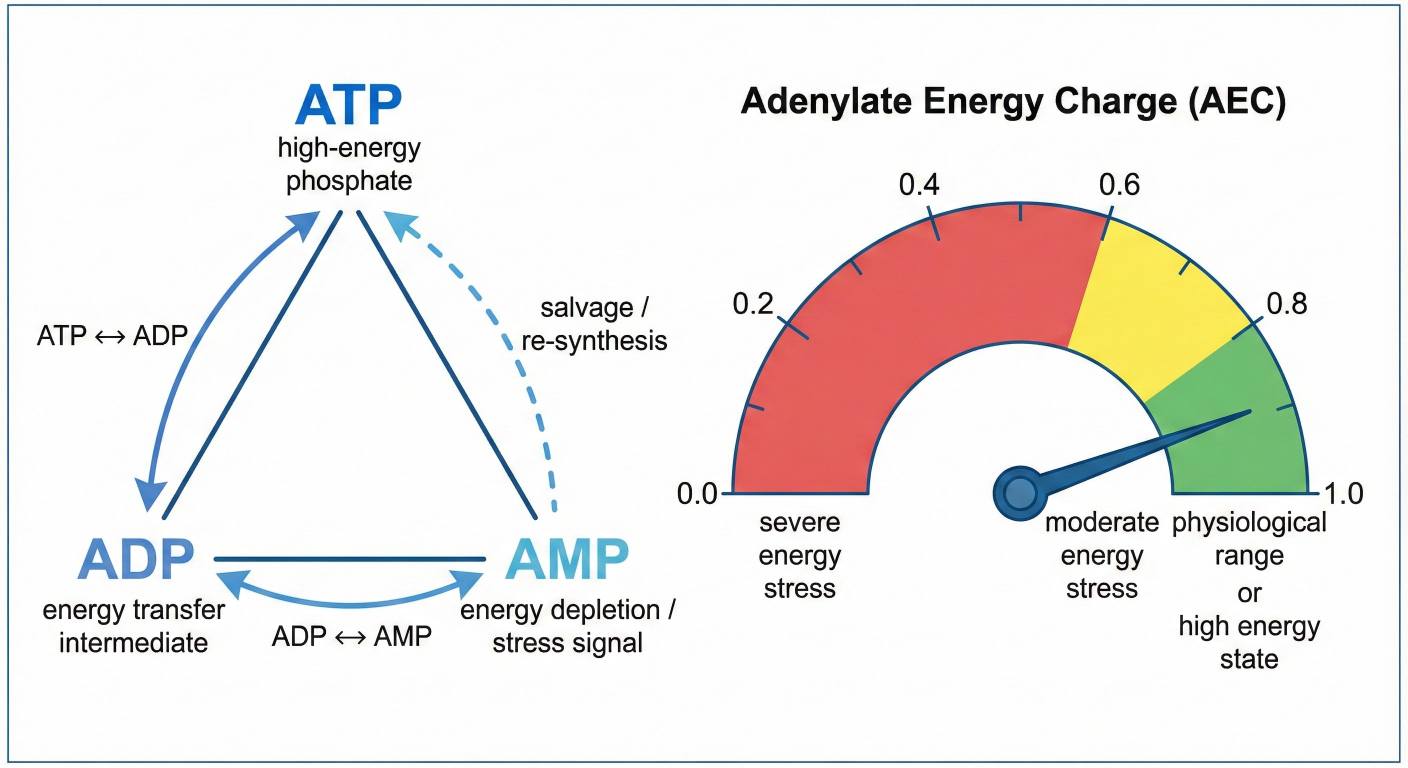 Figure 1. Conceptual overview of the adenylate pool and AEC.
ATP/ADP/AMP in Tumor Metabolism and Epithelial–Mesenchymal Transition (EMT)
Metabolic reprogramming in cancer and EMT models
Cancer cells and EMT models are classic examples of metabolic reprogramming:
- Enhanced glycolysis (Warburg effect) even in the presence of oxygen.
- Rewired mitochondrial function, with shifts in TCA flux, anaplerosis and OXPHOS contribution.
- A continuous balancing act between energy supply and biosynthetic demand for growth, proliferation and invasion.
In these contexts, total ATP may not change dramatically. Cells can maintain ATP within a narrow range by compensating through glycolysis or mitochondria. However, the distribution across ATP/ADP/AMP and the resulting AEC often shows subtle but informative shifts that reflect:
- Energy stress vs sufficiency
- Shifts in ATP production routes
- The capacity to buffer increased demand
How ATP/ADP/AMP readouts are used in tumor studies
Conceptually, adenylate readouts in tumor metabolism are often used to:
Monitor the impact of drugs on energy balance
Chemotherapy agents, kinase inhibitors, metabolic drugs and immune-modulating therapies can all alter ATP turnover. Changes in ATP/ADP ratio and AEC can reveal whether a compound primarily triggers energy stress, or affects viability through other mechanisms.
Characterise the action of metabolic inhibitors
Glycolysis inhibitors vs OXPHOS inhibitors often yield distinct adenylate signatures. Combining ATP/ADP/AMP + lactate + TCA intermediates + NAD(H) helps differentiate:
- "Pure energy collapse"
- Versus "pathway switching" (e.g. increased glycolytic compensation when mitochondria are partially inhibited).
Improve mechanism-of-action interpretation
A simple ATP decrease is hard to interpret: is it apoptosis, necrosis or adaptive reprogramming? By adding ADP, AMP and an extended panel, researchers can distinguish between early energy stress, irreversible mitochondrial damage and adaptive re-routing of metabolism.
Example design elements in cancer metabolism studies
Typical elements in cancer metabolism and EMT projects include:
- Multiple time points
- Early time points (e.g. 2–6 h) to capture primary metabolic responses.
- Later time points (24–72 h) to link energetics to cell fate decisions.
- Dose–response designs
- Several concentrations to separate subtle sublethal effects from overt cytotoxicity.
- Adenylates can help identify the transition from adaptive stress to collapse.
- Combined readouts
- ATP/ADP/AMP, lactate, selected TCA intermediates and NAD⁺/NADH ratios.
- This combination provides a focused yet mechanistically rich "energy snapshot".
In early-phase experiments, many groups start with ATP-only or ATP/ADP ratios to pick up trends across many conditions. For mechanistic follow-up and manuscript figures, LC–MS/MS-based ATP/ADP/AMP plus extended energy metabolism panels are often introduced for higher resolution.
For more detailed discussion of assay choice, experimental design and sample handling in adenylate-focused work, see "ATP/ADP/AMP Targeted Metabolomics: Assay Choice, Experimental Design and Sample Preparation".
When projects move toward deeper pathway analysis, our energy metabolism targeted metabolomics panel can be integrated alongside ATP/ADP/AMP profiling.
ATP/ADP/AMP and AEC in Hypoxia and Ischemia–Reperfusion Models
Why adenylates are informative in hypoxia/I–R
In organs such as heart, brain and kidney, hypoxia and ischemia–reperfusion induce dramatic fluctuations in energy supply:
- During ischemia, oxygen delivery drops and ATP synthesis via OXPHOS is strongly compromised.
- Upon reperfusion, oxygen is restored, but mitochondrial function may be partly damaged or undergo transient dysfunction.
ATP/ADP/AMP and AEC are used to:
- Quantify the degree of energy collapse during ischemia.
- Assess recovery of energetic status during reperfusion.
- Compare different interventions — drugs, devices or surgical strategies — in terms of their ability to preserve or restore energy charge.
Typical readouts and time-course setups
Common observations in hypoxia and I/R models include:
- Sharp ATP decrease during ischemia
- Marked AMP accumulation, reflecting ATP breakdown and stress signalling
- AEC dropping from ~0.8–0.9 to <0.6, then partially or fully recovering during reperfusion, depending on the severity of injury and the protective intervention.
Typical time-course designs capture:
- Pre-ischemia baseline
- Several ischemia time points to follow the pace of ATP depletion and AMP rise
- Early reperfusion (minutes to 1–2 hours) when energy and redox parameters are highly dynamic
- Late reperfusion (e.g. 24 h) to assess sustained recovery vs persistent dysfunction
Both bulk tissue and regional sampling (e.g. subendocardial vs subepicardial layers) can be used to probe spatial differences in injury and recovery.
Integrating adenylate data with injury markers
To get a full picture, adenylate readouts are often analysed together with:
- Lactate and pH: reflect anaerobic glycolysis and acidosis.
- Oxidative stress markers, such as GSH/GSSG ratio or other redox couples.
- Injury markers, such as LDH release or tissue-specific damage markers.
This helps distinguish:
- "Functional protection": preserved contractile or neurological function, even if injury markers show some damage.
- "Metabolic protection": better maintenance or faster restoration of ATP/ADP/AMP and AEC, even when structural damage is present.
In these models, adenylate panels are often combined with targeted metabolomics to characterise both energetic status and metabolic compensation following hypoxic or ischemic insults.
Mitochondrial Toxicity Screening Using ATP Depletion, ADP/ATP Ratios and ATP/ADP/AMP Panels
Mitochondrial liabilities are a major concern across multiple therapeutic classes, including antiviral agents, oncology compounds, and neuroactive drugs. These toxicities may not manifest in standard cytotoxicity assays, yet contribute to serious clinical outcomes such as delayed organ injury, fatigue syndromes, or chronic dysfunction.
Functional readouts centered on ATP depletion remain a widely adopted early marker, as impaired energy production is often among the first signs of mitochondrial stress.
Readout Strategy in Mitochondrial Toxicity Projects
While ATP-only assays are frequently used for high-throughput screening, mitochondrial toxicity projects benefit from multi-layered readouts that help distinguish:
- Early, reversible mitochondrial stress
- Sustained dysfunction leading to energetic collapse
- Subtle metabolic rewiring that may affect long-term safety
Typical readout configurations include:
| Readout Type | Role |
|---|---|
| ATP | Primary viability/energy marker (screening level) |
| ADP/ATP ratio | Early indication of OXPHOS stress |
| AMP & AEC | Severity and reversibility of energetic disturbance |
| NAD⁺/NADH, TCA, acylcarnitines | Mechanistic insight into mitochondrial function and compensation |
These layers are selected based on project depth and endpoint goals, rather than used universally.
Experimental Design Considerations
Mitochondrial toxicity studies often share several design principles:
Dose and Time Point Selection
- 6–8 doses spanning sub-therapeutic to supraphysiological concentrations
- Time points typically include:
- Early (2–4 h): detect primary mitochondrial effects
- Intermediate (6–8 h): capture transient adaptation
- Late (24–48 h): assess sustained impact and cell fate
Cell Model Choices
- Hepatocytes (primary or HepaRG) for liver-specific risk
- iPSC-derived cardiomyocytes for cardiac safety
- Other organ-relevant iPSC models (e.g. renal, neuronal) depending on the liability in question
Readout Combinations
- Core: ATP, ADP/ATP, AEC (often via LC–MS/MS)
- Optional panels:
- TCA intermediates (mitochondrial substrate flux)
- NAD⁺/NADH (redox balance)
- Acylcarnitines (fatty acid oxidation)
- Orthogonal platforms for ROS or mitochondrial membrane potential (Δψm)
Signal Patterns and Interpretation Examples
Interpreting ATP/ADP/AMP data in mitochondrial toxicity requires looking at dose–response and time-course trajectories, often in conjunction with secondary markers.
| Scenario | Typical Profile | Interpretation |
|---|---|---|
| Mild reversible stress | ↓ATP, ↑ADP/ATP, AEC ~0.8 | Early mitochondrial impairment; glycolysis or other pathways may compensate |
| Sustained dysfunction | ↓↓↓ATP, ↑↑AMP, AEC < 0.6 | Irreversible energy collapse, likely to progress to cell death |
| Subtle mitochondrial rewiring | ATP stable, but NADH↑, TCA pattern altered, acylcarnitines shifted | Chronic compensation or pathway shift without immediate collapse |
By combining these quantitative profiles with morphological, redox and viability data, teams can classify compounds with greater resolution — not just as "toxic or not," but how and when toxicity emerges, and whether it is reversible.
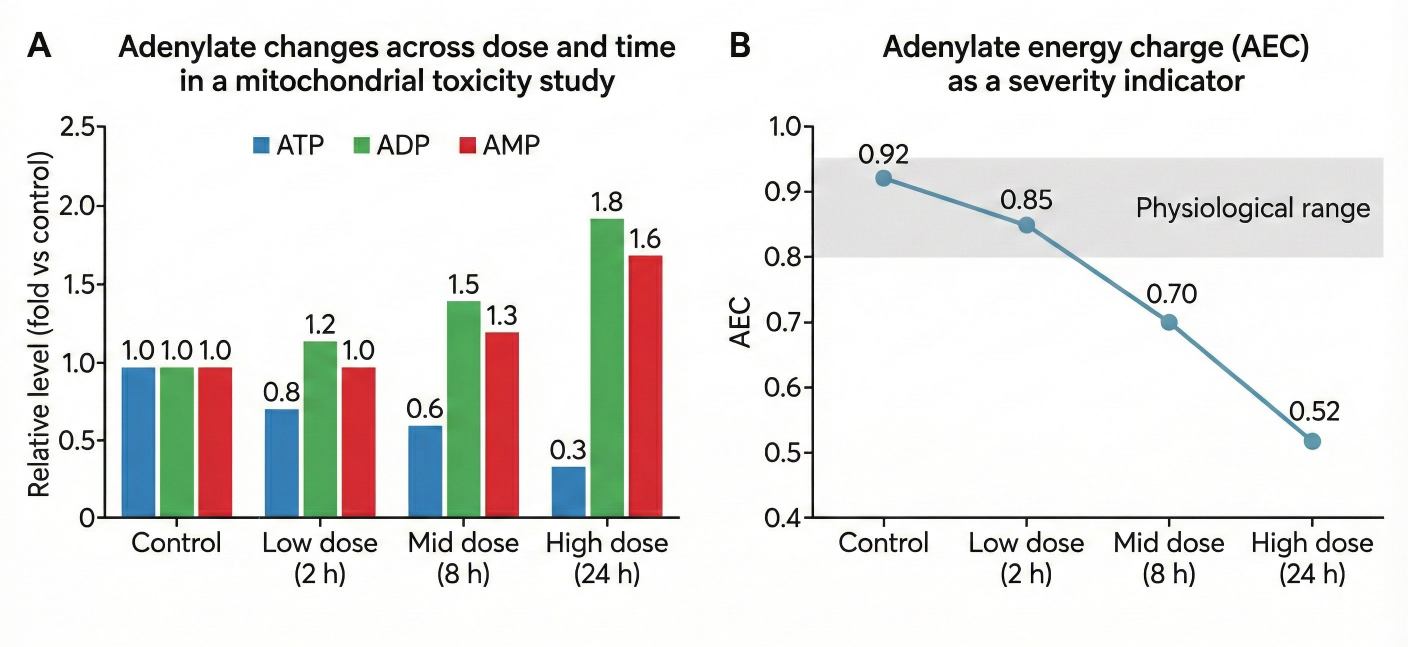 Figure 2. Mitochondrial toxicity readout patterns based on adenylate levels and AEC. Panel A shows changes in ATP, ADP, and AMP across increasing dose and exposure time. Panel B shows a corresponding decline in AEC, indicating progressive energy stress.
Using AEC and Extended Energy Panels to Characterise Sublethal Toxicity
Why Sublethal Changes Matter
Many compounds disrupt cellular energy metabolism at concentrations that do not immediately trigger cell death. These sublethal effects can still carry long-term toxicological implications by:
- Reducing functional reserve (e.g., cardiomyocyte contractility under stress)
- Interacting with co-morbidities or co-medications
- Contributing to chronic toxicities that are not captured by short-term, high-dose viability assays
As toxicology increasingly shifts toward mechanistic and functional endpoints, capturing these subtle energy shifts is critical for understanding safety margins and long-term risk.
AEC as a Summary Index in Sublethal Toxicity
The adenylate energy charge (AEC) is a highly informative marker in sublethal settings because it reflects the distribution across ATP, ADP and AMP, not just absolute ATP levels. AEC is particularly valuable because:
- It is sensitive to mild or moderate energy stress
- It reveals when cells are compensating to maintain ATP at the cost of rising ADP and AMP
For example:
- Total ATP may appear stable compared to controls
- However, a drop in AEC from ~0.90 to ~0.78 may indicate that the system is under energetic strain
- This suggests partial compensation, which could become unsustainable under prolonged exposure or additional challenges
Thus, AEC acts as an early warning indicator of metabolic load and potential vulnerability — often preceding overt signs of damage.
Combining AEC with Broader Metabolomics
In sublethal toxicity studies, AEC alone provides a directional signal, but its interpretive power increases when combined with targeted metabolomics panels, including:
- TCA cycle intermediates: reveal bottlenecks or rerouting in central metabolism
- Acylcarnitines: assess fatty acid oxidation and detect incomplete substrate utilization
- NAD⁺/NADH and related redox couples: provide context on mitochondrial respiratory status and redox homeostasis
Together, these readouts help differentiate between:
- Localized ATP stress, where the broader metabolic network remains stable
- Versus widespread reprogramming or mitochondrial dysregulation, which may indicate deeper and longer-term liabilities
In this context, AEC acts as a gateway marker, triggering broader mechanistic profiling when significant shifts are observed.
For a practical, pattern-focused discussion of ATP/ADP/AMP and cellular energy readouts, you can refer to "Practical Guide to ATP/ADP/AMP and Cellular Energy Readouts".
When projects require sublethal toxicity characterisation, our nucleotide and purine metabolism panel and energy metabolism panels can be combined to give a more comprehensive picture of energetic and metabolic resilience.
ATP/ADP/AMP in Translational and Preclinical Studies
Bridging in vitro, ex vivo and in vivo
One advantage of adenylate profiling is that similar readouts can be applied across multiple experimental layers:
- In vitro cell lines and iPSC-derived models
- Ex vivo tissue slices or perfused organs
- In vivo animal models and preclinical studies
Using ATP/ADP/AMP (and AEC where applicable) consistently across these systems helps:
- Align mechanistic findings with functional outcomes.
- Trace how a compound's mitochondrial or metabolic effects play out from controlled cellular models to complex in vivo environments.
- Support translational hypotheses about disease mechanisms and drug action.
Multi-center or longitudinal designs
Because adenylate measurements can be quantitative and standardised, they are well suited for:
- Multi-center preclinical collaborations, where harmonised readouts support cross-lab comparison and meta-analysis.
- Longitudinal studies, where consistent ATP/ADP/AMP and AEC measurements across batches and time points help separate biological changes from technical variation.
When combined with robust QC and appropriate normalisation, adenylate profiles can contribute to comparability and reproducibility in complex translational programmes.
Choosing the Right Readout Depth for ATP/ADP/AMP and Energy Metabolism
Selecting the appropriate readout depth depends on your research question, project stage, and the level of mechanistic detail required.
The table below provides a quick overview of four typical readout levels—ranging from ATP-only to full energy and purine metabolism panels—and when each is most useful:
| Readout Depth | When to Use | Key Advantages | Limitations |
|---|---|---|---|
| ATP-only | High-throughput screens; early-stage viability ranking | Simple, fast, scalable; widely available | Cannot reveal mechanisms; low sensitivity to mild stress |
| ATP + ADP (ATP/ADP ratio) | Mitochondrial function, metabolic reprogramming, moderate energy shifts | More sensitive than ATP alone; maintains good throughput | Limited insight into stress reversibility or severity |
| ATP + ADP + AMP (+AEC) | Hypoxia/I–R, mitochondrial toxicity, stress-to-death decision points | Captures energy charge, severity, and reversibility; supports mechanistic insight | Requires LC–MS/MS; more complex analysis |
| Extended panels (e.g., TCA, NAD(H), acylcarnitines, purines) | Cancer metabolism, immunometabolism, biomarker discovery, translational studies | Explains why ATP changes; pathway-level interpretation | Higher cost and complexity; lower throughput |
Below, we provide more detail on each level and its common use cases.
When ATP-Only Is Sufficient
ATP-only readouts are often enough for:
- Primary or pre-screens: E.g., high-throughput ranking of compound impact on viability or cellular energy
- Simple directional questions: E.g., "Does this compound strongly reduce ATP under these test conditions?"
Caveats:
- Not suitable for mechanism-of-action studies
- Rarely sufficient as standalone data in high-impact publications or regulatory dossiers
ATP-only is best viewed as a first-pass filter, not a mechanistic endpoint.
When You Should Include ADP (ATP/ADP Ratio)
Adding ADP to calculate the ATP/ADP ratio provides higher sensitivity to subtle shifts in energy status, without greatly increasing assay complexity.
This level is ideal when:
- Studying mitochondrial function, metabolic reprogramming, or immune cell activation
- Detecting moderate stress that doesn't lead to full ATP collapse
- Running multi-timepoint or dose–response experiments needing mid-level resolution
ATP/ADP ratio is a good compromise between throughput and mechanistic richness, and is commonly used in drug–mitochondria interaction studies.
When ATP/ADP/AMP and AEC Are Recommended
Full profiling of the adenylate pool—ATP, ADP and AMP—along with AEC (adenylate energy charge) is recommended for studies that require a more detailed understanding of stress severity, reversibility, or cell fate decisions.
Applicable scenarios include:
- Hypoxia and ischemia–reperfusion (I/R): To grade energy collapse and monitor recovery potential
- Mitochondrial toxicity models: To distinguish early, adaptive energy stress from deep dysfunction
- Stress-to-death transitions: To evaluate whether a cell is on track for apoptosis, necrosis, or adaptation
Key questions supported at this level include:
- How severe is the energy disturbance?
- Is it reversible or progressive?
- Are mitochondria or other pathways primarily involved?
We offer an ATP/ADP/AMP Analysis Service optimized for such studies, with absolute quantification and AEC calculation via LC–MS/MS.
When to Move to Extended Panels (TCA, NAD(H), Purine, etc.)
Extended metabolomics panels are especially important when your goal is to understand why ATP levels change—by exploring upstream pathways and compensatory shifts.
Recommended when:
- Studying cancer metabolism, immunometabolism, or inborn metabolic disorders
- Conducting biomarker discovery or translational mechanism-of-action studies
- Assessing pathway-level effects of drug treatments or genetic interventions
Panels often include:
- TCA cycle intermediates (mitochondrial flux)
- NAD⁺/NADH (redox balance and respiratory capacity)
- Acylcarnitines (fatty acid oxidation, incomplete substrate usage)
- Purine degradation and salvage metabolites
If your key question is why ATP changes—not just whether—then extended panels are strongly recommended.
Integrating ATP/ADP/AMP Readouts into Metabolomics Workflows
Creative Proteomics supports a wide range of project types by embedding ATP/ADP/AMP profiling into targeted metabolomics workflows. Common use cases include:
- Early screens using ATP-only or ATP/ADP ratios
- Mechanistic studies with full adenylate profiling and energy metabolism panels
- Toxicology workflows involving dose–response and time-course designs
We help define models, panels, and depth—from exploratory profiling to high-resolution LC–MS/MS quantification.
What You Receive
Typical outputs include:
- Absolute quantification of ATP, ADP, and AMP
- AEC calculation (if applicable)
- Quality control metrics and method parameters
- Optional expert support for interpreting results or selecting follow-up panels
Need to profile ATP/ADP/AMP in your disease or drug study? Contact us to discuss the right panel configuration and sampling strategy.
References
- Fu, Xiaorong, et al. "Targeted determination of tissue energy status by LC-MS/MS." Analytical Chemistry 91.9 (2019): 5881–5887.
- Jayaraj, Richard L., et al. "Development and validation of LC-MS/MS method for quantification of ATP, ADP and AMP in dried blood spot, liver and brain of neonate mice pups." Results in Chemistry 3 (2021): 100172.
- Bassett, John, et al. "High content imaging of relative ATP levels for mitochondrial toxicity prediction in human induced pluripotent stem cell derived cardiomyocytes." Toxicology 514 (2025): 154088.
- Pucar, Darko, et al. "Adenylate kinase AK1 knockout heart: Energetics and functional performance under ischemia-reperfusion." American Journal of Physiology – Heart and Circulatory Physiology 283.2 (2002): H776–H782.

 Contact Us