Flavonoid Detection Panel — Organized by Subclass
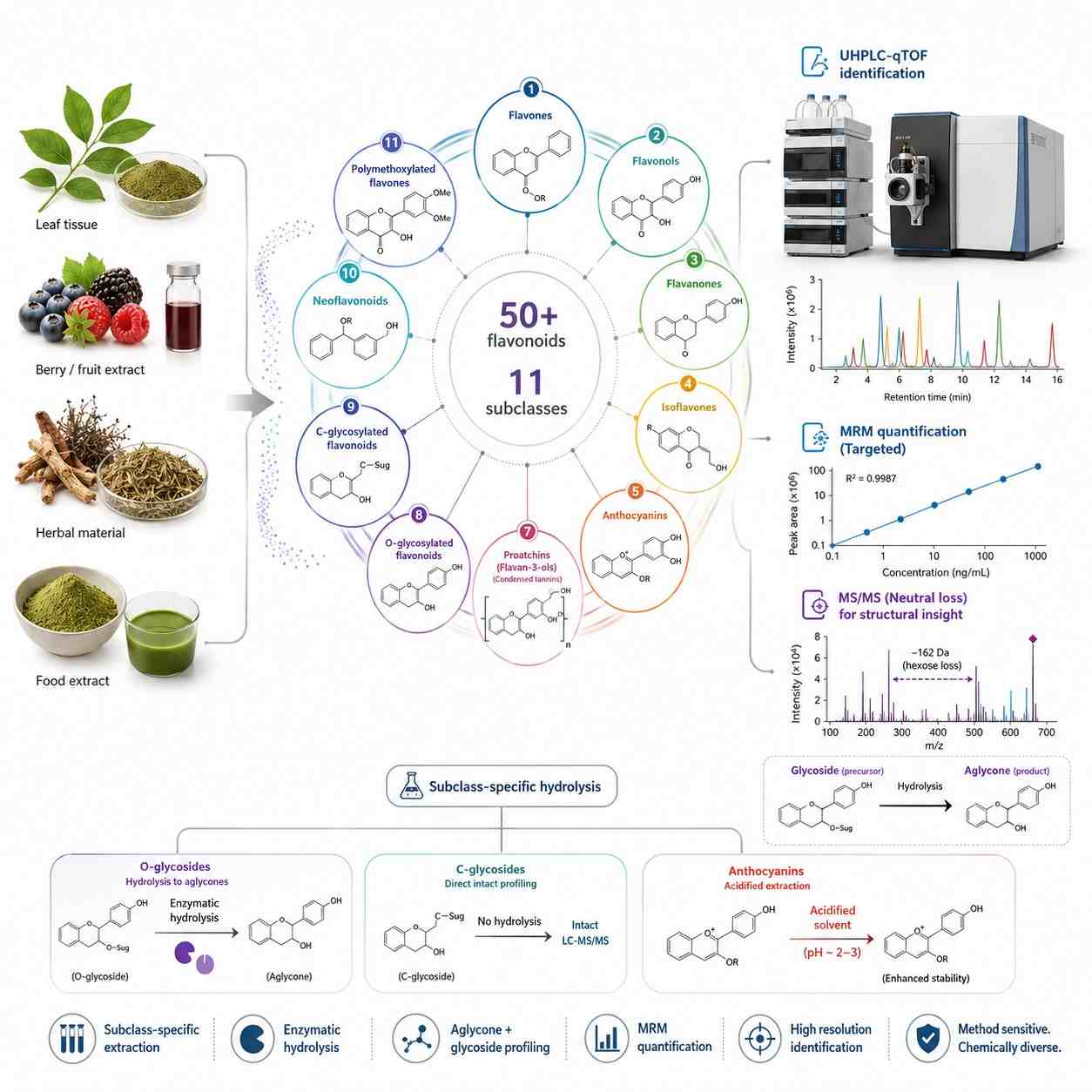
Each flavonoid subclass requires different sample preparation, chromatography, and ionization conditions. Mixing them in one generic method compromises data quality across all subclasses. Our panel runs subclass-specific methods and reports results in a single unified data table. Each subclass links to its dedicated analysis page with full compound lists and method details.
| Subclass |
Analytes |
Key Compounds Covered |
| Flavones |
10+ |
Apigenin, apigenin, luteolin, chrysin, baicalein, baicalin, diosmetin, acacetin. Major aglycones in herbs, vegetables, and propolis. Baicalein/baicalin are the signature flavones of Scutellaria species. |
| Flavonols |
10+ |
Quercetin, kaempferol, myricetin, isorhamnetin, rutin (quercetin-3-O-rutinoside). Most widely distributed flavonoid subclass — quercetin glycosides are the dominant flavonoids in onions, apples, tea, and red wine. |
| Flavanones |
10+ |
Naringenin, hesperetin, eriodictyol, homoeriodictyol. Dominant flavonoids in citrus — naringenin in grapefruit, hesperetin in oranges. Dihydroflavanones are the biosynthetic precursors. |
| Isoflavones |
8+ |
Genistein, daidzein, glycitein, formononetin, biochanin A. Phytoestrogens concentrated in soy and legumes. Require enzymatic hydrolysis to release aglycones from glycoside and malonyl-glycoside conjugates — without this step, genistein and daidzein are underestimated by 30-60%. |
| Anthocyanins |
15+ |
Cyanidin, delphinidin, pelargonidin, peonidin, petunidin, malvidin glycosides. pH-dependent structural interconversion — extraction and chromatography must be performed under acidic conditions (pH < 2) to stabilize the flavylium cation. Quantified as individual glycosides and as aglycone equivalents after acid hydrolysis. |
| Catechins (Flavan-3-ols) |
8+ |
Catechin, epicatechin, epigallocatechin (EGC), epigallocatechin gallate (EGCG), gallocatechin. Dominant polyphenols in tea (Camellia sinensis). EGCG is the most abundant catechin in green tea and the most studied for bioactivity. |
| Proanthocyanidins |
5+ |
Procyanidins B1, B2, B3, C1; prodelphinidins. Oligomeric and polymeric flavan-3-ols in grape seeds, cocoa, cranberry, and pine bark. Quantified by acid-catalyzed depolymerization to anthocyanidins (DMAC or butanol-HCl assay) with individual dimer/trimer profiling by LC-MS/MS. |
| O-Glycosylated Flavonoids |
15+ |
Quercetin-3-O-glucoside, kaempferol-3-O-rutinoside, apigenin-7-O-glucoside. O-glycosides are the predominant storage form of flavonoids in plants. Enzymatic hydrolysis (beta-glucosidase or hesperidinase) releases the aglycone for quantification by MRM. |
| C-Glycosylated Flavonoids |
8+ |
Vitexin, isovitexin, orientin, isoorientin. C-glycosides resist enzymatic and acid hydrolysis — cannot be quantified as aglycones. Require direct quantification of intact glycosides against C-glycoside authentic standards. Common in cereal grains and passionflower. |
| Neoflavonoids |
5+ |
Daidzein-related 4-phenylcoumarins and dalbergiones. Distinct from isoflavones in biosynthetic origin. Found in Dalbergia and Machaerium species. |
| Polymethoxylated Flavones (PMFs) |
5+ |
Nobiletin, tangeretin, sinensetin, heptamethoxyflavone. Highly methoxylated flavones in citrus peel with enhanced bioavailability compared to hydroxylated flavones. GC-MS compatible due to reduced polarity from methoxy substitution. |
Why Flavonoid Hydrolysis Must Be Subclass-Specific
Most flavonoids exist as glycosides — an aglycone core conjugated to one or more sugar molecules. Quantifying intact glycosides directly is impractical: hundreds of possible sugar combinations per aglycone, authentic standards available for only a handful, and MS response factors that shift with the sugar moiety.
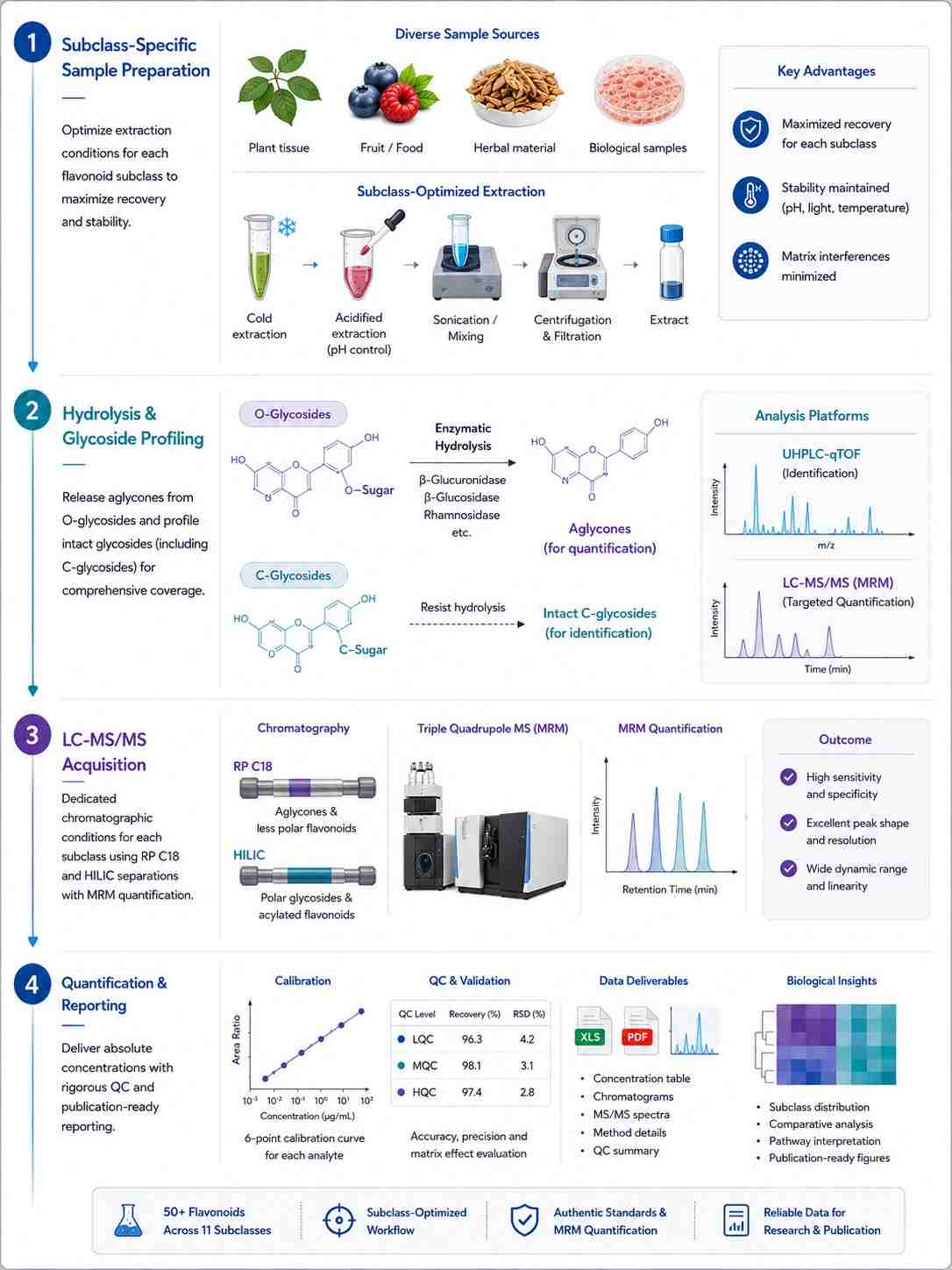
The standard fix — enzymatic or acid hydrolysis to release the aglycone — works for O-glycosides. It fails for C-glycosides (the carbon-carbon bond resists hydrolysis). It underestimates isoflavones (malonyl-glycosides need esterase treatment). It overestimates anthocyanins if pH is not controlled. Each subclass needs its own protocol:
- O-Glycosides — Flavonols, flavones, flavanones: enzymatic hydrolysis with beta-glucosidase or hesperidinase (37 degree C, 2 h) releases aglycones for MRM quantification. Aglycone concentration reported as aglycone equivalents.
- Isoflavone Glycosides — Additional esterase treatment to hydrolyze malonyl- and acetyl-glycoside conjugates. Without this step, genistein and daidzein are underestimated by 30-60% in soy products.
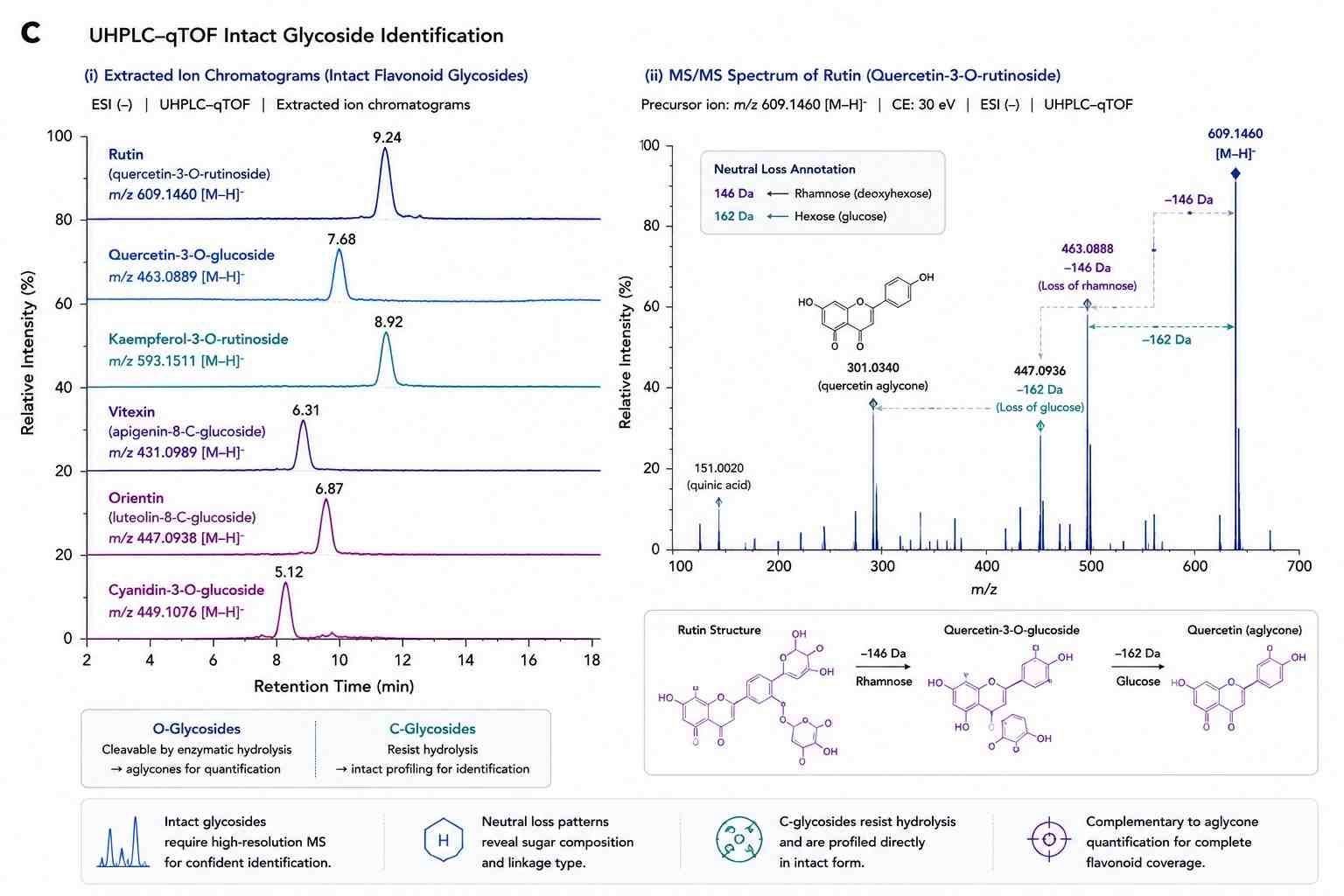
- C-Glycosides — Resistant to enzymatic and acid hydrolysis. Quantified directly as intact glycosides against C-glycoside authentic standards (vitexin, isovitexin, orientin). Reported as individual C-glycoside concentrations.
- Anthocyanins — Acidified extraction (1% HCl in methanol) stabilizes the flavylium cation. Quantified as individual anthocyanin glycosides by MRM. Acid hydrolysis (1.2 M HCl, 90 degree C, 2 h) converts to anthocyanidin aglycones for aglycone-equivalent reporting.
HILIC + RP LC-MS/MS Platform for Flavonoid Quantification
LC-MS/MS Platform
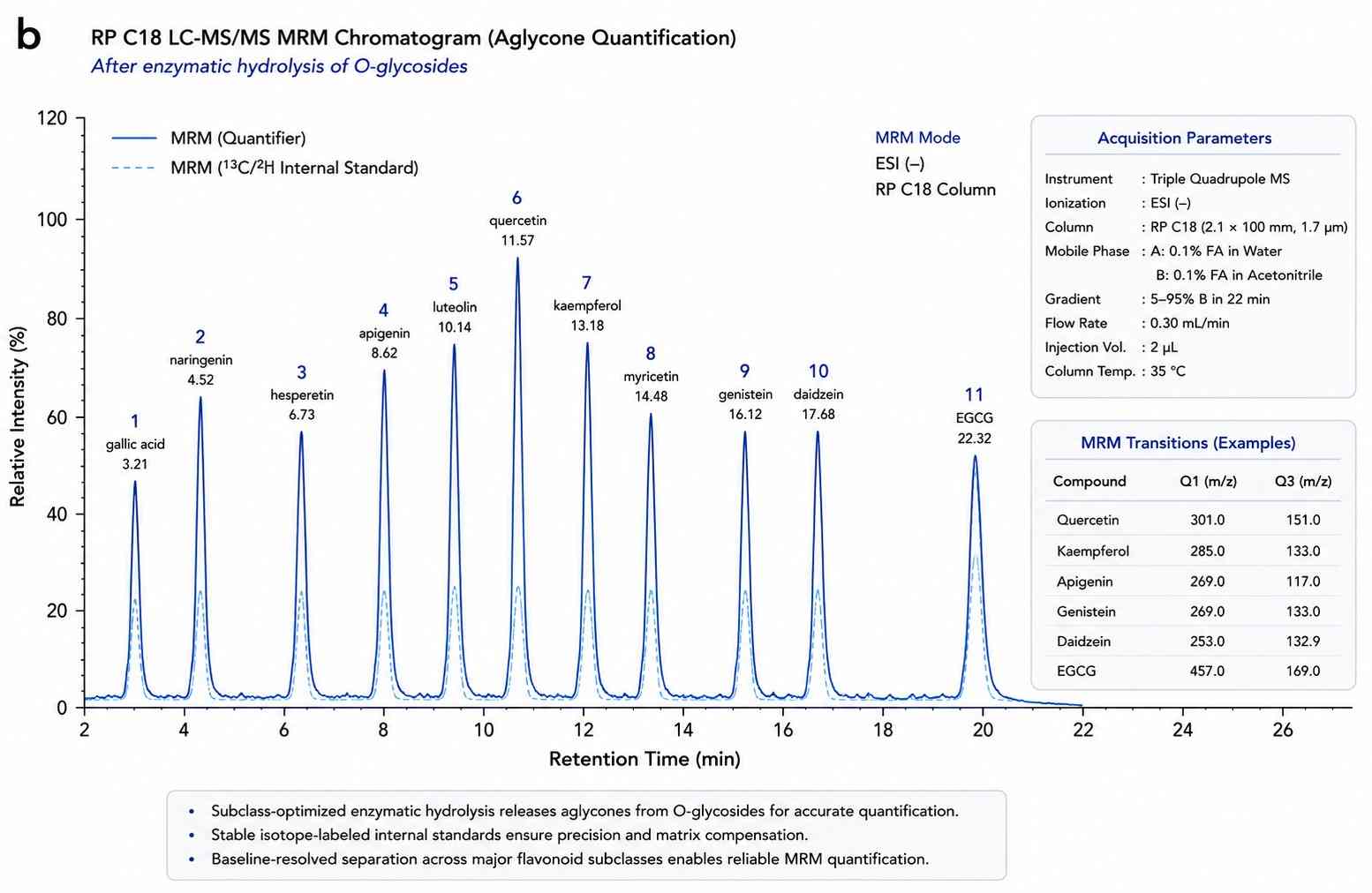
SCIEX QTRAP 6500+ with scheduled MRM. Reversed-phase C18 for aglycone separation (flavonoid core structure determines retention). HILIC for intact glycoside profiling (sugar moiety determines retention — complementary to RP). AB SCIEX TripleTOF 5600 for UHPLC-qTOF untargeted flavonoid profiling and glycoside identification via MS/MS fragmentation (sugar neutral loss patterns identify glycosylation type and position).
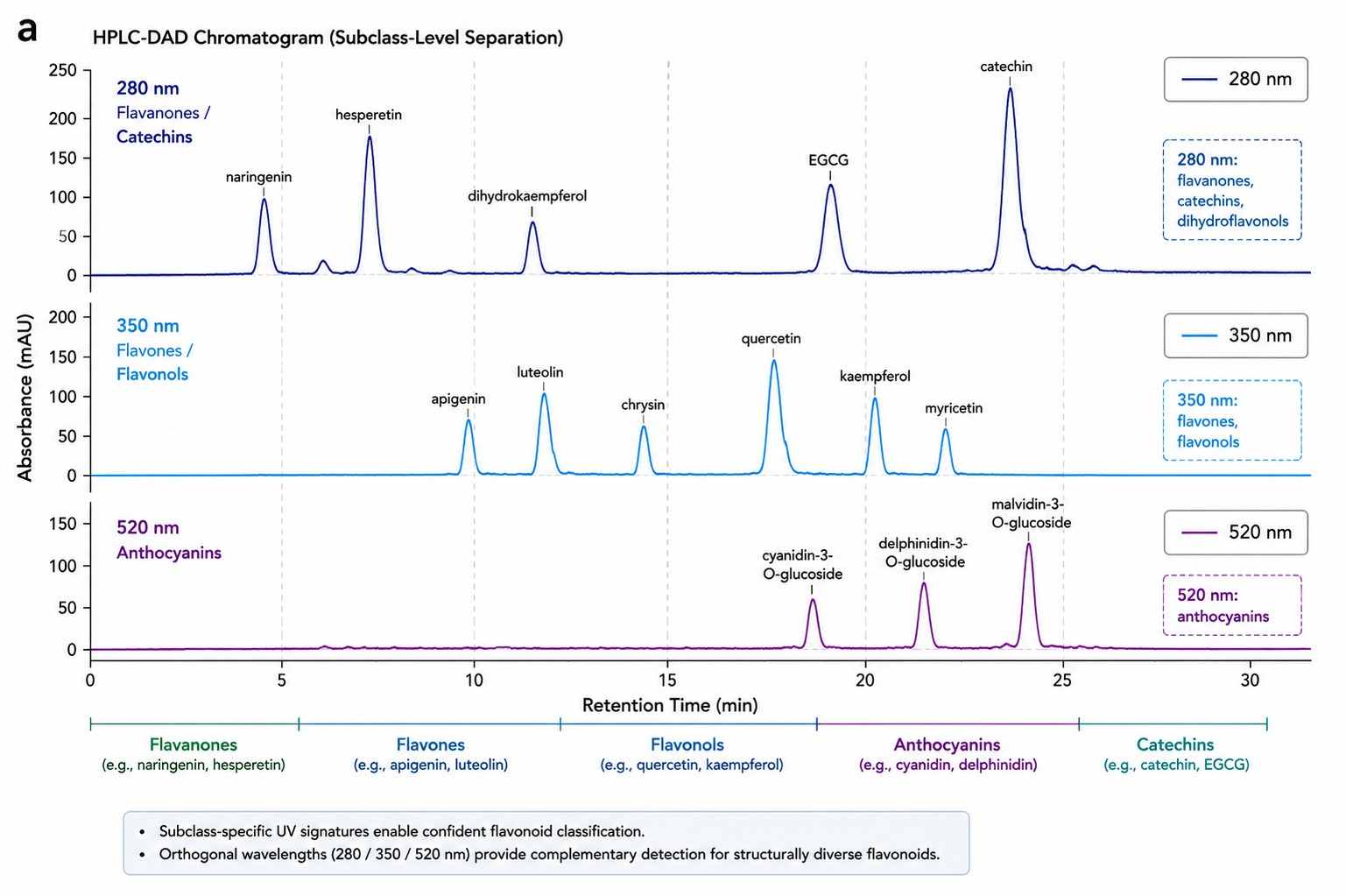
Complementary: HPLC-DAD — Agilent 1260 Infinity II with diode array. Flavonoids have characteristic UV spectra (Band I: 300-380 nm, Band II: 240-280 nm) that distinguish subclasses: flavones/flavonols absorb at 350-365 nm, flavanones at 280-290 nm with a shoulder at 330 nm, isoflavones at 260 nm. DAD provides subclass confirmation orthogonal to MS.
Method Performance
| Parameter |
Specification |
| LOD |
0.01-0.5 ng/mL (analyte-dependent); quercetin: 0.05 ng/mL, EGCG: 0.1 ng/mL |
| Linear Range |
3-4 orders of magnitude; R2 above or equal to 0.995 per analyte |
| Quantification |
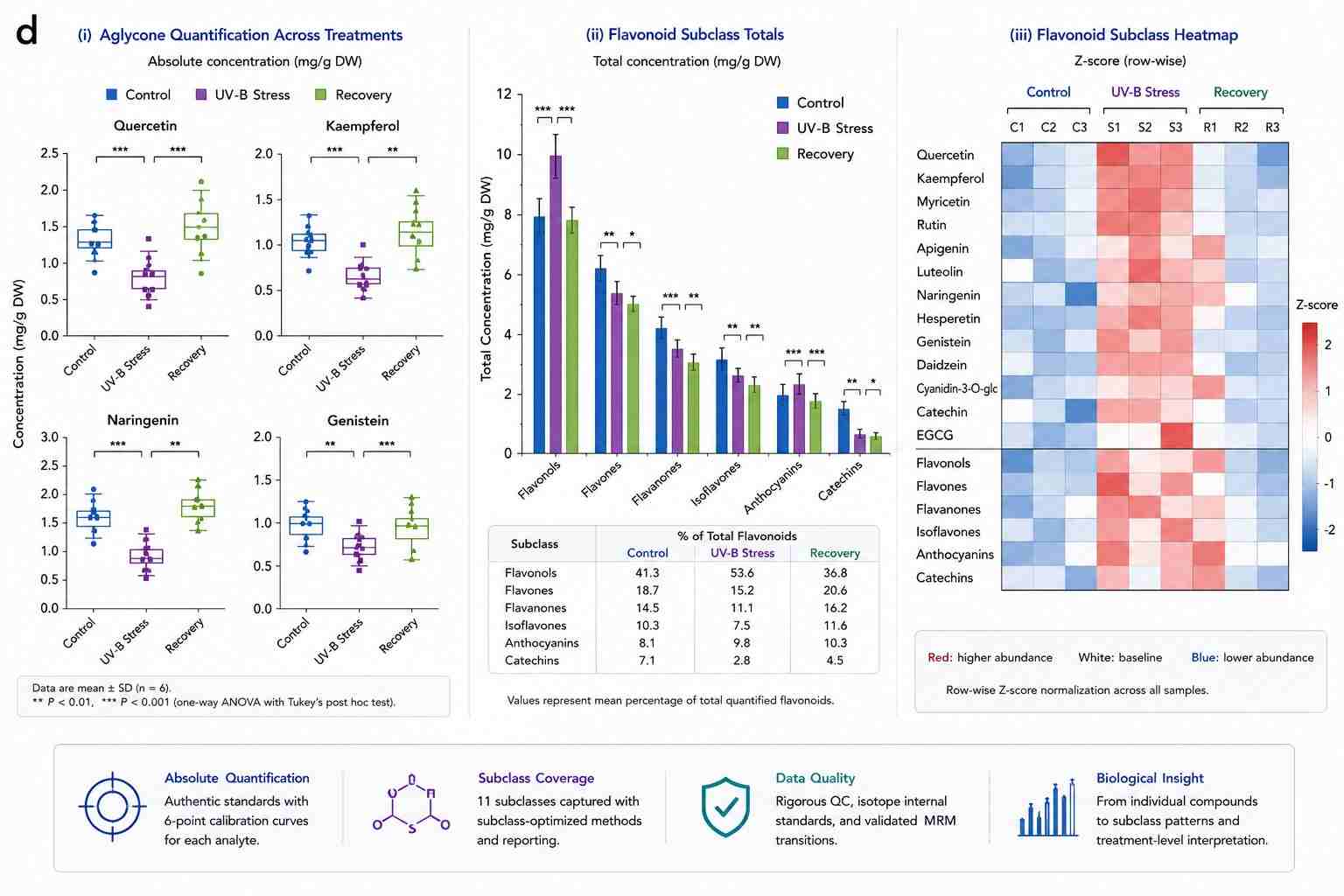
Absolute — 6-point authentic standard calibration, subclass-specific IS |
| Precision (CV) |
Intra-batch: below 5% (aglycones), below 10% (glycosides). Inter-batch: below 15% |
| Hydrolysis Efficiency |
Validated per subclass — spike recovery of glycoside standard converted to aglycone: 85-115% |
Flavonoid Analysis Workflow
What You Receive from Flavonoid Analysis
- Quantitative Concentration Table — Absolute concentrations (mg/g dry weight, ug/mL, or mg/100 g) for each flavonoid per sample. Aglycone equivalents reported for hydrolyzed O-glycosides. Intact C-glycosides reported individually. Hydrolysis efficiency per subclass documented.
- QC Report — Calibration curves (6-point, 1/x2 weighted, R2 and back-calculated accuracy per analyte). Pooled QC RSD. IS recovery. Glycoside-to-aglycone conversion efficiency. Blank carryover.
- Chromatograms & Spectral Data — MRM traces for each aglycone. UHPLC-qTOF MS/MS spectra for glycoside identification (sugar neutral loss annotation). HPLC-DAD UV spectra confirming subclass assignment.
- Methods Documentation — Extraction protocol per subclass, hydrolysis conditions and enzyme specifications, LC-MS/MS parameters. Formatted for manuscript methods section.
Flavonoid Analysis — Chromatograms, Spectra & Quantification
Case Study — Flavonoid Profiling Links Aronia Supplement to Improved Gut Function
Effects of Aronia melanocarpa juice-powder on hindgut function and performance in post-weaned pigs
Pearce, S.C., Anderson, C.L., & Kerr, B.J. | Journal of Functional Foods, 2024, 116, 106196 | IF: 3.8
DOI: 10.1016/j.jff.2024.106196
The Challenge
Post-weaning is the most stressful period in a pig's life — intestinal inflammation, reduced feed intake, and growth stasis caused by abrupt dietary and environmental changes. Aronia melanocarpa (black chokeberry) is one of the richest dietary sources of flavonoids and phenolic acids, with documented anti-inflammatory and antioxidant properties. The question was whether supplementing post-weaning pig feed with Aronia juice powder could mitigate intestinal inflammation and improve growth performance — and critically, what specific flavonoids and phenolic acids were present in the supplement at bioactive concentrations. Without comprehensive flavonoid profiling, the link between supplement composition and biological effect would remain a black box.
The Results
The Aronia juice powder was sent to a commercial laboratory for targeted flavonoid and phenolic acid quantification by LC-MS/MS. The analysis identified and quantified the full spectrum of Aronia polyphenols, including anthocyanins (cyanidin-3-galactoside, cyanidin-3-arabinoside), flavonols (quercetin glycosides), and phenolic acids (chlorogenic acid, neochlorogenic acid). Pigs receiving Aronia-supplemented feed showed improved hindgut barrier function and reduced intestinal inflammation markers compared to unsupplemented controls — effects directly attributable to the characterized flavonoid profile of the supplement.
Why It Matters
This study demonstrates the essential role of flavonoid profiling in nutritional intervention research: without quantifying which flavonoids were present and at what concentrations, the biological effect cannot be attributed to specific compounds, the dose-response relationship cannot be established, and the results cannot be replicated. Our flavonoid panel provides the same analytical framework — identify and quantify the flavonoid profile of your plant material, food product, or supplement, then connect the chemistry to the biology.
How We Deliver the Same
- Targeted LC-MS/MS quantification of anthocyanins, flavonols, flavanones, and phenolic acids with authentic standard calibration
- Aglycone-equivalent reporting after enzymatic hydrolysis — the standard format for nutritional flavonoid data
- Subclass-specific extraction and hydrolysis protocols — anthocyanins require acidified conditions, which our method handles separately from flavonols
Reference
- Pearce, S.C., Anderson, C.L., & Kerr, B.J. Effects of Aronia melanocarpa juice-powder on hindgut function and performance in post-weaned pigs. Journal of Functional Foods 116, 106196 (2024).


 Contact Us