

Capsorubin Analysis Service
Submit Your InquiryWhat is Capsorubin?
Capsorubin is a natural xanthophyll-class carotenoid primarily found in red peppers (Capsicum annuum) and certain lilies. It is a key component of paprika oleoresin, contributing to the vibrant red coloration of mature pepper fruits. Structurally, it belongs to the ketocarotenoid family, with the molecular formula C40H56O4, and exhibits potent antioxidant and anti-inflammatory properties. As a critical metabolite in the carotenoid biosynthesis pathway, capsorubin plays a role in plant stress responses and has applications in food, cosmetics, and agricultural research.
Why Choose Us?
Capsorubin Analysis Services by Creative Proteomics
- Quantitative Analysis of Capsorubin – Accurate measurement of capsorubin content in different matrices.
- Identification of Capsorubin Derivatives – Detection and structural elucidation of related metabolites.
- Capsorubin Stability Testing – Analysis under different environmental conditions (e.g., light, temperature, pH).
- Capsorubin Extraction Efficiency Assessment – Evaluation of different extraction techniques for maximum yield
- Metabolic Pathway Analysis – Profiling of capsorubin-associated metabolites in biological samples.
- Capsorubin Bioavailability Studies – Examination of absorption, distribution, and metabolism in experimental models.
List of Detected Capsorubin and Related Metabolites
| Compound Name | Category | Biological Relevance |
|---|---|---|
| Capsorubin | Xanthophyll Carotenoid | Major red pigment in peppers |
| Capsanthin | Xanthophyll Carotenoid | Co-existing carotenoid with capsorubin |
| Violaxanthin | Xanthophyll Carotenoid | Precursor in carotenoid biosynthesis |
| Antheraxanthin | Xanthophyll Carotenoid | Intermediate in the xanthophyll cycle |
| Zeaxanthin | Xanthophyll Carotenoid | Important in plant photoprotection |
| β-Cryptoxanthin | Xanthophyll Carotenoid | Pro-vitamin A precursor |
| Lutein | Xanthophyll Carotenoid | Plays a role in plant defense |
| β-Carotene | Carotenoid | Precursor to vitamin A |
Techniques and Instrumentation for Capsorubin Analysis
Ultra-Performance Liquid Chromatography (UPLC-QTOF-MS) – High-resolution separation and detection of capsorubin and metabolites.
High-Performance Liquid Chromatography with Diode-Array Detection (HPLC-DAD) – Accurate quantification based on UV-Vis absorption properties.
Gas Chromatography-Mass Spectrometry (GC-MS) – Complementary technique for volatile metabolite profiling.
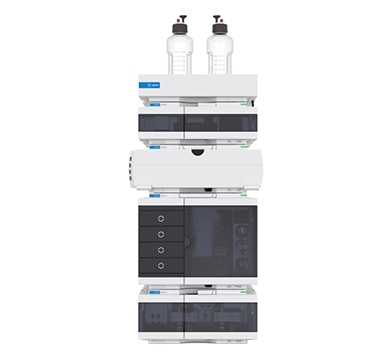 Agilent 1260 Infinity II HPLC (Figure from Agilent)
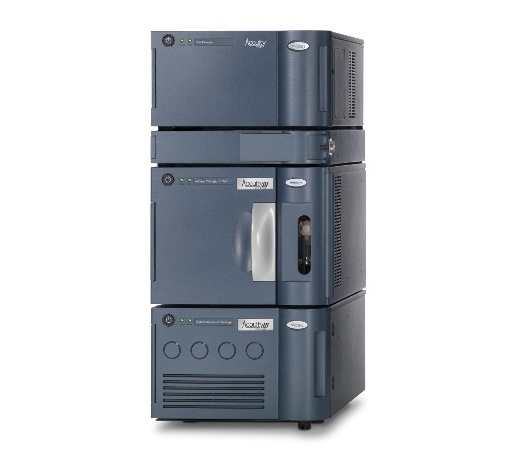 Waters ACQUITY UPLC System (Figure from Waters)
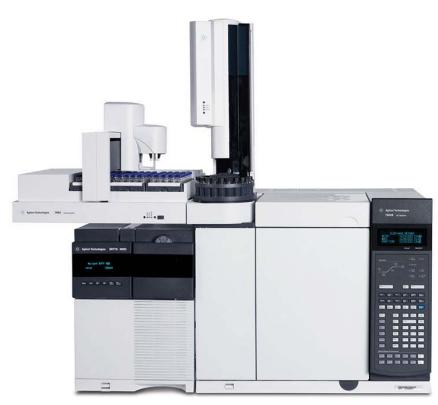 Agilent 7890B-5977B (Figure from Agilent)
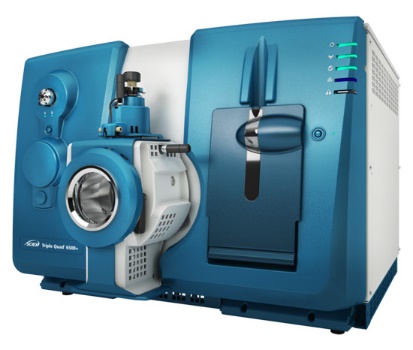 SCIEX Triple Quad™ 6500+ (Figure from Sciex)
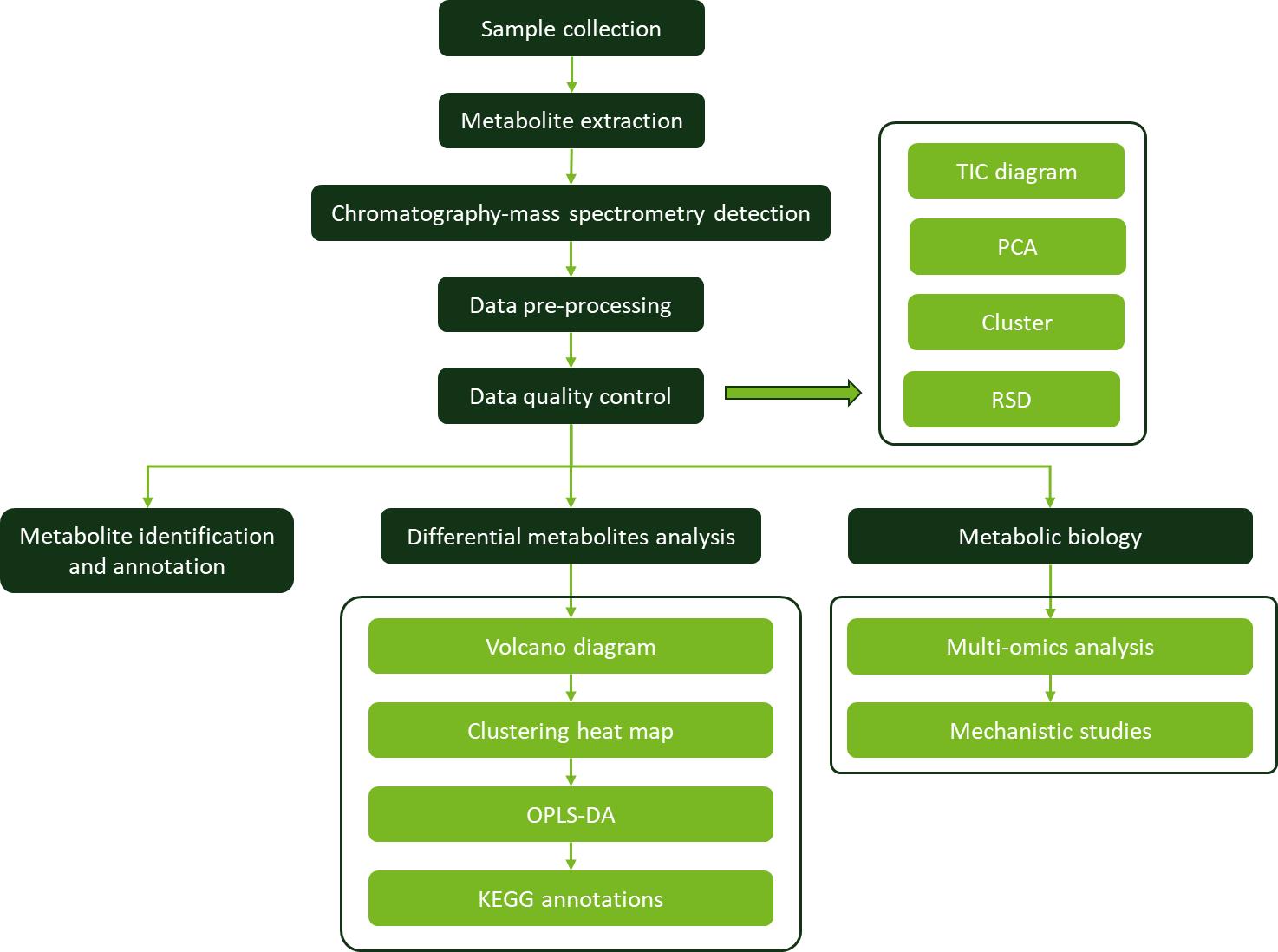
Workflow for Capsorubin Analysis Service
Sample Requirements for Capsorubin Assay
| Sample Type | Minimum Required Amount | Recommended Storage Conditions | Shipping Conditions |
|---|---|---|---|
| Plant Tissues (Fresh/Frozen) | 500 mg | -80°C (Frozen) | Dry Ice |
| Dried Plant Materials | 100 mg | Room Temperature | Sealed, Cool, and Dry |
| Food Samples (e.g., Pepper Extracts, Beverages) | 5 g | -20°C (Frozen) | Ice Pack or Dry Ice |
| Dietary Supplements (Powder/Tablets/Capsules) | 1 g or 10 capsules | Room Temperature | Sealed, Cool, and Dry |
| Biological Fluids (e.g., Serum, Plasma) | 200 µL | -80°C (Frozen) | Dry Ice |
| Cell Culture Media | 500 µL | -80°C (Frozen) | Dry Ice |
| Oil-based Extracts | 1 mL | 4°C (Refrigerated) | Ice Pack |
Applications of Capsorubin Analysis
Food & Beverage
Agriculture & Plant Research
Industrial & Environmental
Nutraceuticals & Supplements
- Q: How should I prepare plant tissue samples for capsorubin analysis?
- A: Fresh samples should be flash-frozen in liquid nitrogen immediately after harvest, ground to a fine powder, and stored at -80°C in amber vials to prevent oxidation. Avoid light and heat exposure during handling.
- Q: Can you analyze capsorubin in processed foods (e.g., sauces, snacks)?
- A: Yes, we analyze capsorubin in complex matrices like sauces, powders, and oils. Samples require lipid extraction and purification to remove interfering compounds.
- Q: How should I ship light-sensitive samples?
- A: Use dry ice and opaque, airtight containers. Ensure proper temperature control with insulated packaging.
- Q: How long can I store extracted capsorubin samples before analysis?
- A: Store extracts at -80°C in ethanol or acetone for up to four weeks. Avoid freeze-thaw cycles to maintain stability.
- Q: How do you ensure accurate capsorubin quantification?
- A: We use certified reference materials (CRMs) and in-house recovery tests, achieving 95–102% accuracy in plant tissue samples.
- Q: What instruments do you use for capsorubin analysis?
- A: We employ high-resolution LC-MS/MS (SCIEX Triple Quad™ 6500+), UPLC-QTOF-MS, and HPLC-DAD for precise quantification and metabolic profiling.
- Q: Can you analyze capsorubin in animal-derived samples (e.g., egg yolks)?
- A: Yes. We adapt extraction protocols to remove fats and proteins, with a detection limit of 0.1 μg/g in animal tissues.
- Q: How do you handle samples with low capsorubin concentrations?
- A: We use solid-phase extraction (SPE) or liquid-liquid extraction (LLE) to concentrate samples, enhancing sensitivity.
- Q: What file formats do you provide for raw data?
- A: We offer raw data in .RAW (Thermo), .D (Agilent), and .CSV formats, with processed data compatible with MetaboAnalyst.
- Q: Do you provide guidance for agricultural research?
- A: Yes. Our reports include comparative capsorubin data across cultivars and correlations with environmental factors like light exposure and soil nutrients.
- Q: Can you analyze capsorubin interactions with other antioxidants?
- A: Yes, we offer synergy and antagonism studies using DPPH and ABTS assays to evaluate combined antioxidant effects.
- Q: Do you analyze capsorubin in microbial fermentation broths?
- A: Yes. We optimize extraction for yeast and bacterial cultures, ensuring accurate carotenoid quantification.
- Q: Can you correlate capsorubin levels with gene expression data?
- A: Yes, we integrate metabolomics data with RNA-seq/qPCR results to analyze carotenoid biosynthesis pathways.
- Q: What is the turnaround time for capsorubin analysis?
- A: Standard turnaround is 10–14 business days. Expedited services are available upon request.
- Q: Do you offer bulk discounts for large-scale studies?
- A: Yes. We provide volume-based pricing for projects with over 50 samples.
Case. Designing a microbial factory suited for plant chloroplast-derived enzymes to efficiently and green synthesize natural products: capsanthin and capsorubin as examples
Background:
Plant chloroplast natural products (PCNPs) were analyzed.
The study aimed to design an innovative microbial factory to promote the heterologous synthesis of PCPNs, taking capsanthin and capsorubin as examples, by mimicking the chloroplast microenvironment in a microbial factory.
Samples:
E. coli DH5α was used for plasmid construction, and E. coli BL21 (DE3) was used for constructing carotenoid - producing strains.
Technical methods procedure:
Genes were optimized based on E. coli codon preference, obtained by PCR, and linked using infusion cloning technology. Plasmids were transformed into E. coli DH5α first and then into E. coli BL21(DE3).
The trxb gene in E. coli was knocked out using a two-plasmid system (pHCY-25A and pHCY-26D) designed for targeted genome editing.
Chloroplast transit peptides of proteins were predicted by SignalP - 6.0
The three - dimensional structures of enzymes in the carotenoid metabolic pathway were predicted by AlphaFold 3.
Carotenoids were analyzed by high - performance liquid chromatography (HPLC) after filtration.
Cytoplasmic and membrane proteins were purified by Ni²⁺ affinity chromatography
Protein concentration was measured by the Bradford method.
SDS - PAGE was performed with different concentrated gels for proteins of different sizes.
Results:
The accumulation of violaxanthin increased significantly and reduced upstream carotenoid accumulation.
Increasing the copies of CCS promoted the synthesis of violaxanthin and capsanthin.
Co - expressing chaperones provided a folding - promoting microenvironment for CCS.
Chloroplast - derived chaperones Cpn60α, Cpn60β, and Cpn20 were more effective in enhancing CCS catalytic performance, but all chaperones decreased ZEP activity.
Constructing an artificial homotrimer (AHT) of CCS and localizing it to the cell membrane increased the accumulation of capsanthin and capsorubin.
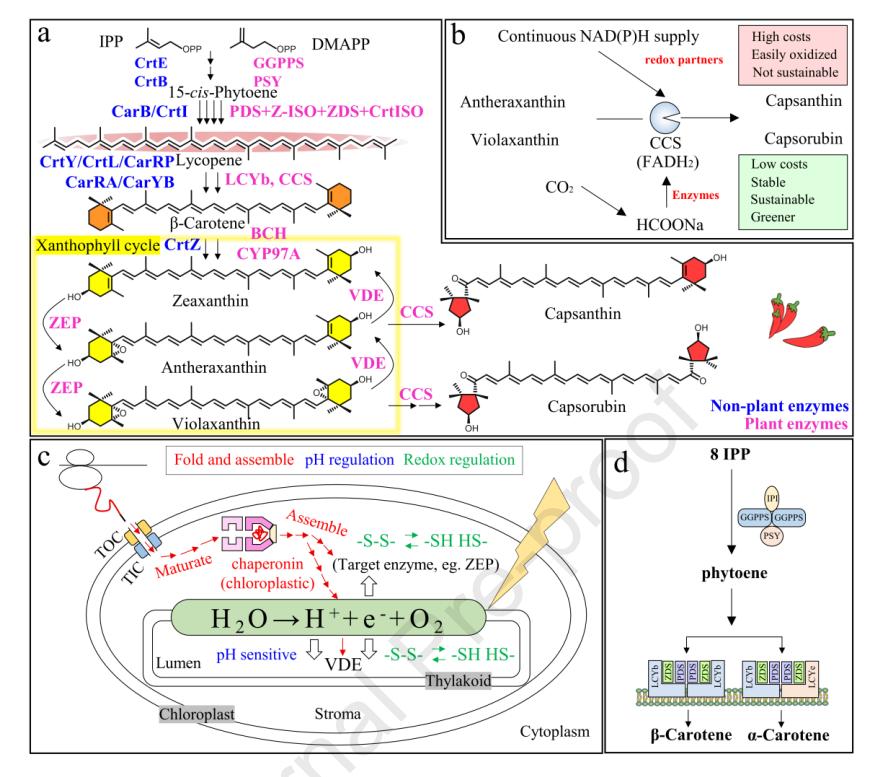 Overview and current obstacles of capsanthin/capsorubin biosynthesis.
Reference
- Chen, H, et al. "Designing a microbial factory suited for plant chloroplast - derived enzymes to efficiently and green synthesize natural products: capsanthin and capsorubin as examples." Metabolic Engineering (2025). https://doi.org/10.1016/j.ymben.2025.01.005

 Contact Us