Breathomics and Exhaled Breath VOC Profiling — Non-Invasive Metabolic Readout
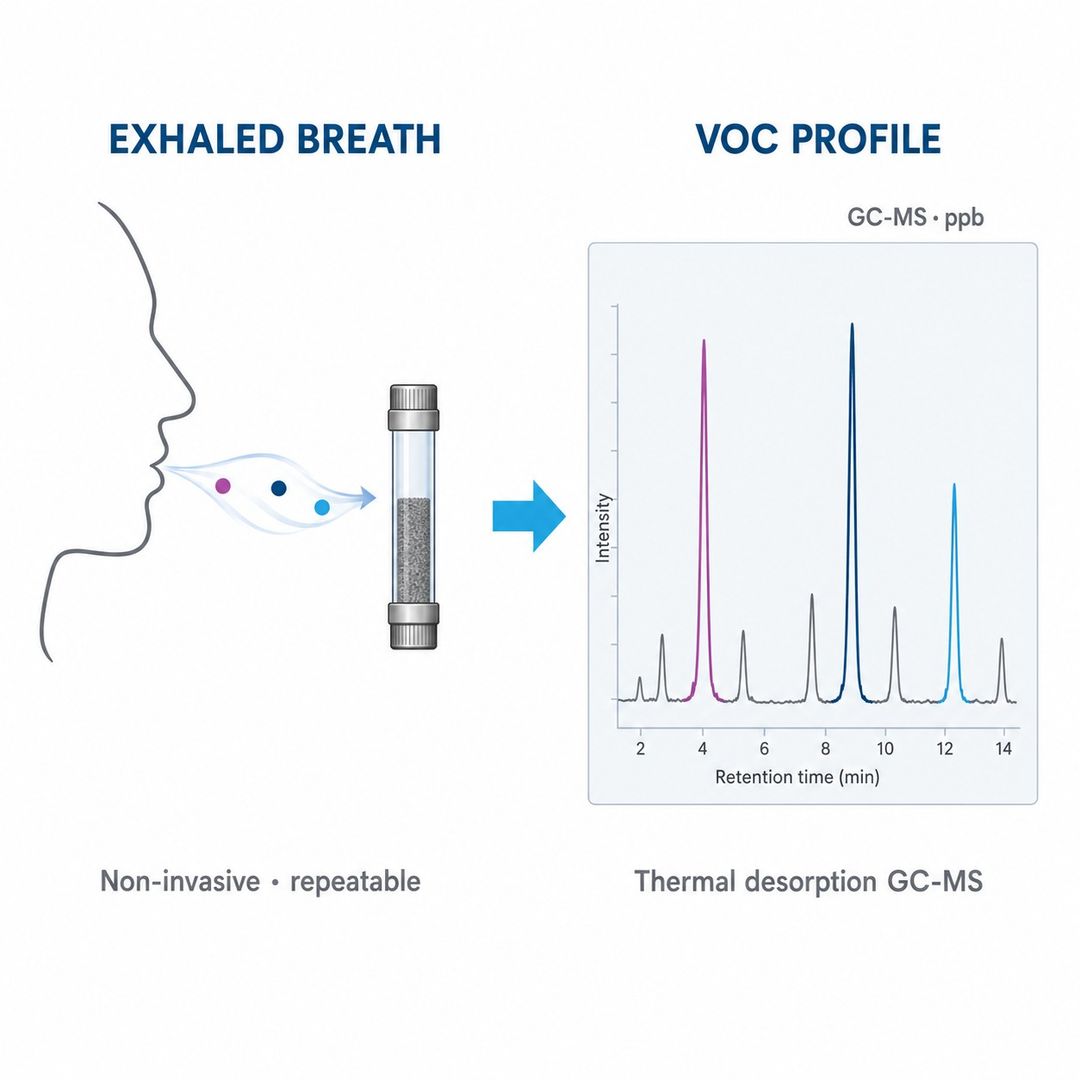
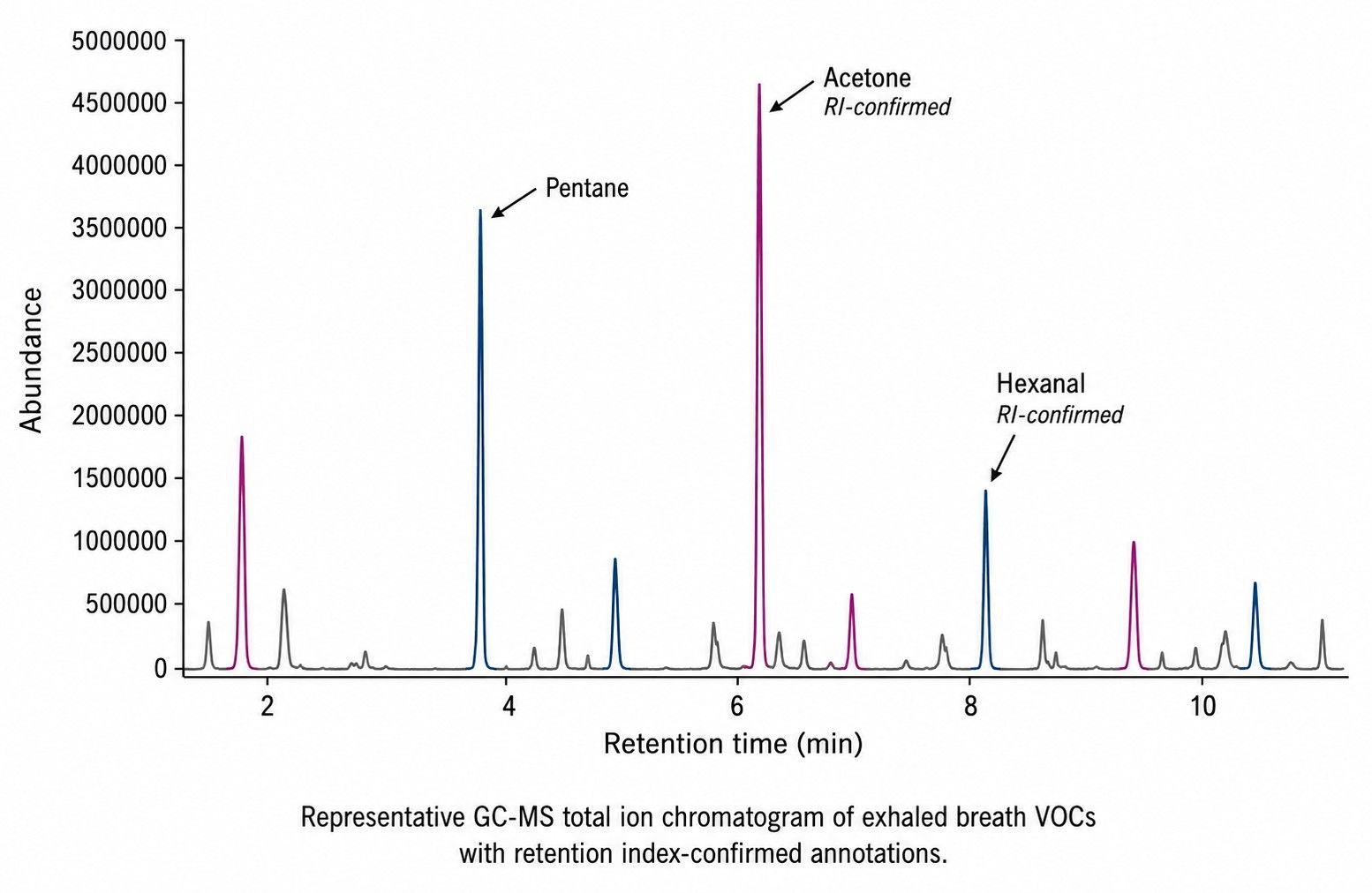
Breathomics is the capture, identification, and quantification of volatile organic compounds (VOCs) in exhaled breath, analyzed by thermal desorption GC-MS to profile endogenous metabolism, microbiome-derived signals, and environmental exposures from a single non-invasive sample.
Every breath contains hundreds to thousands of VOCs — metabolic products from cells, tissues, and the
microbiome, mixed with trace compounds from diet, smoking, and the environment. Because these molecules
reach the breath via blood and alveolar exchange, the exhaled VOC profile is a real-time chemical readout of
physiological state, obtained without needles, biopsies, or sample destruction.
Breathomics VOC analysis delivers:
- Non-invasive sampling: repeated sampling is feasible, enabling longitudinal monitoring
in studies where blood or tissue collection is impractical
- Broad VOC coverage: hydrocarbons, ketones, aldehydes, alcohols, sulfides, and terpenes
across endogenous and exogenous sources
- ppb-level sensitivity: thermal desorption pre-concentration detects trace VOCs that
would be missed by direct injection
- Ambient air background control: inhalation air is profiled in parallel to separate
endogenous signals from environmental background
What Breathomics Adds Over Blood or Urine Metabolomics
Blood and urine metabolomics require invasive collection and reflect metabolism over longer averaging
windows. Breathomics complements them with a non-invasive, rapidly responsive VOC signature:
Breathomics vs. Blood and Urine Metabolomics
| Dimension |
Exhaled Breath VOC |
Blood or Urine |
| Collection |
Non-invasive; repeated sampling easy |
Invasive (blood) or timed collection (urine) |
| Time resolution |
Near real-time metabolic signal |
Minutes-to-hours (blood) to longer (urine) |
| Volatile coverage |
VOCs — the volatile fraction of metabolism |
Non-volatile and semi-volatile polar metabolites |
| Exposure readout |
Direct trace of inhaled and ingested volatiles |
Indirect, metabolite-based |
The two approaches are complementary. Where breathomics captures the volatile, rapidly exchanging fraction,
our untargeted metabolomics service covers the deep
non-volatile metabolome in blood, urine, and tissue — together they profile the same physiology from
complementary chemical windows.
Exhaled Breath VOC Analysis Platform and Technical Parameters
Our breathomics workflows combine breath collection support with thermal desorption GC-MS analysis,
configured for the VOC classes and sensitivity your study requires.
| Parameter |
Specification |
| Collection media |
Thermal desorption tubes, Tedlar bags, or Breath Biopsy-class cartridges per study design |
| Pre-concentration |
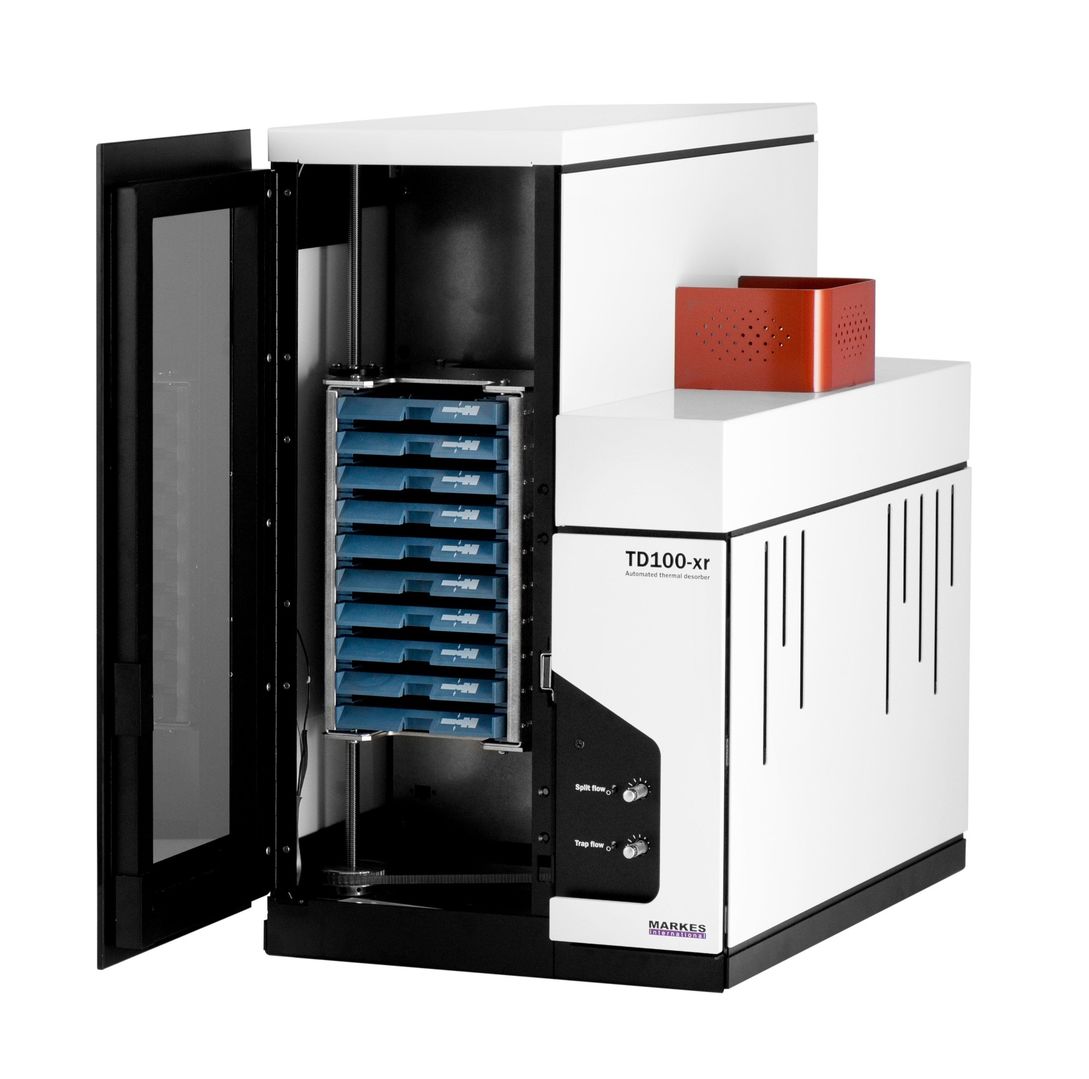
Thermal desorption with two-stage trap focusing for ppb-level sensitivity |
| Separation and detection |
GC-MS with spectral library matching and retention index (RI) confirmation |
| VOC classes |
Hydrocarbons, ketones, aldehydes, alcohols, sulfides, terpenes, aromatics |
| Endogenous vs. exogenous |
Ambient air background control separates inhaled from exhaled signals |
| Polarity modes |
Full-scan acquisition with both electron ionization (EI) spectra for library matching |
| File formats |
Raw vendor files, processed peak lists, and annotation tables |
Volatile Organic Compound Coverage
Breathomics captures both endogenous metabolic products and exogenous compounds reflecting exposure:
| Compound class |
Examples and notes |
| Ketones |
Acetone, 2-butanone — linked to ketone body metabolism and lipid oxidation |
| Hydrocarbons |
Ethane, pentane — oxidative stress-related VOC markers |
| Aldehydes |
Hexanal, nonanal — lipid peroxidation products |
| Alcohols and esters |
Ethanol, methanol, ethyl esters — metabolic and dietary sources |
| Sulfur compounds |
Dimethyl sulfide, hydrogen sulfide — microbiome-related VOCs |
| Terpenes and aromatics |
Limonene, toluene — dietary, environmental, and tobacco-related exposure markers |
For studies requiring deep coverage of non-volatile metabolites alongside VOC profiling, untargeted
metabolomics provides complementary blood, urine, or tissue analysis from the same cohort.
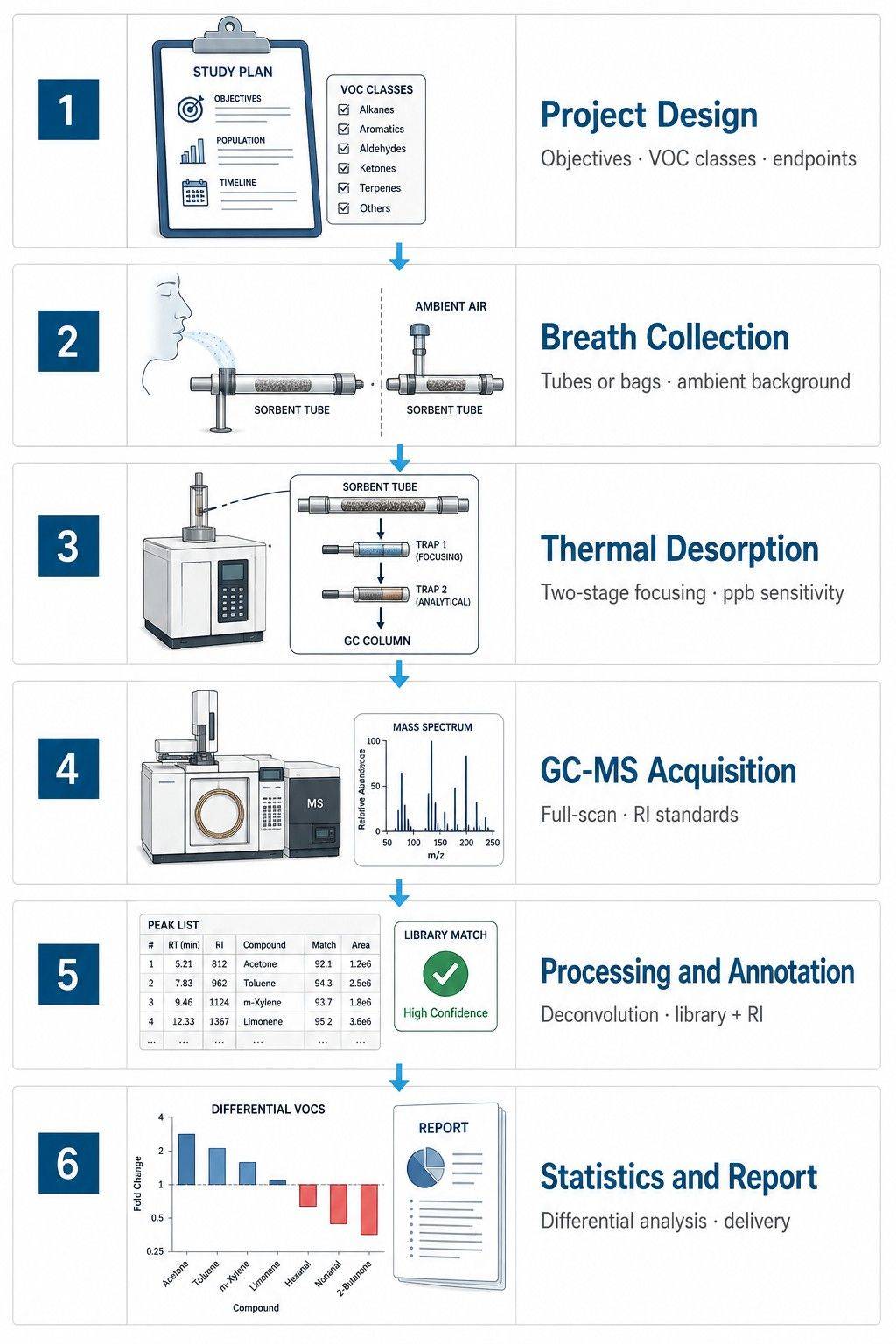
Breathomics Workflow — A Step-by-Step Guide
Sample Requirements for Exhaled Breath VOC Analysis
Breathomics requires attention to collection standardization — the analytical quality depends on consistent
sampling and background control:
| Sample type |
Requirements and notes |
| Exhaled breath (tubes) |
Thermal desorption tubes with sorbent; flow-controlled collection; stored sealed at controlled
temperature |
| Exhaled breath (bags) |
Tedlar or aluminized bags analyzed within validated storage window |
| Ambient air background |
Inhalation air sampled in parallel for each subject or site to enable background subtraction |
| Exhaled breath condensate (EBC) |
Optional non-volatile complement; analyzed by LC-MS where required |
| Pre-collection controls |
Fasting or standardized diet window, smoking and exercise restrictions per study design |
Collection guidance: we provide a detailed breath sampling SOP for your study — including
collection duration, storage conditions, and ambient air controls — so that samples arriving at our
laboratory are reproducible across subjects and time points.
Why Choose Our Breathomics Service
- Standardized breathomics pipeline
From collection SOP to thermal desorption GC-MS and annotation, every step is documented with acceptance criteria.
- Endogenous-exogenous separation
Ambient air background control distinguishes metabolic VOCs from environmental and dietary signals.
- ppb-level sensitivity
Two-stage thermal desorption focusing detects trace VOCs that define exhaled breath signatures.
- Integrated multi-omics options
Pair breathomics with blood or urine untargeted metabolomics for volatile plus non-volatile coverage.
- Research-first framing
Candidate biomarker discovery and mechanism studies, with RUO-compliant reporting for your publication pipeline.
Breathomics Data Deliverables and Statistical Analysis
You receive a complete, interpretation-ready breathomics dataset:
- Annotated VOC feature tables with retention time, RI, spectral match score, and
endogenous/exogenous assignment
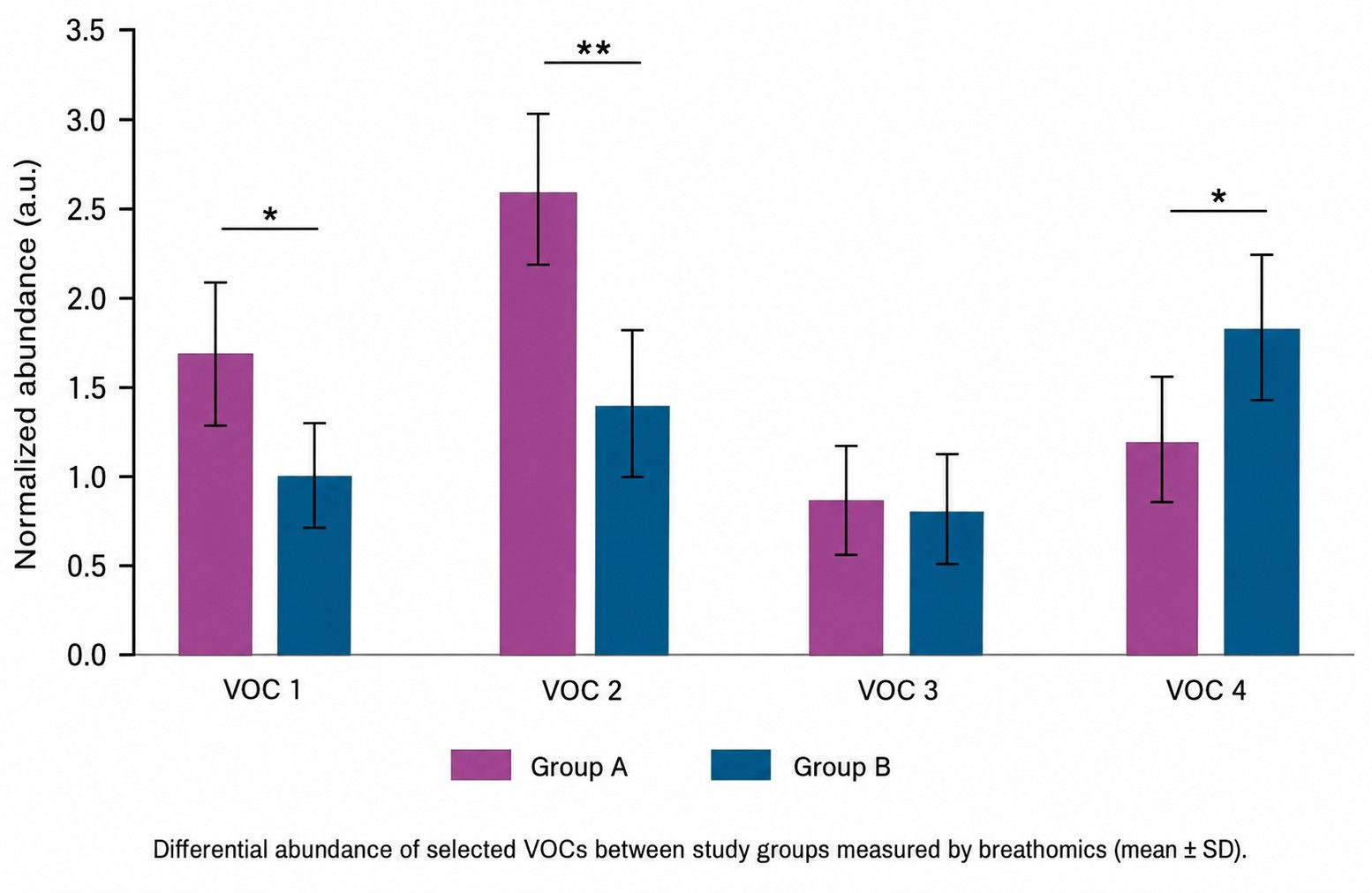
- Differential VOC analysis between study groups with FDR-controlled statistics and
effect sizes
- VOC source annotation — metabolic, dietary, microbiome, or environmental origin where
assignable
- Ambient air subtraction results documenting background control
- Full data package — raw files, peak lists, metadata, and analysis notebooks
Applications
- Respiratory research — non-invasive VOC signatures in asthma, COPD, and pulmonary
research models
- Metabolic research — breath ketone and VOC readouts linked to lipid and energy
metabolism
- Environmental and tobacco exposure — internal dose markers of inhaled pollutants and
smoke constituents
- Microbiome-host studies — microbiome-derived VOCs as a window into gut-lung axis
activity
- Drug metabolism — VOC monitoring of drug-related volatile metabolites where applicable
Case Study: Non-Invasive Saliva Metabolomics of Tobacco Carcinogen Exposure
Metabolic reprogramming in saliva of mice treated with the environmental and tobacco carcinogen dibenzo[def, p]chrysene
Sun, Y.-W., Chen, K.-M., Aliaga, C., El-Bayoumy, K. | Scientific Reports, 2024,
14(1)
DOI: 10.1038/s41598-024-80921-1
Background
Oral squamous cell carcinoma (OSCC) develops in a tissue that is directly exposed to tobacco smoke
constituents. Developing non-invasive metabolic readouts of exposure and early neoplastic change is a
central goal in oral cancer research.
Challenge: Establish whether saliva — a non-invasively collected biofluid — reflects
metabolic reprogramming induced by the environmental and tobacco carcinogen dibenzo[def, p]chrysene
(DB[a,l]P).
Analytical Approach
In a mouse model faithfully recapitulating the human disease, comparative untargeted metabolomic profiling
of saliva from DB[a,l]P-treated versus control mice was performed by UPLC-ESI-MS (Q Exactive Plus) analysis
at Creative Proteomics — a non-invasive biofluid readout of carcinogen-induced metabolic change.
Key Findings
| Metric |
Finding |
| Sample type |
Saliva — collected non-invasively from carcinogen-treated and control mice |
| Metabolic readout |
Comparative metabolomic profiling revealed reprogramming associated with DB[a,l]P exposure |
| Model fidelity |
Mouse model recapitulates the human disease context for OSCC research |
| Non-invasive utility |
Saliva profiling supports exposure monitoring and early-change research without invasive sampling
|
What This Means for Your Breathomics Study
- Non-invasive biofluids carry metabolic signal. This study shows saliva reflects
carcinogen-induced metabolic reprogramming — the same principle underpins exhaled breath VOCs as a
non-invasive readout.
- Exposure research needs trace-level sensitivity. Detecting carcinogen-related metabolic
change in a dilute biofluid mirrors the ppb-level sensitivity required for breath VOC profiling.
- Complementary windows. Where saliva and blood capture non-volatile metabolome,
breathomics captures the volatile fraction — together they profile exposure and physiology more
completely.
Conclusion
This study demonstrates that non-invasive biofluid metabolomics can resolve metabolic responses to
environmental carcinogen exposure. Our breathomics service extends this capability to exhaled breath VOCs —
profiling volatile metabolism and exposure markers from a single non-invasive sample.
Publications
The molecular basis of the synergistic toxicity of nickel and copper, common environmental co-contaminants
Darwiche, L., Rodriguez-Bornot, C. A., Ingrassia, R. A., et al.
Journal: Applied and Environmental Microbiology, 2025, 91(12)
Metabolomic analysis of environmental co-contaminant toxicity, supporting exposure-related metabolic
readouts relevant to breathomics studies of inhaled pollutants.
The activity of the aryl hydrocarbon receptor in T cells tunes the gut microenvironment to sustain autoimmunity and neuroinflammation
Merchak, A. R., Cahill, H. J., Brown, L. C., et al.
Journal: PLOS Biology, 2023, 21(2), e3002000
Environmental signal sensing through the aryl hydrocarbon receptor shaping gut metabolism, supporting
microbiome-environment axes studied by breath VOC approaches.


 Contact Us