Ion Mobility Metabolomics — What It Adds to LC-MS
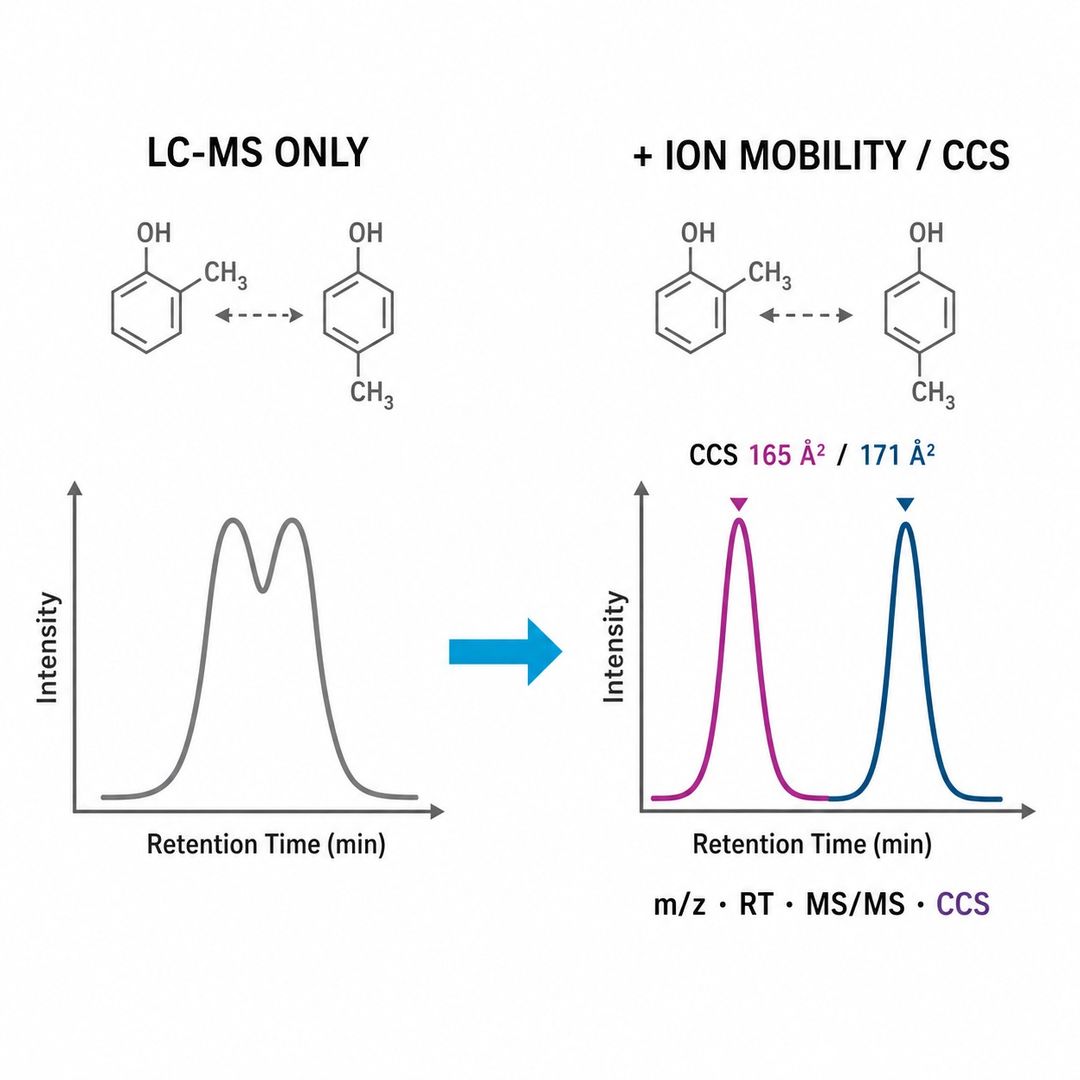
Standard untargeted LC-MS identifies features by accurate mass and retention time, then confirms them by
MS/MS fragmentation. Two limitations persist: isomeric compounds that share the same mass and formula, and
isobaric compounds with nearly identical mass, often co-elute and produce indistinguishable spectra. Ion
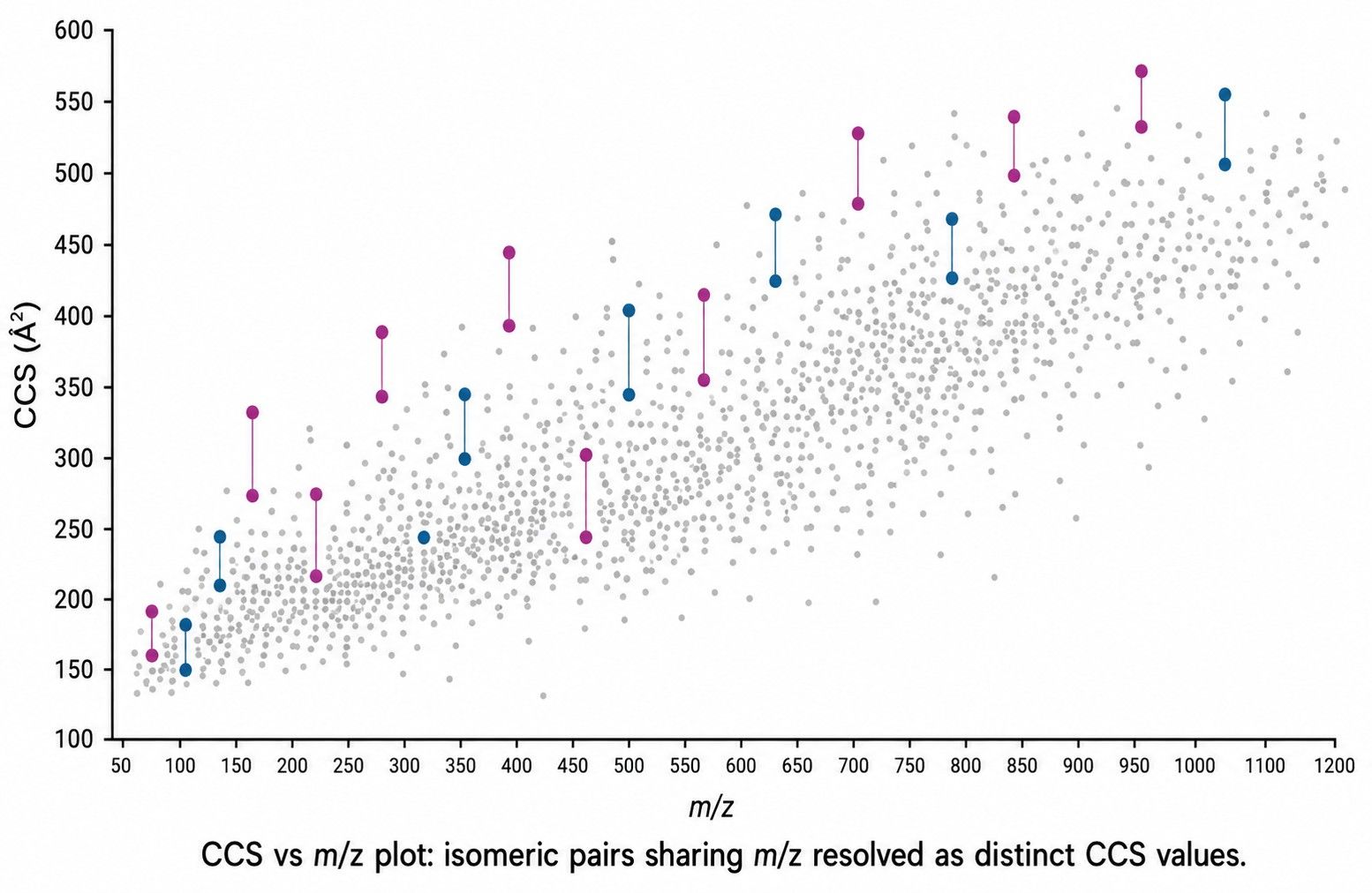
mobility adds a gas-phase separation step that resolves these ions by their collision cross section (CCS) —
a physical property tied to ion shape and size — before mass analysis.
CCS gives untargeted data a fourth, orthogonal dimension. Because CCS is largely independent of
chromatographic system and matrix, it provides reproducible, instrument-transferable evidence that mass and
retention time alone cannot. Two metabolites with near-identical MS/MS spectra can be separated and
correctly assigned by their distinct CCS values, and a measured CCS can reject candidate structures whose
predicted CCS falls outside a narrow tolerance window.
Ion mobility metabolomics delivers:
- Isomer and isobar separation: baseline resolution of compounds that co-elute and share
mass, including lipid and glycan isomers
- CCS as identification evidence: a measured, instrument-transferable value added to
every feature alongside m/z, RT, and MS/MS
- Higher annotation confidence: CCS filtering removes false candidate structures and
upgrades identifications that mass accuracy alone cannot confirm
Conventional LC-MS vs. Ion Mobility LC-MS Metabolomics
| Dimension |
Conventional LC-MS |
Ion Mobility LC-MS |
| Identification dimensions |
Three: m/z, retention time, MS/MS |
Four: m/z, RT, MS/MS, and CCS |
| Isomer resolution |
Isomers and isobars often co-elute; mass and spectra alone cannot separate them |
Gas-phase separation resolves isomers and isobars by shape and size before detection |
| False-positive control |
Candidate structures filtered only by mass and MS/MS match |
CCS tolerance window rejects candidate structures with mismatched ion size |
| Data transferability |
Retention time varies between systems and laboratories |
CCS is instrument-transferable, comparable across platforms and published libraries |
When Ion Mobility Matters — Isomers, Isobars, and Where CCS Helps
Not every untargeted study needs ion mobility. The technology pays off most when your feature set is
dominated by compound classes where isomerism is the rule rather than the exception:
- Lipids and lipid-like molecules — glycerophospholipids, triacylglycerols, and
sphingolipids differ by sn-position and double-bond location; CCS resolves isobaric and isomeric lipid
species that dominate lipidomics
- Carbohydrates and glycans — hexose isomers (glucose vs. fructose vs. galactose) and
glycan linkage isomers share exact mass and are difficult to separate chromatographically
- Amino acid and small-molecule isomers — leucine vs. isoleucine, and positional isomers
of organic acids, resolve by their gas-phase conformations
- Natural products and xenobiotics — structurally diverse secondary metabolites where
isomer identity determines biological activity
- Exposomics and drug metabolites — co-eluting matrix interferences and phase-II
metabolite isomers benefit from the added separation dimension
Ion Mobility LC-MS Platform and Technical Parameters
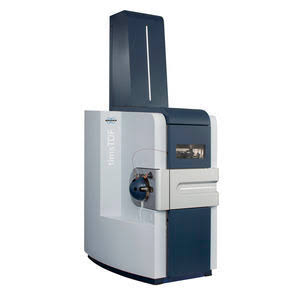
We run ion mobility metabolomics on a trapped ion mobility (TIMS) platform — the most widely adopted ion
mobility technology in metabolomics research — coupled to high-resolution mass analysis. TIMS accumulates
and releases ions by their gas-phase mobility before MS/MS, giving an extra separation dimension without
sacrificing throughput.
| Parameter |
Specification |
| Ion mobility platform |
Trapped ion mobility spectrometry (TIMS) coupled to high-resolution Q-TOF mass analysis |
| CCS measurement |
Collision cross section (CCS, Ų) measured for each detected feature; calibration against a known
CCS reference set per batch |
| CCS reproducibility |
Inter-batch CCS RSD typically below 1 percent; instrument-transferable values for database
matching |
| Four-dimension acquisition |
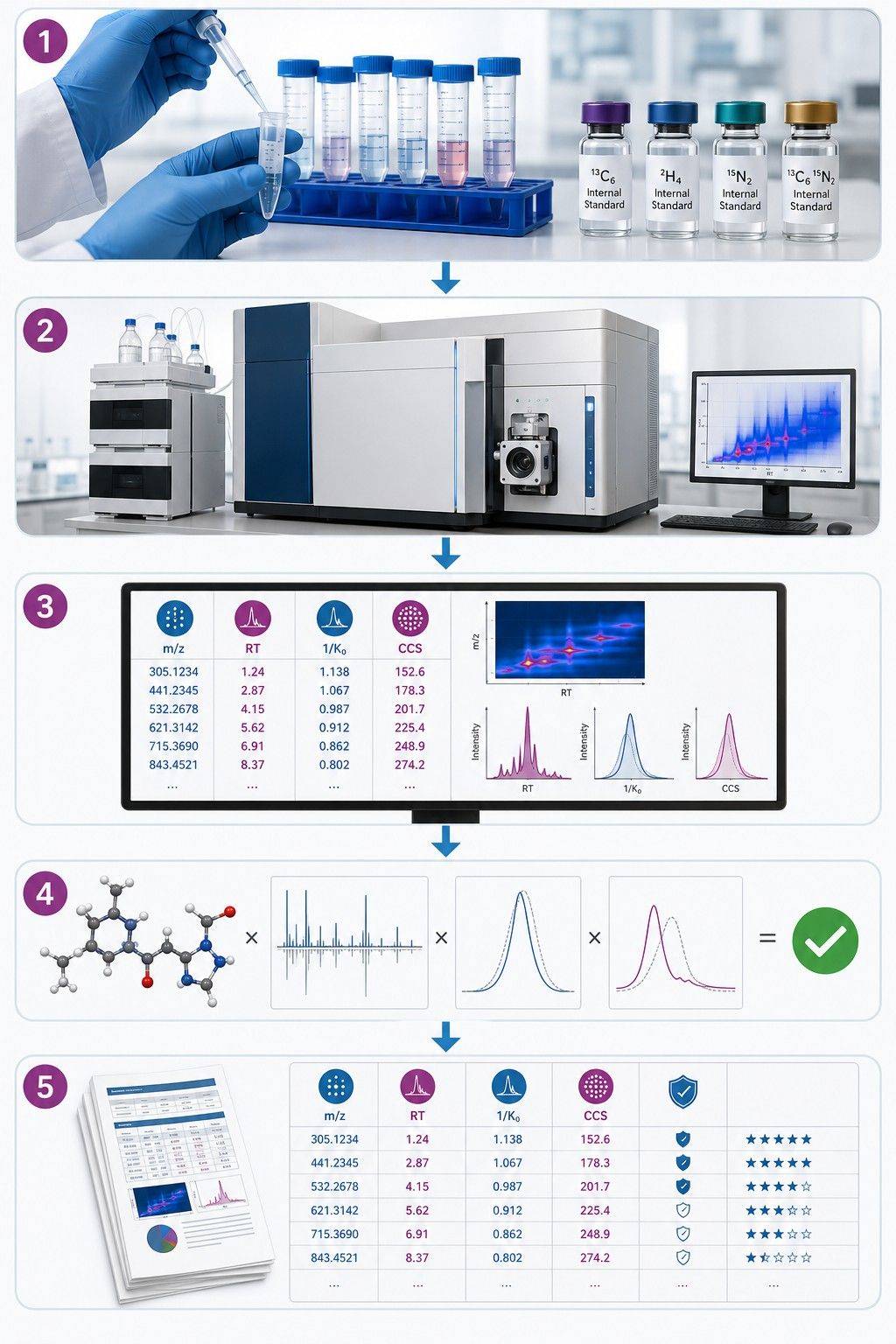
m/z, retention time, ion mobility (1/K0), and MS/MS fragment spectra acquired in a single run per
sample |
| Isomer resolution |
Gas-phase separation of isobaric and isomeric species that co-elute chromatographically |
| Mass accuracy |
Low-ppm high-resolution mass measurement with internal lock-mass correction |
Ion Mobility Metabolomics Workflow — A Step-by-Step Guide
CCS-Assisted Metabolite Annotation
Conventional annotation ranks candidate structures by accurate mass and MS/MS spectral similarity. CCS adds
an independent filter: a candidate is accepted only if its measured CCS matches the predicted or library CCS
within a tight tolerance. This single orthogonal constraint removes a large fraction of false candidates
that would otherwise rank highly.
- Library CCS matching — measured CCS values are searched against curated metabolite CCS
libraries for direct annotation
- Predicted CCS filtering — in silico CCS prediction scores candidate structures from in
silico fragmentation tools, narrowing the candidate list
- Isomer disambiguation — isomeric candidates that share mass and near-identical spectra
are separated by their distinct CCS values
- Instrument-transferable evidence — CCS values are reproducible across instruments and
laboratories, so annotations travel with the data
CCS Library and Calibration
CCS annotation is only as good as the library and calibration behind it. We maintain a curated metabolite
CCS library and calibrate every batch against a reference CCS set, so measured values are directly
comparable to published databases.
| Attribute |
Description |
| CCS library coverage |
Curated metabolite CCS library covering major metabolite and lipid classes; supplemented by public
CCS databases for broad matching |
| CCS calibration |
Batch-level calibration against a known CCS reference set spanning the mobility range of the
analytes |
| CCS tolerance window |
Candidate matching within a defined CCS tolerance (typically ±1–3 percent, study-dependent) |
| CCS reproducibility QC |
Inter-batch CCS RSD tracked in every report to confirm value transferability |
Metabolite Identification Confidence Levels
We report identifications using the established confidence levels, and CCS upgrades assignments that mass
accuracy alone cannot confirm.
| Confidence Level |
Criteria |
CCS Contribution |
| Level 1 |
Confirmed by authentic reference standard (RT, MS/MS, and CCS match) |
CCS adds an independent confirmation dimension |
| Level 2 |
Putatively annotated by library MS/MS and CCS match |
CCS rejects isomeric alternatives with distinct CCS values |
| Level 3 |
Candidate class or structure assigned by predicted CCS and in silico fragmentation |
Predicted CCS narrows the candidate space |
| Level 4 |
Unknown feature with measured m/z, RT, and CCS (no confident assignment) |
CCS recorded for future database re-annotation |
Why Choose Our Ion Mobility Metabolomics Service
- Four-Dimension Identification
m/z, RT, MS/MS, and CCS acquired in one run — more evidence per feature than conventional LC-MS.
- Isomer and Isobar Resolution
Gas-phase separation resolves species that co-elute and share mass, a capability conventional LC-MS lacks.
- Curated CCS Library and Calibration
Batch-level CCS calibration and a curated metabolite library make measured values directly comparable to published data.
- Instrument-Transferable Evidence
CCS values are reproducible across instruments and laboratories, so your annotations stay valid beyond a single run.
- Confidence-Level Reporting
Every feature is reported with its identification confidence level, so you know exactly how each assignment was made.
- Collaborator-Ready Deliverables
CCS-annotated tables, drift plots, QC metrics, and a methods appendix support clear communication to collaborators and reviewers.
Ion Mobility Metabolomics Sample Requirements
| Sample Type |
Minimum Amount |
Preparation |
Storage and Shipping |
| Plasma / Serum |
≥ 50 µL |
Collect in EDTA tube, centrifuge at 4°C, aliquot, avoid hemolysis |
−80°C; ship on dry ice |
| Tissue |
≥ 20 mg wet weight |
Snap-freeze in liquid nitrogen; record wet weight |
−80°C; ship on dry ice |
| Cells |
≥ 1 × 10⁶ cells |
Wash with cold PBS, centrifuge at 4°C, snap-freeze pellet |
−80°C; ship on dry ice |
| Urine / CSF |
≥ 100 µL |
Aliquot immediately; minimize freeze-thaw cycles |
−80°C; ship on dry ice |
| Plant / Fermentation Extract |
≥ 200 mg / 200 µL |
Homogenize; record processing history |
−20°C or −80°C; ship on dry ice |
Critical Notes:
- Untargeted discovery requires consistent sample handling — pooled QC samples are strongly recommended so
CCS and intensity drift can be corrected across the batch.
- For lipid-focused studies, minimize freeze-thaw cycles which can alter isomeric lipid composition.
Ion Mobility Metabolomics Data Deliverables
CCS-Annotated Feature Table (.xlsx/.csv)
m/z, retention time, CCS (Ų), MS/MS match score, annotation confidence level, and QC flags per feature.
QA/QC Report
CCS calibration, CCS reproducibility RSD, internal standard recovery, pooled QC trend plots.
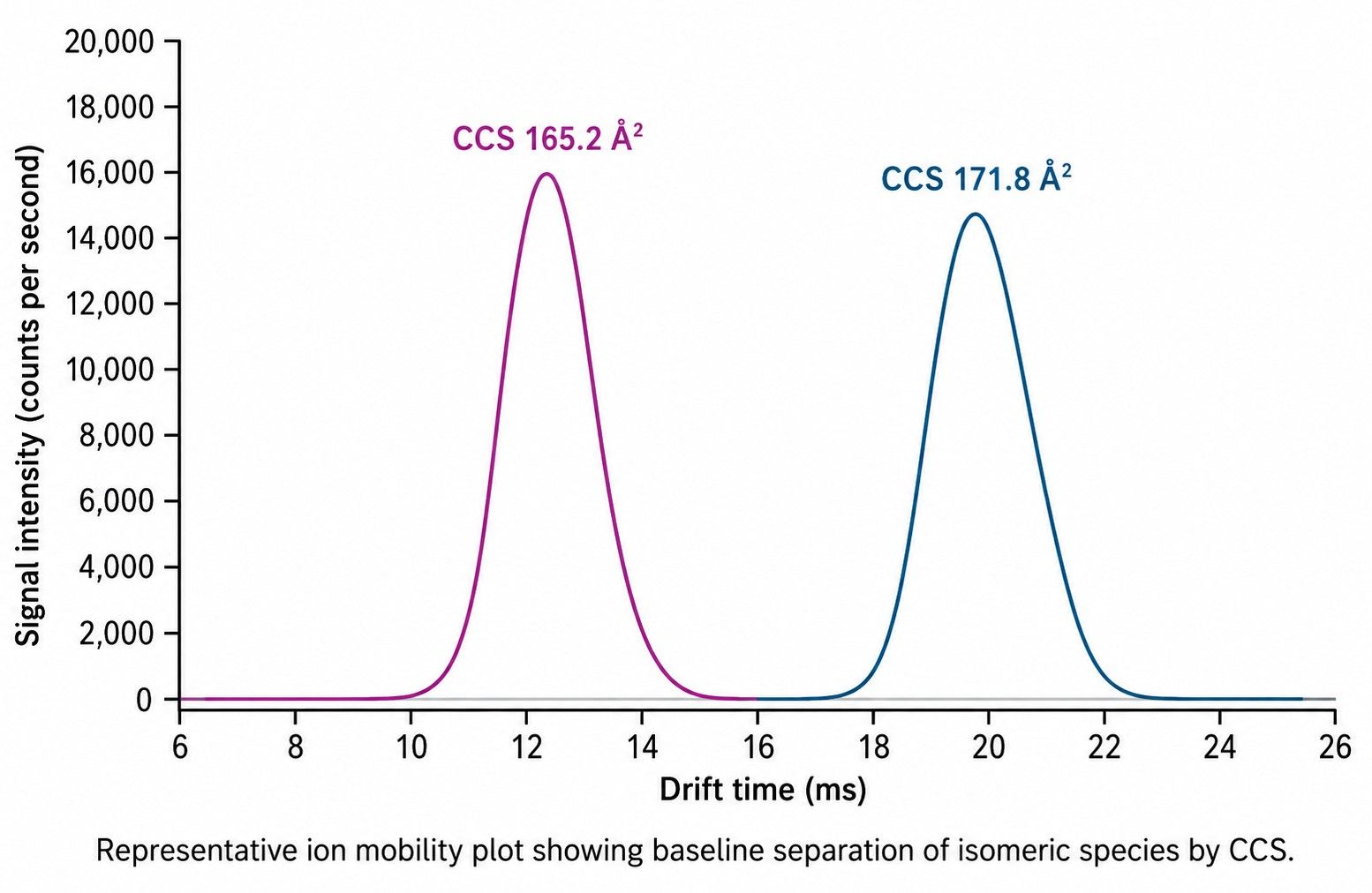
Ion Mobility Plots
Drift-time and CCS distributions with isomer pairs highlighted; feature-level mobilograms.
Raw IM-MS Data
Vendor-native and open formats (.mzML) for downstream re-analysis.
Methods Appendix
IM platform settings, CCS calibration details, annotation workflow — formatted for reproducible reporting.
Ion Mobility Metabolomics Applications
Ion mobility metabolomics supports researchers where isomer identity and annotation confidence determine
the outcome:
- Drug Metabolism and Pharmacometabolomics — resolve phase-I and phase-II metabolite
isomers and confirm drug metabolite structures
- Lipidomics and Metabolic Disease — resolve isobaric and isomeric lipid species for
cardiovascular and metabolic research
- Natural Product Discovery — distinguish structurally related secondary metabolites
where isomer identity drives bioactivity
- Exposomics and Environmental Toxicology — separate co-eluting matrix interferences and
assign pollutant-derived features with higher confidence
- Glycomics and Carbohydrate Metabolism — resolve hexose and glycan linkage isomers that
share exact mass
For discovery-scale screening that feeds into this workflow, our untargeted metabolomics service provides the conventional
LC-MS foundation; ion mobility adds the CCS dimension. Where candidate structures remain unresolved, our unknown metabolite identification service
extends the annotation. For downstream interpretation, our metabolomics data analysis team supports pathway and
statistical reporting.
Case Study: Multi-Omics Identifies Xanthine as a Pro-Survival Metabolite in
Mitochondrial Dysfunction
Multi-omics identify xanthine as a pro-survival metabolite for nematodes with mitochondrial dysfunction
Gioran, A., Piazzesi, A., Bertan, F., Schroer, J., Wischhof, L., Nicotera, P., and Bano, D.
| The EMBO Journal, 2019, 38(6)
DOI: 10.15252/embj.201899558
Background
Mitochondrial dysfunction triggers broad metabolic rewiring, yet which metabolites actively support
survival under bioenergetic stress is difficult to resolve from bulk readouts alone. This study asked
whether specific metabolites confer pro-survival effects in nematode models of mitochondrial dysfunction.
Challenge: Identify the metabolic signatures distinguishing long-lived mutants under
mitochondrial dysfunction from controls, and pinpoint which metabolites drive the survival phenotype.
Analytical Approach
Multi-omics profiling — including UPLC-MS lipidomics performed at Creative Proteomics — was applied to
wild-type, age-1, gas-1, and age-1;gas-1 mutant nematodes, with all profiles normalized to nematode number
per sample. The integrated analysis identified xanthine as a metabolite whose abundance tracked the
pro-survival phenotype.
Key Findings
| Metric |
Finding |
| Pro-survival metabolite |
Xanthine identified by multi-omics integration as elevated in the pro-survival context |
| Metabolic profiling |
UPLC-MS lipidomics across four genotypes, normalized per sample |
| Mitochondrial context |
Metabolite signatures resolved under mitochondrial dysfunction in C. elegans models |
| Integrated readout |
Multi-omics analysis linked metabolite abundance to the survival phenotype |
What This Means for Your Ion Mobility Metabolomics Research
- Metabolite identification drives mechanism. Pinpointing xanthine as the pro-survival
metabolite required confident identification across a complex background. Ion mobility adds the CCS
dimension to this workflow, so isomeric and isobaric candidates are resolved rather than summed into one
feature.
- Isomer resolution matters for annotation. Purine-related metabolites share mass and
fragmentation patterns; CCS-assisted annotation assigns each with higher confidence than mass accuracy
alone.
- Multi-omics integration benefits from orthogonal evidence. A measured CCS provides
instrument-transferable identification evidence that strengthens cross-platform multi-omics conclusions.
Conclusion
This study shows how confident metabolite identification can reveal the molecules behind a phenotype. Our
ion mobility LC-MS metabolomics service extends this capability with CCS-assisted annotation — resolving the
isomeric and isobaric species that conventional LC-MS sums together, for higher-confidence identification in
your own studies.
The NADPARK study: A randomized phase I trial of nicotinamide riboside supplementation in Parkinson's disease
Brakedal, B., Dölle, C., Riemer, F., et al.
Journal: Cell Metabolism, 2022, 34(3), 396–407.e6
Untargeted metabolomics applied to a clinical trial cohort, linking NAD precursor supplementation to
brain NAD levels and metabolic changes. Demonstrates untargeted profiling for intervention studies.


 Contact Us