

HILIC vs Reversed-Phase LC in Metabolomics: Selecting Chromatography for Polar and Nonpolar Metabolites
Submit Your InquiryChromatography should be selected from the metabolites that carry the study claim, not from a generic preference for "broad coverage." Within a metabolomics workflow, reversed-phase LC–MS can produce stable, information-rich data while failing to retain the phosphorylated, ionic, or highly hydrophilic compounds central to the hypothesis. HILIC can resolve many of those compounds, but only when retention drift, salt-related matrix effects, and injection-solvent distortion are controlled.
The relevant comparison is not which mode is universally better. It is whether the selected mode provides adequate retention and selectivity for the required chemical space, tolerates the sample matrix, and produces reproducible measurements at the intended batch size. A second method is warranted only when its additional measurements justify the extra sample volume, acquisition time, QC, and data integration.
Analyte Chemical Space and Retention Requirements
Reversed-phase liquid chromatography (RPLC), commonly using C18 or related hydrophobic stationary phases, retains compounds primarily through hydrophobic interactions. It is a robust starting point for moderately polar to nonpolar metabolites and lipids. Highly polar compounds often elute at or close to the void volume, where salts and other matrix components also emerge. A detectable peak near the solvent front is not equivalent to a reliable chromatographic measurement: coelution can impair selectivity, increase ion suppression, and make isomers difficult to distinguish.
Hydrophilic interaction liquid chromatography (HILIC) uses a polar stationary phase and a mobile phase with high organic content. Retention commonly involves partitioning into a water-enriched layer at the stationary-phase surface, with additional hydrogen-bonding, dipole, and electrostatic interactions that depend on the column chemistry. These properties make HILIC well suited to many polar and ionic metabolites that RPLC retains poorly.
| Metabolite class or question | RPLC suitability | HILIC suitability | Planning note |
|---|---|---|---|
| Complex lipids, steroids, bile acids, hydrophobic xenobiotics | Generally strong | Limited or class-dependent | RPLC commonly provides chain-length and hydrophobicity-related selectivity |
| Amino acids and small amines | Variable; derivatization or specialized phases may help | Frequently strong | Ionization state and stationary-phase charge strongly affect HILIC selectivity |
| Nucleobases and nucleosides | Moderate to variable | Often strong | Nucleotides are substantially more challenging than nucleosides in RPLC |
| Nucleotides and sugar phosphates | Often weak without ion pairing or alternative chemistry | Frequently preferred | Metal interaction, peak tailing, and pH require method-specific control |
| Organic acids and central-carbon intermediates | Weak to moderate depending on phase and pH | Often favorable in negative mode | Isomer separation and matrix salt effects must be evaluated |
| Acylcarnitines | Good for medium- and long-chain species | Useful for free carnitine and shorter polar species | A single mode may bias coverage toward part of the chain-length range |
| Phenolics, indoles, and semi-polar plant metabolites | Often strong | Complementary for highly polar conjugates | Glycosylation and sulfation can shift chromatographic behavior markedly |
| Untargeted broad profiling | Reproducible foundation for mid-polar/nonpolar space | Adds polar coverage | Dual methods increase coverage but also increase analytical and computational burden |
The class labels are starting points rather than guarantees. LogP or logD, charge state at the working pH, hydrogen-bonding capacity, molecular size, and matrix determine actual behavior. Authentic standards should be evaluated under the intended conditions when a metabolite is critical to the study.
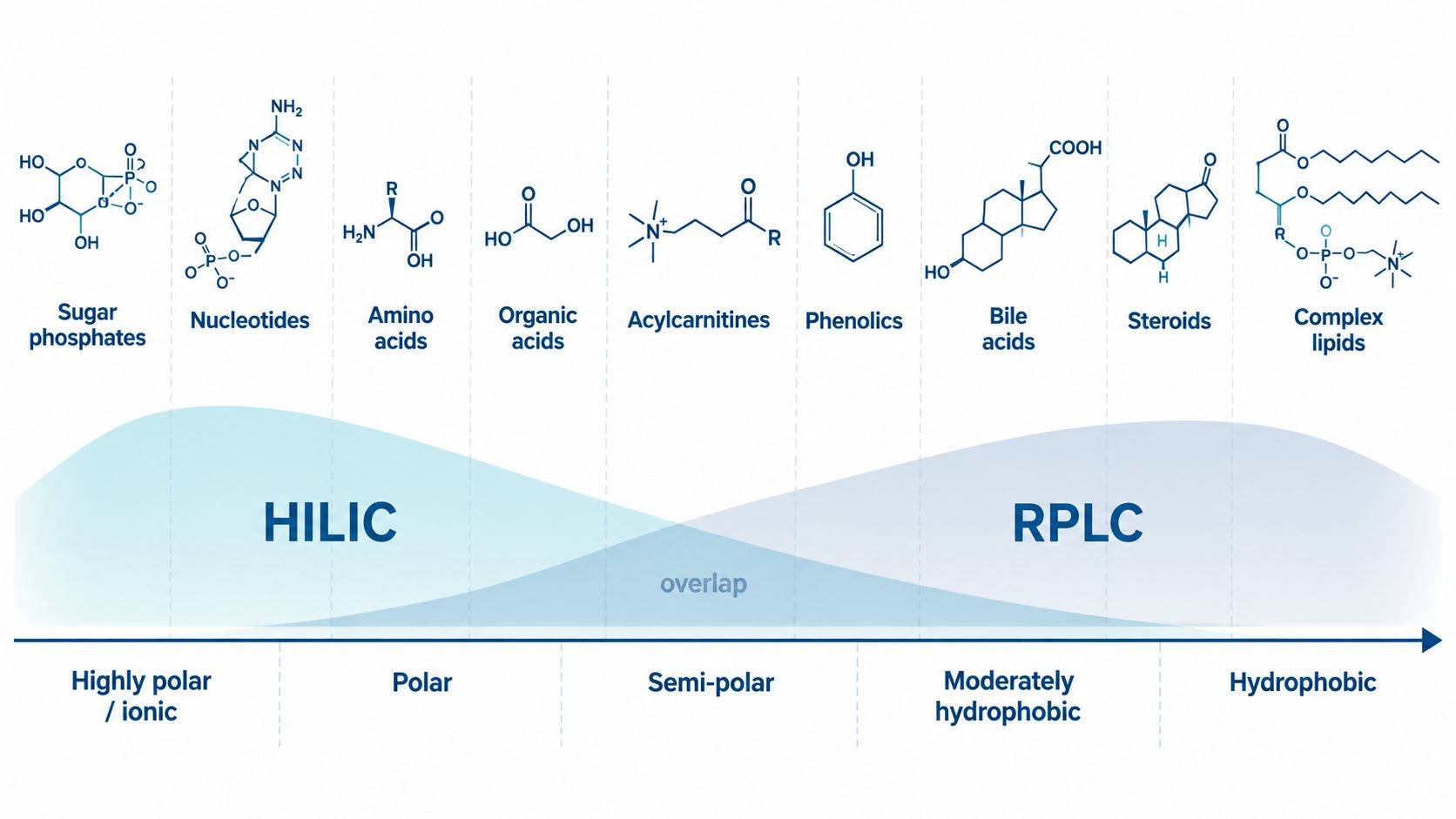 Figure 1. RPLC and HILIC cover overlapping but distinct regions of metabolite chemical space. Method selection should prioritize adequate retention and selectivity for the required analytes rather than maximizing the raw number of detected features.
RPLC and HILIC Retention Mechanisms
RPLC retention is comparatively predictable: increasing hydrophobicity generally increases retention, although ionization and secondary interactions can alter the pattern. HILIC is more heterogeneous. Two columns both sold as HILIC can provide substantially different coverage because amide, bare silica, amino, diol, and zwitterionic phases combine partitioning and electrostatic interactions differently.
RPLC Selectivity
RPLC method development typically adjusts stationary-phase chemistry, gradient strength, organic solvent, pH, and modifier. C18 is not the only option; polar-embedded, aqueous-compatible, phenyl, or mixed-mode phases can improve selected metabolite classes. For moderately polar analytes, an aqueous-compatible reversed-phase column may provide sufficient retention with simpler transfer and equilibration than HILIC.
Ion-pairing RPLC can retain strongly ionic metabolites such as nucleotides and phosphorylated intermediates. It can be powerful for targeted central-carbon analysis, but nonvolatile or persistent ion-pair reagents may contaminate the LC–MS system, alter ionization, and make the instrument less suitable for other assays. Dedicated hardware or strict cleaning and scheduling may be required. Ion pairing should therefore be treated as a separate method decision, not as a minor RPLC adjustment.
HILIC Selectivity
HILIC retention depends on polarity and charge but also on stationary-phase chemistry, buffer concentration, pH, temperature, water content, and the sample solvent. Zwitterionic phases can provide strong retention of charged metabolites; amide phases often perform well for sugars, amino acids, nucleosides, and other polar compounds; bare silica and amino phases offer different charge characteristics. The best phase for anionic phosphorylated compounds may not be best for basic amines or neutral sugars.
Method development should use a standard mixture spanning the intended pathways and chemical properties. Evaluating only total feature count can select a condition that produces many weak or redundant signals while failing to resolve the metabolites that determine the scientific conclusion.
Matrix Compatibility and Ion-Suppression Risk
Chromatographic retention is valuable because it moves analytes away from coeluting matrix. In RPLC, inorganic salts and highly polar matrix components often pass near the void volume. A polar metabolite that also elutes there may be detectable but poorly quantified because it shares that region with substantial ion suppression.
HILIC can retain polar metabolites away from the solvent front, but it may also retain inorganic ions and other hydrophilic matrix components. Sodium, potassium, chloride, phosphate, and buffer residues can promote adducts, clusters, signal suppression, and retention changes. Plasma, urine, cell-culture media, and phosphate-buffered saline present different risks. A HILIC method optimized with neat standards may perform differently in the actual biological matrix.
Matrix evaluation should include:
- post-extraction spiking or post-column infusion to locate suppression zones;
- matrix-matched calibration or standard addition for critical targeted analytes;
- dilution-linearity testing to determine whether lower matrix load improves response;
- monitoring of adduct patterns and internal standards across the chromatogram;
- comparison of neat standard, extracted matrix, and pooled QC retention and peak shape;
- evaluation of sample cleanup without sacrificing the polar compounds of interest.
Desalting is not automatically beneficial in a polar metabolites analysis. Procedures that remove salts may also remove small ionic metabolites or introduce variable recovery. The method must demonstrate that cleanup improves usable measurement rather than merely reducing total matrix.
Injection-Solvent Compatibility
Injection-solvent strength is a common reason a promising HILIC method fails in biological samples. HILIC typically begins at high organic content; injecting a large volume of water-rich extract can disrupt the stationary aqueous layer and produce broad, split, fronting, or shifting peaks. Reconstitution in a higher proportion of acetonitrile and controlling injection volume can improve focusing, but some metabolites or matrix components may precipitate.
RPLC has the opposite practical concern: a sample dissolved in a solvent substantially stronger than the initial mobile phase can cause poor focusing and distorted early peaks. The extraction and reconstitution procedure must be compatible with the chromatographic start conditions. A single extract may be divided and reconstituted differently for HILIC and RPLC rather than forcing one solvent to serve both methods.
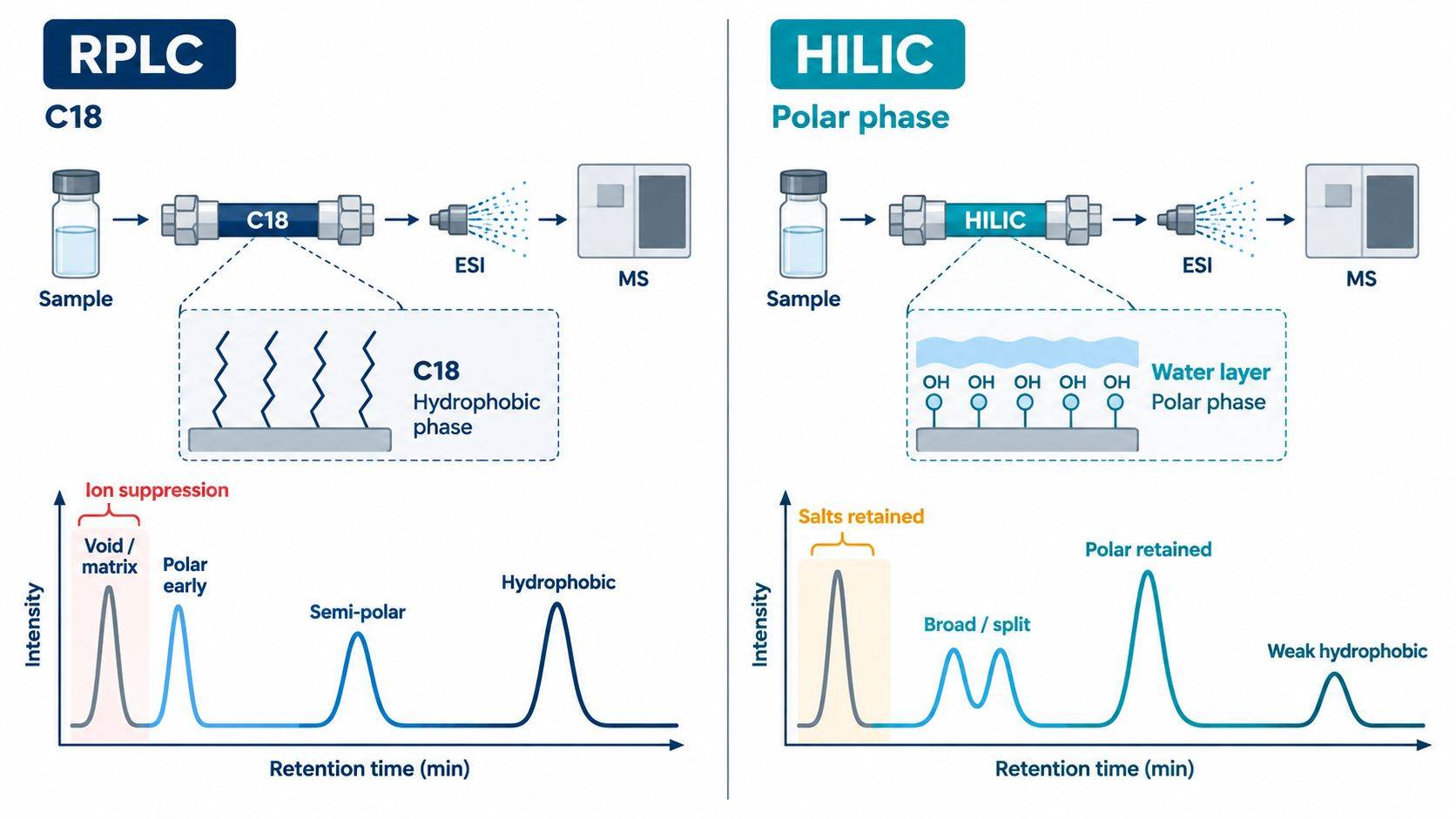 Figure 2. Each mode has characteristic matrix risks. RPLC may leave highly polar analytes in a crowded void region, whereas HILIC can retain both target metabolites and matrix ions and is particularly sensitive to aqueous injection plugs and inconsistent mobile-phase composition.
HILIC Method Reproducibility
HILIC is not inherently unsuitable for large studies. Optimized methods have achieved intra- and inter-batch reproducibility comparable to RPLC, but this requires deliberate control of variables that have less influence in many routine reversed-phase methods.
Mobile-Phase Preparation
Small changes in buffer concentration, apparent pH, water content, or solvent evaporation can alter HILIC retention. Prepare mobile phases gravimetrically or with tightly controlled volumetric procedures, use consistent reagent lots and water quality where practical, and document whether pH was adjusted in the aqueous component or measured in the final hydro-organic mixture. Volatile ammonium salts are generally preferred for MS compatibility, but their buffering capacity and solubility must be appropriate to the working composition.
Equilibration and Sequence Design
Returning the pump to the starting composition does not prove that the stationary-phase water layer and ionic environment have re-equilibrated. Retention-time creep across early injections is a warning that the column or system has not reached a stable state. Method qualification should establish the required start-up conditioning and between-injection re-equilibration in column volumes, then verify it with representative standards and matrix QC.
Long sequences should include system-suitability injections, pooled QC, and retention-time reference compounds distributed across the run. If a column is changed, cleaned, stored, or transferred to another instrument, the method should define reconditioning and acceptance criteria rather than relying on a fixed waiting time.
Temperature, Carryover, and Column History
Column temperature affects viscosity, mass transfer, and selectivity. It should be controlled and recorded. Strongly retained ionic compounds and matrix residues can create carryover or progressive selectivity changes; blank injections and targeted carryover challenges are therefore necessary. Column history matters, particularly when a HILIC column is exposed to incompatible solvents, high salt loads, or pH outside its stable range.
Useful acceptance criteria include retention-time deviation for reference compounds, peak-width and asymmetry limits, internal-standard response, mass accuracy, blank carryover, pooled-QC feature CV, and dilution-series linearity. Criteria should be evaluated separately for early, middle, and late portions of the chromatogram because instability may not affect every retention region equally.
Single-Method and Dual-Method Strategy
A dual HILIC/RPLC workflow can expand metabolome coverage substantially, but additional detections do not automatically improve the study. The second method is justified when it measures metabolites that are necessary for the biological claim and cannot be obtained reliably with the primary method.
Criteria for RPLC-Only Workflows
RPLC alone may be appropriate when the objective centers on lipids, steroids, bile acids, xenobiotics, semi-polar specialized metabolites, or a validated panel that is adequately retained. It may also be preferable for large cohorts where robust throughput and consistent retention are more valuable than marginal polar coverage.
Criteria for HILIC-Only Workflows
HILIC may be appropriate when the question is dominated by amino acids, organic acids, nucleosides, nucleotides, sugar phosphates, small amines, or other polar pathways and the method has demonstrated matrix-specific robustness. A targeted HILIC assay can be more efficient than acquiring an RPLC profile that does not contribute to the primary endpoint.
Criteria for Complementary HILIC–RPLC Analysis
Use dual analysis when the study spans central-carbon metabolism and lipid or signaling pathways, when discovery requires both polar and nonpolar coverage, or when critical metabolites lie in the weak-retention regions of either method. Published plasma and urine studies have shown meaningful gains in feature coverage when optimized HILIC and RPLC methods are combined.
However, dual workflows require:
- sufficient sample volume for separate aliquots or extracts;
- method-specific reconstitution and internal standards;
- twice the acquisition and QC scheduling;
- separate feature extraction and retention alignment;
- explicit rules for signals detected by both methods;
- correction for platform- or mode-specific batch effects;
- an integrated annotation and reporting hierarchy.
The same metabolite can appear in both modes with different adducts, fragments, peak shapes, and matrix effects. Duplicate signals should not be treated as independent biological confirmations unless identity and quantitative agreement are established. The report should indicate which method provides the primary measurement for each key metabolite.
| Project requirement | Preferred starting strategy | Escalation trigger |
|---|---|---|
| Lipids and hydrophobic signaling molecules | RPLC | Add HILIC only if polar precursors or cofactors are required |
| Central-carbon, nucleotide, or sugar-phosphate pathways | HILIC or validated ion-pairing RPLC | Add RPLC for semi-polar products, drugs, or lipid mediators |
| Broad untargeted discovery with adequate volume and budget | Complementary HILIC plus RPLC | Add targeted confirmation for decision-critical metabolites |
| Large cohort with limited volume | One qualified mode aligned to primary hypothesis | Use a pilot subset to test whether the second mode changes biological conclusions |
| New matrix with high salt or unusual additives | Matrix-specific feasibility before platform commitment | Modify extraction, dilution, or chromatographic phase based on recovery and suppression |
| Small targeted panel | Select the mode providing best retention and selectivity for the full panel | Split into two methods if one mode compromises critical analytes |
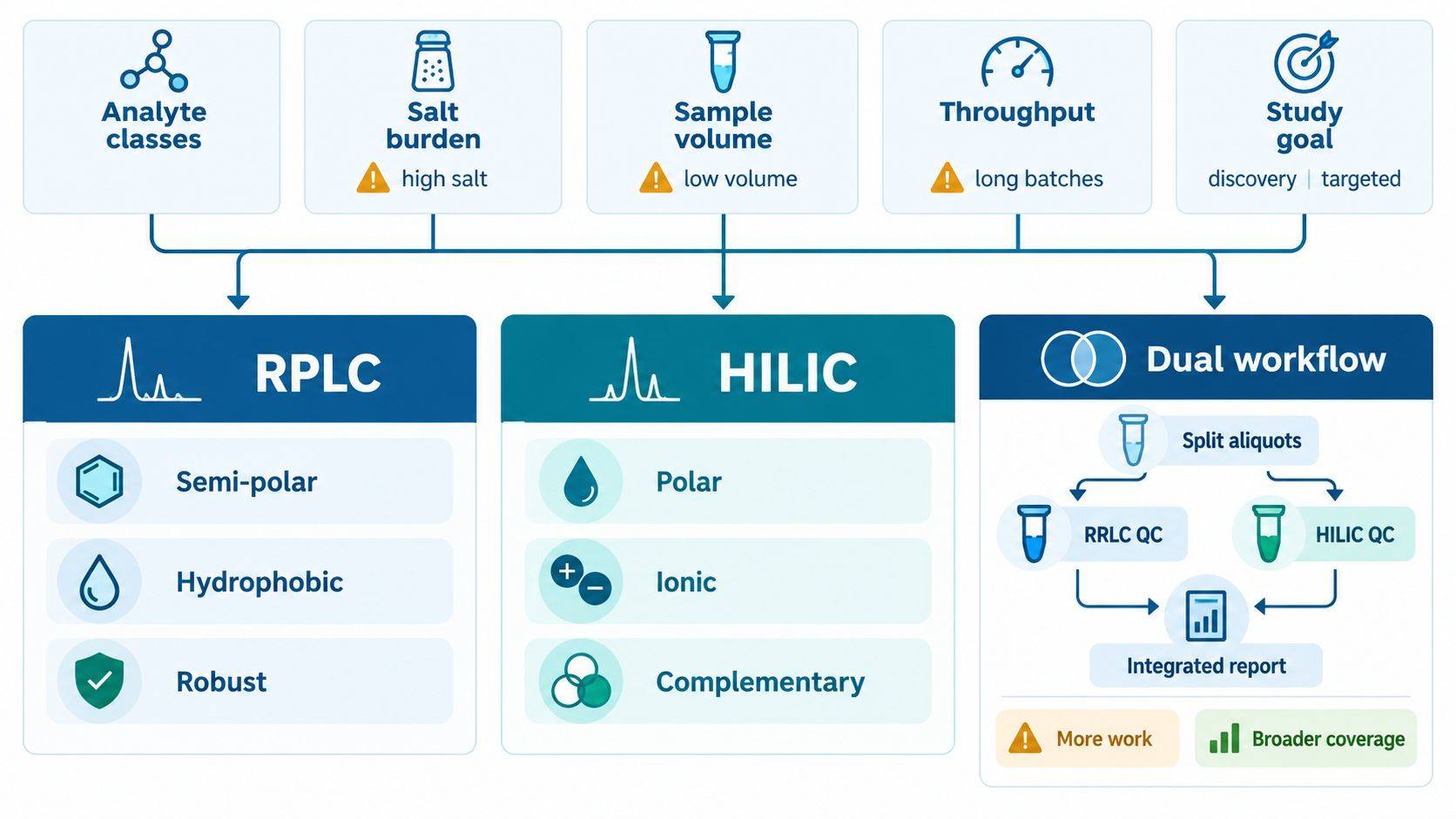 Figure 3. The chromatography decision balances chemical coverage against sample compatibility and operational burden. A second method is warranted when it adds reliable measurements required for the study claim, not simply when it increases the number of detected features.
Matrix-Specific Method Qualification
A feasibility study should precede full-batch acquisition when the matrix, extraction, analyte panel, or column chemistry is new. The study should use representative biological samples, not only neat standards, and include the expected concentration range and matrix load.
For each required metabolite or pathway, document:
- retention factor and separation from the void region;
- peak shape, integration reliability, and isomer resolution;
- matrix effect, recovery, and dilution behavior;
- intra- and inter-batch retention-time and response precision;
- carryover and blank interference;
- stability in the extraction and autosampler conditions;
- annotation evidence, including retention time and MS/MS comparison with authentic standards where available;
- the primary chromatographic mode when a metabolite is detected by both routes.
For untargeted metabolomics, compare retained, reproducible features after blank and QC filtering—not raw feature count. For targeted studies, prioritize calibration behavior, selectivity, accuracy, precision, and the ability to maintain performance across the intended batch size. The qualification record should state why the chosen route is adequate for each claim-critical metabolite and where the method remains intentionally out of scope.
Frequently Asked Questions (FAQs)
Is HILIC always better for polar metabolites?
No. HILIC is often a strong choice, but retention and peak shape depend on charge, stationary phase, pH, buffer, matrix, and injection solvent. Some moderately polar compounds perform well on aqueous-compatible RPLC, mixed-mode phases, or validated ion-pairing methods. Critical analytes should be tested with authentic standards in the intended matrix.
Why can a polar metabolite be detected by RPLC but still be poorly measured?
Detection near the void volume may occur without useful chromatographic retention. The analyte can coelute with salts and matrix components, experience variable ion suppression, and lack separation from isomers. A visible peak is not sufficient evidence of selectivity or quantitative robustness.
Does HILIC require a different extraction?
Not always, but it often requires a different final solvent composition and injection volume. A water-rich extract can distort HILIC peaks, while high organic content may precipitate some matrix components or reduce solubility. Splitting one extract and applying method-specific reconstitution is often more reliable than using one injection solution for both HILIC and RPLC.
Why does HILIC retention time drift during a sequence?
Common causes include insufficient column re-equilibration, inconsistent buffer concentration or pH, solvent evaporation, temperature changes, matrix salt loading, and column history. The method should establish equilibration in column volumes and monitor reference compounds and pooled QC throughout the batch.
Should untargeted metabolomics always use both HILIC and RPLC?
No. Dual acquisition is valuable when both polar and nonpolar chemical spaces are needed for the biological question and the project can support the extra volume, cost, batch design, and data integration. For a focused question or large cohort, one well-qualified method may yield a more consistent and interpretable dataset.
How should a metabolite detected by both methods be reported?
Assign a primary measurement based on retention, selectivity, matrix effect, precision, and identification evidence. The second detection can support identity or robustness, but correlated signals should not be counted as independent metabolites. Disagreement should trigger review of adducts, fragments, isomers, calibration, and integration.
References
- Contrepois, K., Jiang, L., & Snyder, M. (2015). Optimized analytical procedures for the untargeted metabolomic profiling of human urine and plasma by combining hydrophilic interaction and reversed-phase liquid chromatography–mass spectrometry. Molecular & Cellular Proteomics, 14(6), 1684–1695. doi:10.1074/mcp.M114.046508
- Hosseinkhani, F., Huang, L., Dubbelman, A.-C., Guled, F., Harms, A. C., & Hankemeier, T. (2022). Systematic evaluation of HILIC stationary phases for global metabolomics of human plasma. Metabolites, 12(2), 165. doi:10.3390/metabo12020165
- Cubbon, S., Antonio, C., Wilson, J., & Thomas-Oates, J. (2010). Metabolomic applications of HILIC–LC–MS. Mass Spectrometry Reviews, 29(5), 671–684. doi:10.1002/mas.20252
- Wernisch, S., & Pennathur, S. (2016). Evaluation of coverage, retention patterns and selectivity of seven liquid chromatographic methods for metabolomics. Analytical and Bioanalytical Chemistry, 408(22), 6079–6091. doi:10.1007/s00216-016-9716-4
- Ivanisevic, J., & Want, E. J. (2019). From samples to insights into metabolism: uncovering biologically relevant information in LC-HRMS metabolomics data. Metabolites, 9(12), 308. doi:10.3390/metabo9120308
- Zhang, T., Creek, D. J., Barrett, M. P., Blackburn, G., & Watson, D. G. (2012). Evaluation of coupling reversed phase, aqueous normal phase, and hydrophilic interaction liquid chromatography with Orbitrap mass spectrometry for metabolomic studies of human urine. Analytical Chemistry, 84(4), 1994–2001. doi:10.1021/ac2030738
- Kuehnbaum, N. L., & Britz-McKibbin, P. (2013). New advances in separation science for metabolomics: resolving chemical diversity in a post-genomic era. Chemical Reviews, 113(4), 2437–2468. doi:10.1021/cr300484s
- Gika, H. G., Theodoridis, G. A., Plumb, R. S., & Wilson, I. D. (2014). Current practice of liquid chromatography–mass spectrometry in metabolomics and metabonomics. Journal of Pharmaceutical and Biomedical Analysis, 87, 12–25. doi:10.1016/j.jpba.2013.06.032

 Contact Us


